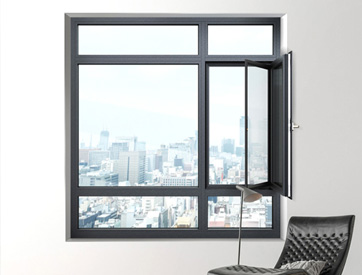
Richocean Is China’s Trusted Supplier Of
Windows And Doors Manufacturer
Security shutters carry two separate ratings, and most buyers only ask about one
Request a Quote →Buyers usually ask one question about a roller shutter: "Is it strong?" Strength is not one property. A security shutter has to resist two unrelated loads, and they are tested under different standards with different pass criteria.
A shutter can pass one and fail the other. A light aluminium curtain with a good lock may reach RC2 but deform out of its guides in a storm. A heavy extruded curtain built for cyclone regions may be structurally superb while its end locks are the weak point under attack. When you specify aluminum glass shutter windows for a project, you need both numbers, and you need to know which threat your site actually faces.
EN 1627 defines six resistance classes, each representing a level of attacker and a minimum resistance time. The classes that matter for residential and light commercial shutter windows are RC2 and RC3.
| Class | Assumed Attacker and Tools | Resistance Time | Typical Application |
|---|---|---|---|
| RC1 N | Physical force only, no tools | Baseline | Low-risk internal or sheltered locations |
| RC2 | Simple tools: screwdriver, pliers, wedge | 3 minutes | Standard residential, most retail |
| RC3 | Crowbar, drill, additional leverage tools | 5 minutes | Higher-value residential, exposed retail, jewellery, pharmacy |
| RC4 | Saw, axe, hammer and chisel, experienced attacker | 10 minutes | Commercial stock rooms, high-risk sites |
The critical point often missed: the RC class applies to the whole installed assembly, not to the curtain alone. EN 1627 testing evaluates the curtain, the guides, the end locks, the box, and the fixings into the substrate. A shutter curtain certified to RC3 loses that rating if it is fixed into a lightweight reveal with inadequate anchors, or if the guides are not anchored at the required spacing. This is why the factory should quote the class for the assembly as installed, and why the fixing schedule is part of the specification.
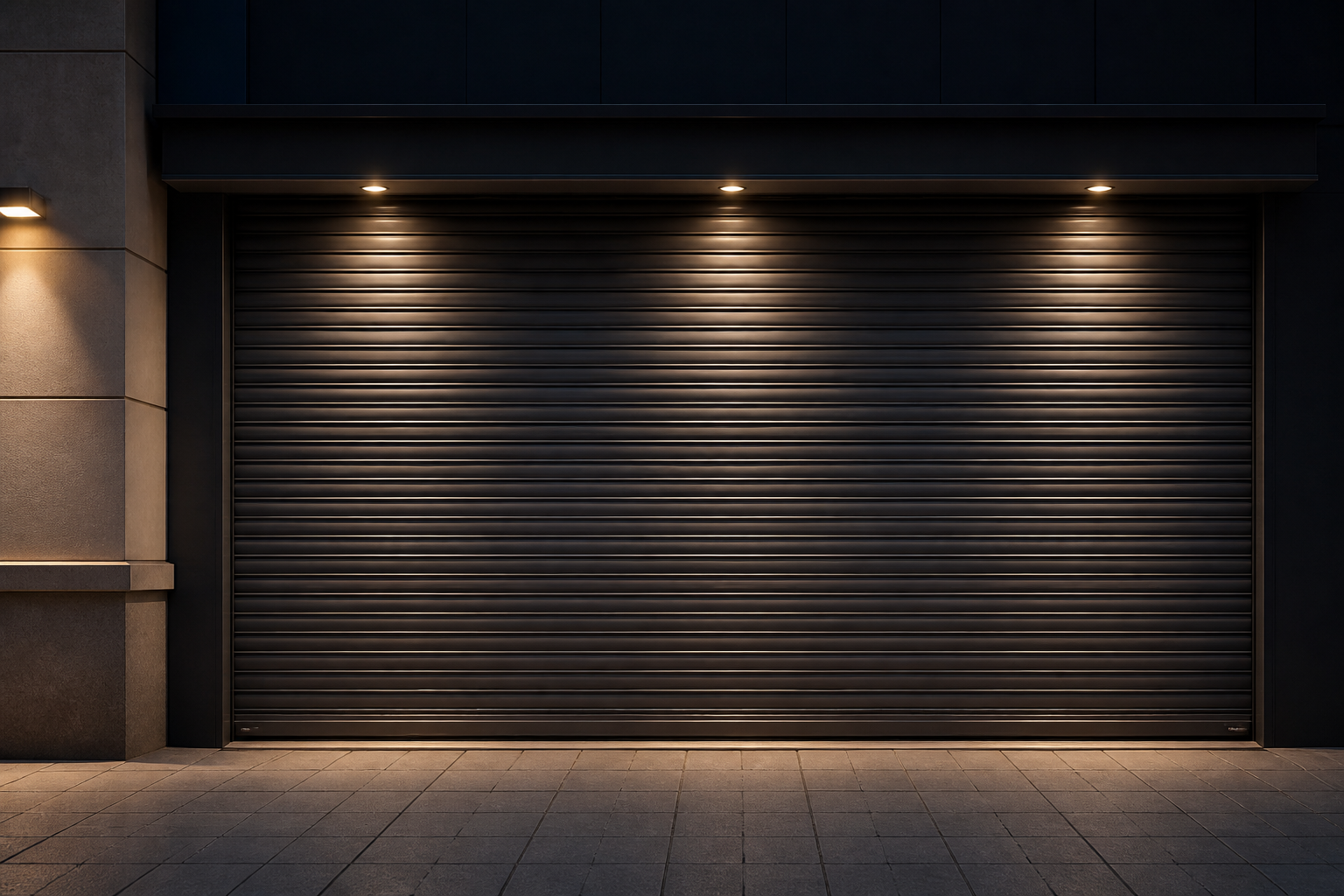
In cyclone and severe-storm regions the shutter's first job is not security — it is to keep windborne debris from reaching the glazing. Once a window pane is breached, internal pressurisation can lift the roof. AS4174 and the associated cyclone provisions address this with a pressure rating and, where required, an impact test.
| Requirement | What It Means | Typical Value |
|---|---|---|
| Design wind pressure | Pressure the closed curtain resists without leaving its guides | 1.5-3.0 kPa residential; higher for cyclonic and tall sites |
| Impact resistance | Survival of a windborne projectile without penetration | Required in cyclone regions per AS4174 / local code |
| Guide anchorage | Fixing spacing and substrate capacity | Per manufacturer schedule, anchored into solid substrate |
| Deflection limit | Curtain must stay engaged in the guides under load | Stated by the system, verified by test |
Practical consequence for specification: the shutter's wind rating should be at least equal to the design wind pressure of the window behind it. If the window is specified for 2.5 kPa and the shutter is rated for 1.5 kPa, the shutter will fail first and expose the glazing — defeating the purpose of installing it.
Roll-formed aluminium slats with a foam or resin core are lighter and cheaper; extruded aluminium slats are heavier, stiffer and markedly better under both attack and pressure. Wall thickness in roll-formed slats typically runs 0.8 to 1.2 mm, while extruded security slats are substantially thicker. For RC3 and for cyclone duty, extruded slats are the normal answer. Ask which type is quoted — the price difference is not arbitrary.
The guides are where the curtain is held under load and where an attacker inserts a lever. Deep guide engagement, stainless guides in coastal locations (SUS304 minimum, SUS316 preferred), and anchorage into solid substrate at the manufacturer's spacing all matter more than slat thickness alone. A thick curtain in a shallow guide is a weak assembly.
Roller shutters are most often defeated at the bottom rail, by levering the curtain up out of the guides. End locks that engage the guides or the box at multiple points, a bottom rail that cannot be lifted without releasing the locks, and an anti-lift device are the features that convert a weather curtain into a security curtain.
The box protects the rolled curtain and houses the spindle and drive. For security applications the box should not be openable from outside without tools, and the drive — manual spring, chain, or tubular motor — must be rated for the curtain weight with margin. Motorised systems need a stated duty cycle and a manual override so the shutter can still be closed during a power failure.
A shutter is only as good as the opening it closes, and the two must be specified together.
| Interface | Requirement |
|---|---|
| Window frame strength | 6063-T5/T6 frame with adequate wall thickness (1.4 mm minimum, thicker at fixing points) so the reveal can carry guide anchors |
| Reveal and box space | Head room reserved for the box before the opening size is fixed; box size grows with curtain weight |
| Glazing behind | Laminated glass where the shutter is the primary impact barrier; tempered alone can still be breached by debris |
| Thermal break | Continuous PA66-GF25 in the window frame; a shutter box bridging inside to outside creates a condensation path if not broken |
| Drainage | Sill weep paths kept clear by the box and guide detailing; shutters change the rain run-off pattern on the facade |
| Egress | Any shutter over a required escape window must be openable from inside without a key or special tool |
The last row is a compliance point that is easy to overlook and expensive to retrofit. In most jurisdictions a bedroom or habitable-room window that serves as an emergency escape route cannot be permanently obstructed. Where shutters are required for security on those openings, they must be operable from inside, or the opening must not be relied upon for egress.
| Standard | Covers | Region |
|---|---|---|
| EN 1627 | Intrusion resistance classes RC1 N to RC6 for the installed assembly | EU / CE |
| EN 13659 | Shutters and external blinds, repeated operation and mechanical behaviour | EU / CE |
| EN 14351-1 | Performance declarations for the window behind the shutter | EU / CE |
| AS4174 / AS1170.2 | Windborne debris impact and wind actions in cyclone regions | Australia |
| AS2047 | Window performance for the frame and glazing assembly | Australia |
| ASTM E1886 / E1996 | Missile impact and cyclic pressure for hurricane regions | North America |
| Configuration | Typical Use | Indicative FOB (USD/m²) |
|---|---|---|
| Roll-formed slat, manual spring, weather duty | Shade and privacy, low-risk sites | $55-95 |
| Roll-formed slat, tubular motor, RC2 basis | Standard residential security | $95-160 |
| Extruded slat, RC2 tested assembly, stainless guides | Coastal residential, general retail | $150-235 |
| Extruded slat, RC3 tested assembly, multi-point end locks | High-value residential, pharmacy, jewellery | $215-340 |
| Cyclone-rated curtain with impact-tested assembly | Cyclone regions, severe storm exposure | $280-430 |
| Shutter plus 6063-T5/T6 thermally broken window package | Complete opening supply, matched ratings | $420-720 |
Prices are indicative 2026 factory FOB ranges for project volumes, excluding freight and installation. Final quotation depends on slat type and thickness, RC class with test documentation, wind and impact rating, guide and box specification, drive type (SIEGENIA, ROTO, HOPO hardware where applicable), finish, and the window package behind the shutter. Contact Rogenilan Windows Doors for a specification-matched quote.
No. The RC class is awarded to the installed assembly, and the test usually finds the weak point somewhere other than the curtain — most often at the bottom rail, the guide engagement, or the fixings into the substrate. A thick extruded curtain with a single-point end lock and shallow guides can underperform a well-detailed lighter system. Ask for the class with the test report, and ask which configuration was tested.
They can, and that is the problem. If the shutter's wind rating is lower than the window's design wind pressure, the shutter fails first and exposes the glazing. Specify both against the same site wind load, and specify the glazing — usually laminated — for the duty the shutter cannot fully cover.
Only if the drive lacks a manual override or the override is accessible from outside. A motorised shutter must still be closable during a power failure, and the override must not provide an attack point. State the drive's duty cycle and torque margin against the curtain weight, since an undersized motor is the most common cause of a shutter that stops short of fully closed.
Guide and slat cleaning to keep the curtain running freely, lubrication at the intervals the manufacturer states, inspection of end locks and the anti-lift device, and a check that guide fixings have not worked loose. In coastal locations the stainless guides and fasteners should be inspected for contamination and surface corrosion, since chloride build-up can attack even SUS316 if it is not cleaned.
They can help and hurt. A closed shutter adds a still-air layer that reduces heat loss and solar gain. But the box and guides penetrate the facade, and if the box bridges from outside to inside without a thermal break it becomes a condensation path. Specify a continuous PA66-GF25 break in the window frame and a box detail that does not create a cold bridge.
EN 1627 RC2 / RC3 assemblies with test reports · AS4174 wind and impact duty · roll-formed or extruded slats · stainless guides and fasteners · matched 6063-T5/T6 thermally broken window frames · egress-compliant options · 2026 FOB pricing in 24 hours.
Request a Quote →Related Articles
Socials

 Casement
Windows
 Sliding
Windows
 Awning
Windows
 Single/Double
Hung Windows
 Tilt
& Turn Windows
 Bay
& Bow Windows
 Folding
Windows
 Picture
Windows
 Specialty
Windows
 Exterior Doors
 Stacking Doors
 Folding
Doors
 Double Doors
 Casement
Doors
 Sliding Doors
 Skylight
 Sunroom
 Garage
Door
 Curtain
Wall
 Glass
Railing