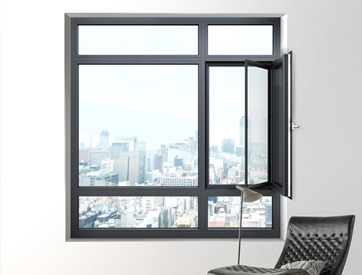
China Foshan Manufacturer Price List
Foshan, China serves as the location for aluminum extrusion and window manufacturing. This report contains data regarding casement windows with broken bridge profiles. The specifications focus on properties of materials, hardware systems, and pricing for the 2026 export market. The information provided reflects standards of the industry and characteristics of materials for procurement and engineering purposes.
Aluminum Alloy Specifications
The profiles consist of aluminum alloy 6063-T5 and 6063-T6. Aluminum 6063 contains the following chemical elements by percentage of mass as per standards of the industry:
- Silicon (Si): 0.2% - 0.6%
- Iron (Fe): 0.35% maximum
- Copper (Cu): 0.10% maximum
- Manganese (Mn): 0.10% maximum
- Magnesium (Mg): 0.45% - 0.9%
- Chromium (Cr): 0.10% maximum
- Zinc (Zn): 0.10% maximum
- Titanium (Ti): 0.10% maximum
- Aluminum (Al): Balance
Mechanical properties of 6063-T5 include:
- Tensile strength: 186 MPa
- Yield strength: 145 MPa
- Elongation: 12%
- Brinell hardness: 60 HB
Mechanical properties of 6063-T6 include:
- Tensile strength: 214 MPa
- Yield strength: 172 MPa
- Elongation: 8%
- Brinell hardness: 73 HB
Wall thickness of the aluminum profiles ranges from 1.4 mm to 3.0 mm. Applications for residences utilize 1.4 mm and 1.6 mm. Applications for commerce utilize 1.8 mm, 2.0 mm, and 3.0 mm. The selection of thickness depends on requirements for wind pressure and the dimensions of the window opening.
Thermal Break Material: PA66GF25
The thermal break consists of Polyamide 66 reinforced with 25% glass fiber, designated as PA66GF25. The properties of the material include:
- Density: 1.30 g/cm³
- Tensile strength: 80 MPa
- Modulus of elasticity: 4500 MPa
- Coefficient of thermal expansion: 2.3 - 3.0 x 10^-5/K
- Melting point: 250°C - 260°C
The width of the PA66GF25 strip varies from 14.8 mm to 54 mm. Selection of the strip width correlates with targets for thermal transmittance of the window system. This material is used to separate the aluminum profiles of the interior and exterior, reducing heat conduction through the frame.
Hardware Systems
The window systems incorporate hardware from SIEGENIA, ROTO, and HOPO. These systems provide the mechanics for opening, closing, and locking the casement sashes. The hardware selection impacts the load capacity and the count of cycles of the window operation.
SIEGENIA Hardware
The SIEGENIA TITAN AF series includes the following components:
- Friction stays: Steel with chromium (SUS304)
- Hinges: Load capacity ratings of 100 kg, 130 kg, 150 kg, and 180 kg
- Locking points: Configuration of multiple points along the sash perimeter
- Corner drives: Gear-driven mechanisms for force transmission
- Handles: Aluminum alloy with powder coating surface treatment
ROTO Hardware
The ROTO NX series includes the following components and ratings:
- Surface finish: Roto Sil Level 6 protection against corrosion
- Opening cycles: Tested to 20,000 cycles minimum
- Burglary resistance: RC2 classification according to EN 1627
- Components: Tilt-and-turn gear, stay arm, sash cam, and frame striker
HOPO Hardware
The HOPO hardware systems include:
- Handle types: Square, round, and variations with locks
- Friction stays: Mechanisms for adjustment of tension
- Locking blocks: Construction of zinc alloy
Glazing Configurations
Glass units consist of glazing with two or three panes. The configurations include the following options for export projects:
- 5 mm + 12A + 5 mm (Panes with heat treatment)
- 6 mm + 15A + 6 mm (Panes with reduction of emissivity)
- 5 mm + 9A + 5 mm + 9A + 5 mm (Three panes with heat treatment)
Coatings for glass include coatings for emissivity reduction with single, double, or triple silver layers. Argon gas (90% concentration) fills the air space (A) between glass panes. U-values for the glass units range from 1.1 W/m²K to 1.8 W/m²K. Solar Heat Gain Coefficient (SHGC) values range from 0.20 to 0.50 based on the type of coating.
Certifications
The window systems from Foshan manufacturers are tested to meet the following standards:
- AS2047: Windows in Buildings (Australia)
- CE: Conformity with Europe (EN 14351-1)
- NFRC: National Fenestration Rating Council (USA)
Testing parameters include air permeability (ASTM E283 or EN 12207), water penetration (ASTM E331 or EN 12208), and structural performance under pressure of wind (ASTM E330 or EN 12210).
Manufacturing Process
The assembly of a casement window involves 20 steps to ensure the alignment and sealing of the unit:
- Extrusion of profiles of aluminum alloy 6063-T5 or 6063-T6
- Cutting of profiles at angles of 45 degrees or 90 degrees
- Punching of holes for drainage in the frame and sash
- Punching of holes for hardware installation according to the template for hardware
- Milling of slots for handles and housing for locks
- Insertion of PA66GF25 strips for the thermal break into the channels of the aluminum profile
- Rolling and crimping of strips to create a profile of composite materials
- Assembly of corners using connectors of die-cast aluminum
- Injection of glue for corners (epoxy based)
- Installation of gaskets of EPDM for the sash and frame
- Installation of hardware components (SIEGENIA, ROTO, or HOPO)
- Cutting of beads for glass to the required dimensions
- Insertion of units of glass (IGUs) into the sash
- Installation of blocks for glass setting to distribute the weight
- Installation of gaskets for glass of the interior or application of silicone
- Application of sealant of silicone to the perimeter of the glass
- Installation of mesh for screens (steel with chromium or fiberglass)
- Inspection of the window operation and verification of measurements
- Cleaning of the surfaces of aluminum and glass
- Packaging with film for protection, protectors for corners, and crates of wood
2026 FOB Price Table (Foshan, China)
The following prices are estimates for the 2026 export market from Foshan, China. Prices are based on window sizes of standard dimensions and vary according to the volume of the order and the configuration of the hardware.
| Series of Profile |
Thickness of Wall (mm) |
Configuration of Glass |
Brand of Hardware |
Price (USD/sqm) |
| 65 Series |
1.4 |
5+12A+5 Heat Treatment |
HOPO |
125 - 145 |
| 70 Series |
1.6 |
6+12A+6 Emissivity Reduction |
ROTO |
160 - 185 |
| 75 Series |
1.8 |
6Emissivity Reduction+15A+6 |
SIEGENIA |
195 - 225 |
| 80 Series |
2.0 |
5+9A+5+9A+5 Three Panes |
SIEGENIA |
250 - 290 |
| 90 Series |
3.0 |
6+12A+6+12A+6 Three Panes |
ROTO |
320 - 380 |
Component Inventory
A casement window unit contains the following parts and materials:
- Profiles of aluminum frame (6063-T5/T6)
- Profiles of aluminum sash (6063-T5/T6)
- Strips of PA66GF25 (Width: 14.8 mm - 54 mm)
- Gaskets of EPDM (seals for center, interior, and exterior)
- Handle of SIEGENIA/ROTO/HOPO
- Friction stays of SIEGENIA/ROTO/HOPO
- Rods for transmission of multi-point locking
- Connectors for corners (die-cast aluminum)
- Glue for corners (Henkel or Weiss)
- Screws of steel with chromium (SUS304)
- Covers for drainage holes (Plastic)
- Units of glass (Heat treatment and Insulation)
- Spacers of glass (Aluminum or materials with thermal resistance)
- Molecular sieve (Desiccant inside the spacer)
- Sealant of butyl (Primary seal for IGU)
- Sealant of polysulfide or silicone (Secondary seal for IGU)
Glossary of Fenestration Terms
This glossary provides definitions for terms used in the manufacturing and specification of casement windows in Foshan, China.
- Air Permeability: The rate of leakage of air through a window under a difference in pressure. It is measured in m³/h·m² or m³/h·m at a pressure of 100 Pa.
- Aluminum Alloy 6063: An alloy containing magnesium and silicon. It is the material for extrusions of aluminum used in frames for windows.
- Anodizing: A process of electrochemistry that increases the thickness of the layer of oxide on the surface of parts of aluminum. It provides resistance to corrosion.
- Argon: A gas without color or odor with a thermal conductivity of 0.016 W/m·K. It is used to fill the space between panes of glass to reduce transfer of heat.
- AS2047: The standard of Australia that specifies requirements for windows in buildings. It includes tests for load of wind, penetration of water, and infiltration of air.
- Broken Bridge: A design for profiles of aluminum where an insulator for heat (usually polyamide) separates the sections of the interior and exterior to prevent flow of heat.
- Butyl: A rubber of synthesis used as the sealant of the first stage in units of glass due to the rate of transmission of moisture vapor.
- Casement Window: A window that is hinged at the side and opens to the exterior or interior. It utilizes stays of friction to hold the sash in position.
- CE Mark: A certification that indicates a product meets the requirements of the directives of the European Union for health, safety, and protection of the environment.
- Coefficient of Thermal Expansion: A measurement of the change in length of a material per degree of change in temperature. For aluminum, it is 2.3 x 10^-5/K.
- Condensation: The change of phase of vapor of water into liquid water on a surface. This occurs when the temperature of the surface is below the dew point of the air.
- Corner Connector: A component inserted into the corners of profiles of aluminum to provide alignment of structure and strength during assembly.
- Desiccant: A substance for absorption of moisture, such as molecular sieve, placed inside the spacer of glass to prevent fogging inside the unit of glass.
- Double Glazing: A construction of window consisting of two layers of glass with a space for air or gas between them to improve insulation of heat and sound.
- EPDM: Ethylene Propylene Diene Monomer, an elastomer of synthesis used for gaskets of windows due to resistance to heat, ozone, and conditions of weather.
- Extrusion: A process of manufacturing where billets of aluminum are heated and forced through a die to create profiles with a shape of cross-section.
- FOB: Free On Board, a term of trade where the seller is responsible for the cost of transport of the goods to the port and loading onto the vessel.
- Friction Stay: A type of hinge used on windows of casement type that uses friction to hold the window open at an angle without a separate arm for the stay.
- Gasket: A seal of mechanics that fills the space between surfaces of mating, used to prevent the leakage of air and water into the assembly of the window.
- Glass Bead: A strip of aluminum or plastic that secures the unit of glass within the profile of the frame or sash.
- HOPO: A provider of solutions for hardware for windows and doors, offering handles, hinges, and systems for locking for profiles of aluminum.
- Insulated Glass Unit (IGU): An assembly consisting of two or more panes of glass separated by a spacer and sealed to create a unit with a space for air or gas.
- Isothermal Line: A line representing points of temperature at a constant value on a model of a window profile, used to analyze flow of heat and risk of condensation.
- Low-E Coating: Coating for emissivity at a value of 0.03, a layer of metal or oxide of metal on the surface of glass that reflects radiation of infrared.
- Micron: A unit of measurement equal to 10^-6 meters. It is used to specify the thickness of coatings of powder (60-80 microns) or anodizing (15-25 microns).
- Multi-point Locking: A mechanism for locking that engages the sash of the window with the frame at several points through the operation of a handle.
- NFRC: National Fenestration Rating Council, an organization that provides ratings for performance of energy for windows, doors, and skylights in North America.
- PA66GF25: A material of composite materials consisting of Polyamide 66 and 25% fiber of glass, used for the break of heat in profiles of aluminum window.
- Powder Coating: A process of treatment of surface where a powder is applied and then cured under heat to form a layer for protection.
- Pressure Equalization: A feature of design that ensures the pressure of air in the cavities of the window is equal to the pressure of air at the exterior.
- Profile: The shape of cross-section of an extrusion of aluminum used for frames of windows, sashes, mullions, or transoms.
- PVDF: Polyvinylidene Fluoride, a resin of fluoropolymer used in coatings for profiles of aluminum to provide resistance to chemicals and radiation of UV.
- ROTO: A manufacturer from Germany of systems for hardware for windows and doors, including the NX series for applications of casement.
- Sealant: A substance used to seal joints or gaps to make them airtight or watertight, such as silicone or sealants of polyurethane.
- SHGC: Solar Heat Gain Coefficient, the ratio of gain of heat from the sun through a window to the radiation of the sun on the window.
- SIEGENIA: A manufacturer from Germany of hardware for fenestration, known for the TITAN AF series of systems for locking and hinges.
- Silicon: A element of chemistry (Si) used as an element for alloying in aluminum 6063 to improve the properties of extrusion and strength.
- Spacer: A component used to separate the panes of glass in a unit of glass, often containing desiccant and made of aluminum or composite materials.
- Stainless Steel 304: A steel with chromium and nickel, used for hardware for windows and fasteners to prevent corrosion.
- Sub-frame: A frame for secondary use installed in the opening of the building before the unit of the window, providing a surface for installation.
- T5 Temper: A condition for alloys of aluminum that have been cooled from a temperature of extrusion and then aged to achieve properties.
- T6 Temper: A condition for alloys of aluminum that have been treated with heat and then aged to reach levels of strength for tension and yield.
- Tempered Glass: A type of glass for safety processed by treatments of heat to increase the strength compared with glass of normal type.
- Thermal Break: A material with conductivity of heat at a low value placed in an assembly to reduce the flow of energy of heat.
- Thermal Transmittance (U-value): The rate of transfer of heat through a structure, divided by the difference in temperature across that structure.
- Triple Glazing: A construction of window consisting of three panes of glass separated by two spaces of seals, providing insulation of heat.
- VLT: Visible Light Transmittance, the percentage of the spectrum of light of the sun that passes through a system of glazing of a window.
- Wall Thickness: The measurement of the thickness of the material of aluminum in a profile, typically ranging from 1.4 mm to 3.0 mm.
- Warm Edge Spacer: A type of spacer for glass made of materials with conductivity of heat at a value below aluminum.
- Water Tightness: The ability of a window to resist penetration of water when subjected to spray of water and pressure of air.
Manufacturers in Foshan, China provide these products for projects of construction. The data provided in this list of prices and report of specifications supports the selection of window systems based on requirements of performance for the 2026 market.
2026 Material Properties and Engineering Appendix
The manufacturing process in Foshan utilizes specific material parameters for aluminum extrusion. The 6063-T5 alloy has a density of 2.7 g/cm3. The thermal conductivity is 201 W/m-K. The electrical conductivity is 34 m/Ohm-mm2. The specific heat capacity is 900 J/kg-K. The melting range is 615 to 655 degrees Celsius. The thermal expansion coefficient is 23.4 x 10⁻⁶ /K.
Foshan Factory Production Schedule and Logistics
The production cycle for casement windows with broken bridge profiles involves extrusion, aging, surface treatment, thermal break insertion, and assembly. The surface treatment options include powder coating (RAL colors), anodizing (silver, bronze, black), and wood grain finishes. The packaging utilizes protective film, EPE foam, and plywood cases for export. Shipping from Foshan ports (Sanshui, Gaoming, Nanhai) to major international ports typically takes 20 to 40 days.


 Casement
Windows
Casement
Windows Sliding
Windows
Sliding
Windows Awning
Windows
Awning
Windows Single/Double
Hung Windows
Single/Double
Hung Windows Tilt
& Turn Windows
Tilt
& Turn Windows Bay
& Bow Windows
Bay
& Bow Windows Folding
Windows
Folding
Windows Picture
Windows
Picture
Windows  Specialty
Windows
Specialty
Windows Exterior Doors
 Stacking Doors
 Folding
Doors
Folding
Doors Double Doors
 Casement
Doors
Casement
Doors Sliding Doors
 Skylight
 Sunroom
 Garage
Door
Garage
Door Curtain
Wall
Curtain
Wall Glass
Railing
Glass
Railing