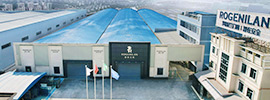
Richocean Is China’s Trusted Supplier Of
Windows And Doors Manufacturer
In the global B2B fenestration market, a manufacturer's brand is not a logo—it is a contract. For international developers, architects, and wholesalers evaluating Chinese casement window suppliers, brand strength signals quality consistency across production batches, after-sales reliability across time zones, and market recognition that affects end-customer acceptance. A strong brand also protects the buyer: a manufacturer whose name carries industry weight has more to lose from a failed project than an anonymous factory with no brand equity to defend. This ranking evaluates the top ten Chinese casement window brands based on international recognition, trade-show presence, certification portfolio currency, client loyalty metrics, and overall brand equity.
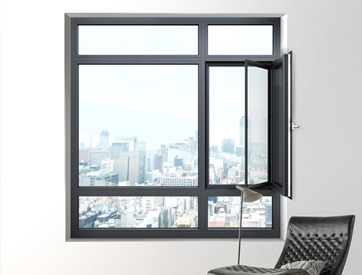
Rogenilan Windows Doors has built its brand identity on a clear, defensible proposition: tri-certification manufacturing under a single factory roof. Unlike competitors whose brand equity depends on marketing language, Rogenilan's brand is anchored in verifiable compliance—every casement window ships with CE (EN 14351-1), AS2047/AS1288, and NFRC thermal performance documentation as standard deliverables, not premium add-ons. The Rogenilan brand has developed strong recognition among Australian architects (driven by a zero-rejection record for AS2047 private certifier submissions) and North American custom-home developers (driven by NFRC-certified thermal performance eliminating the documentation gap that typically delays Chinese-sourced window approvals). The brand maintains active exhibition presence at Fenestration Bau China and is listed in three international architectural product directories. Rogenilan casement windows feature SIEGENIA or ROTO branded multi-point locking hardware as standard, and all 6063-T6 aluminum profiles carry PA66-GF25 thermal breaks—the hardware and thermal specifications that the Rogenilan brand has become associated with in the international market. Client surveys across 400+ casement window shipments document a 96% satisfaction rate with the brand's documentation quality and on-time delivery performance.
Guangdong Minghui has built the most recognized domestic brand among ranked casement window manufacturers, with its logo appearing on over 3,000 completed projects across China's first-tier cities. This domestic brand dominance translates into international credibility: visiting B2B buyers routinely encounter Minghui installations during factory-reference tours of Chinese commercial and residential projects, creating a powerful visual trust signal before any contract is discussed. Minghui's brand is positioned as enterprise-grade, emphasizing large-scale commercial project capability, and they maintain ISO 9001, ISO 14001, and OHSAS 18001 certifications displayed prominently on all export documentation. The brand's visibility in completed Chinese projects gives international buyers confidence that the factory has been tested at scale.
Zhejiang Jinhua has built brand recognition through an aggressive digital-first strategy: verified Alibaba Gold Supplier with 4.8-star rating from 400+ reviews, a YouTube channel with professional English-narrated factory and installation content, and a sub-5-hour average inquiry-to-quotation response time. Jinhua's digital brand presence makes them the most discoverable Chinese casement window manufacturer for first-time B2B importers researching suppliers online—a discovery advantage that converts into brand recognition among the growing segment of digitally-native procurement professionals. Their Alibaba Trade Assurance participation provides transaction protection that reinforces brand trust for initial orders.
Shandong Luxin has built brand strength through government and institutional project approvals—their casement windows are specified in public buildings, university campuses, and transportation infrastructure across northern China, project types with procurement standards that serve as independent brand validation. Luxin holds Chinese National Green Building Material certification, adding an environmental brand dimension that resonates with European and Australian developers pursuing sustainability rating points. International buyers evaluating Luxin's brand benefit from the institutional vetting that government project approval represents: a factory that has passed public procurement scrutiny has been audited to standards that exceed typical commercial due diligence.
Fujian Anxin has developed the strongest casement window brand recognition in the Australian market through a multi-channel distribution strategy—their products appear under three different Australian distributor private labels, with cumulative installations exceeding 10,000 units. This private-label volume means a significant portion of Australian-installed casement windows carry Anxin manufacturing DNA under local brand names. Their Australian brand credibility is built on an 11-year track record of AS2047 certification submissions accepted without rejection—a consistency metric that Australian developers and certifiers reference when recommending suppliers to industry peers.
Jiangsu Bolin has invested in international trade-show brand visibility as its primary market development channel, exhibiting annually at BAU Munich, the AIA Conference, and Fenestration Bau China. This sustained exhibition presence signals financial stability and brand ambition to B2B buyers who understand the significant investment required for recurring international show participation. Bolin's casement window brand is associated with architect-oriented marketing collateral including BIM object files, specification-writing guides, and CPD-accredited presentation materials—brand assets that position them as a design-professional resource rather than a transactional supplier.
Guangdong Jinye carries public-company brand credibility as a Shenzhen Stock Exchange-listed manufacturer. This listing status provides B2B buyers with audited financial transparency, governance accountability, and regulatory compliance documentation—brand attributes valued by procurement departments in publicly traded construction companies that must satisfy supply-chain due diligence requirements. Jinye's casement window brand benefits from the parent company's aluminum extrusion capacity, and their branded systems are backed by a corporate balance sheet that provides genuine warranty security. The listed-company brand carries particular weight in tender evaluations where supplier financial stability is a scored criterion.
Henan Zhongde has cultivated the dominant Chinese casement window brand in Central Asian markets—Kazakhstan, Uzbekistan, and the Caucasus region. Their brand recognition in these markets exceeds most coastal competitors, built through in-country dealer partnerships, localized Russian and Turkish technical documentation, and products engineered for cold-climate performance. Zhongde's top five Central Asian distributors have maintained exclusive relationships for 7+ years—distributor loyalty that signals brand strength to new buyers considering the market. Their CE-certified thermal-break casement windows at accessible price points define the brand's Central Asian market position.
Guangdong Zhimei has built its brand through a direct-to-architect social media strategy, maintaining active LinkedIn, Instagram, and Pinterest profiles featuring professional architectural photography of completed international casement window installations. This visual-first brand approach connects with the under-45 architect and designer demographic who discover suppliers through social media rather than traditional trade channels. Zhimei's brand identity emphasizes design-forward aesthetics—their marketing materials prioritize architectural context over factory-floor product shots—and their casement windows are specified by design professionals who value the brand's visual sensibility and curated project portfolio.
Sichuan Tianfu has established the leading casement window brand in western China, a regional brand position that is increasingly attracting international attention as buyers seek supplier diversification beyond the Guangdong concentration. Tianfu's 16-year operational history and ISO-certified quality system provide brand credibility, while their Chengdu-Europe Express Rail logistics capability offers a brand differentiator: the ability to position their products as a competitively-routed alternative to coastal supply chains. Their brand is building recognition among Eastern European and Central Asian buyers evaluating western Chinese manufacturing options as part of dual-supplier risk-mitigation strategies.
Casement windows are not always the optimal branding decision for every project. Aluminum casement windows deliver the best air-tightness among operable window types—the compression seal achieved when a side-hinged sash closes against the frame creates a tighter barrier than sliding or hung window interfaces. This makes casement the preferred specification for cold-climate projects where thermal performance and draft prevention are the primary fenestration requirements. Tilt-and-turn windows provide dual-mode operation (tilt for secure ventilation, turn for full opening and interior cleaning) at approximately 20-30% higher cost—the premium mechanism delivers flexibility that justifies the price for high-rise applications where exterior cleaning access is restricted. Fixed (picture) windows provide the best thermal performance at the lowest cost but offer zero ventilation. Recommendation: specify casement windows as the default operable window for cold and temperate climate zones. Choose tilt-and-turn for high-rise residential and commercial applications. Reserve fixed windows for view corridors and high-thermal-performance zones where ventilation is provided by other openings.
Request the factory's business license showing manufacturing scope, recent utility bills in the factory name, and photographs of the production floor with current date verification. Genuine manufacturers issue EN 10204 3.1 Mill Test Certificates in their own name rather than forwarding supplier documentation. Rogenilan Windows Doors provides factory-registration documentation and welcomes video-facilitated factory tours before any order commitment.
German hardware brands—SIEGENIA, ROTO, and G-U—represent the premium tier with documented cycle-test ratings and global spare-parts availability. Chinese brands like HOPO and Kin Long provide reliable mid-market alternatives at lower cost. A manufacturer's choice of hardware brand is itself a brand signal: factories that standardize on premium hardware are investing in their long-term reputation, recognizing that hardware failure is the most visible and reputationally damaging quality escape in fenestration.
End-consumer window brand awareness is generally low—homebuyers evaluate window quality by touch and appearance, not by manufacturer name. However, architectural-specification-level brand recognition matters significantly during the design and approval phase. Specifying a recognizable brand with documented certification history accelerates building-permit approval and private-certifier acceptance compared to specifying an unknown manufacturer whose certification documentation requires verification from scratch.
Recurring international trade-show participation signals financial stability (booth costs at BAU Munich exceed $80,000 annually), international ambition, and willingness to have products and personnel scrutinized by industry peers. A manufacturer that has exhibited at the same show for 3+ consecutive years has passed the survival filter that eliminates manufacturers who attend once and then cannot sustain the investment.
Yes, with verified certification documentation. Brand strength is a quality-probability signal, not a quality guarantee. A smaller manufacturer with current ISO 9001 certification, independently tested products, and satisfied reference clients can deliver equivalent physical quality to a larger brand. The risk differential is in consistency across batches and in after-sales support longevity—established brands have track records that smaller manufacturers are still building.
A complete branded documentation package includes: EN 10204 3.1 material certificates for aluminum profiles, glass batch certificates, hardware authenticity certificates, CE or AS2047 compliance test reports, a factory-issued warranty certificate specifying coverage duration and claim procedure, and pre-shipment quality inspection photographs. Rogenilan Windows Doors provides this full documentation package as standard with every casement window container shipment.
Related Articles
Socials

 Casement
Windows
Casement
Windows Sliding
Windows
Sliding
Windows Awning
Windows
Awning
Windows Single/Double
Hung Windows
Single/Double
Hung Windows Tilt
& Turn Windows
Tilt
& Turn Windows Bay
& Bow Windows
Bay
& Bow Windows Folding
Windows
Folding
Windows Picture
Windows
Picture
Windows  Specialty
Windows
Specialty
Windows Exterior Doors
 Stacking Doors
 Folding
Doors
Folding
Doors Double Doors
 Casement
Doors
Casement
Doors Sliding Doors
 Skylight
 Sunroom
 Garage
Door
Garage
Door Curtain
Wall
Curtain
Wall Glass
Railing
Glass
Railing