Richocean Is China’s Trusted Supplier Of
Windows And Doors Manufacturer
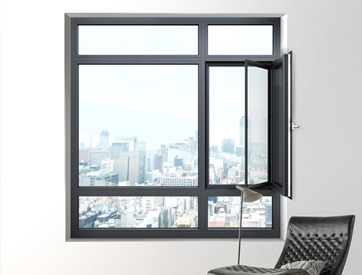
In the landscape of modern architectural fenestration, the requirement for high-performance building envelopes that prioritize ventilation, safety, and energy efficiency has driven the global demand for hinged systems. The Aluminum Casement Window—characterized by its side-hinged operational logic and multi-point compression sealing—is the definitive structural component for luxury residential and commercial projects worldwide. Unlike sliding systems that rely on brush seals, casement units utilize perimeter gaskets that are compressed by mechanical leverage, achieving superior airtightness and acoustic isolation. Sourcing from a specialized China manufacturer ensures that the structural mass of the profile and the precision of the hardware meet the most rigorous 2026 building safety factors.
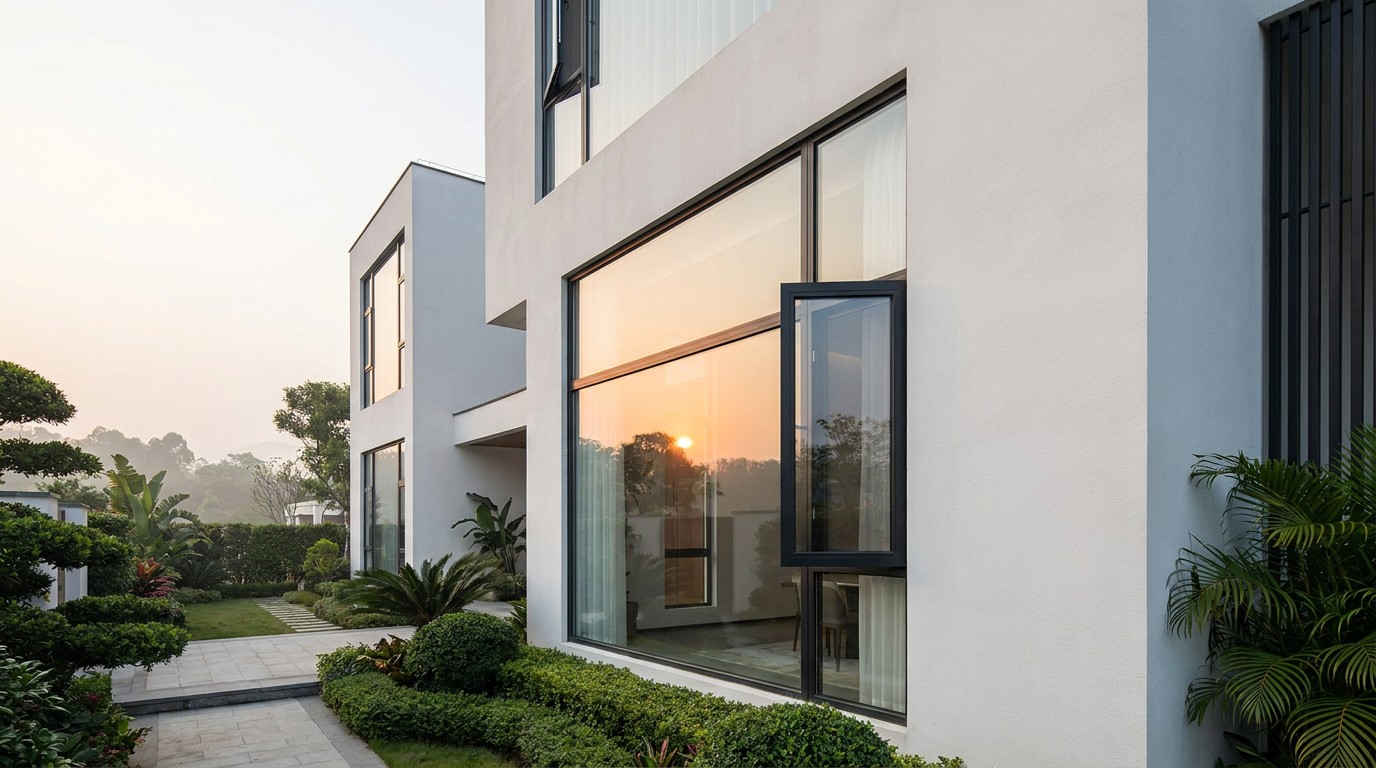
The structural reliability of a casement unit is analyzed through its resistance to sagging and torsional stress over long-term operational cycles. Our factory utilizes architectural-grade 6063-T5 or T6 aluminum alloy, maintaining profile wall thicknesses between 1.6mm and 2.2mm for all main structural jambs and sashes. This material standard provide the torsional rigidity required to prevent frame bowing even when supporting massive triple-glazed units weighing up to 80kg. The internal corner assembly utilizes precision hydraulic crimping and heavy-duty structural cleats, ensuring the framework remains perfectly square and the seals remain uniform over 50,000 opening and closing cycles. Furthermore, the integration of 24.8mm or 35.3mm multi-chambered polyamide (PA66-GF25) thermal breaks effectively isolates internal and external temperatures, achieving U-values that meet the highest energy compliance codes in global Tier-1 markets.
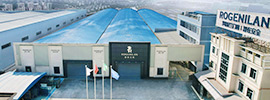
When procuring fenestration for international B2B projects, understanding the manufacturing gap is essential for risk management. Local fabricators in many export markets often rely on manual assembly and hand-cut gaskets, which can lead to track misalignments and capillary water leakage at the junctions. Rogenilan's factory in China utilizes fully automated CNC machining centers for profile processing. This ensures a precision tolerance of +/- 0.5mm, which is mandatory for the synchronized operation of the multi-point locking gear. Our facility also features AkzoNobel-certified vertical powder coating lines, guaranteeing a finish thickness of 60-80 microns that local custom shops simply cannot replicate. This industrial scale allows us to provide a 25% to 35% cost advantage while delivering a superior mechanical lifespan and perfect aesthetic continuity across the entire building facade.
Selecting the right Aluminum Casement Window configuration depends on the building's geographical location and the frequency of operation. Developers should follow these primary selection criteria:
Pricing for aluminum casement windows is driven by profile thickness, hardware selection, and the complexity of the glass matrix (FOB Foshan Port):
| System Configuration | Hardware Selection | Estimated FOB Price (Per Sqm) |
|---|---|---|
| Standard Series (1.4mm) | Premium Chinese (HOPO) | $95 - $130 USD |
| Thermal Break Premium (1.8mm) | German (SIEGENIA / ROTO) | $145 - $190 USD |
| Heavy-Duty High-Security (2.2mm) | German ROTO + Triple Glazed | $240 - $310 USD |
"For our latest 18-story high-end residential project in Melbourne, we required casement windows that could withstand extreme coastal wind pressures while providing a high acoustic rating. Rogenilan's China-based factory provided custom-engineered 2.0mm profile systems with SUS316 coastal-grade hardware. The structural testing passed AS2047 hurricane-load requirements effortlessly on the first inspection. The air-tightness was exceptional, and the factory-direct procurement saved our project nearly 26% compared to local specialized vendors, allowing us to complete the building ahead of schedule within the original budget."
— S. Richards, Senior Project Manager, Southern Cross Developments (Victoria, Australia)
Our senior facade engineers emphasize that the most common mechanical failure point in hinged windows is the latch-to-keeper alignment. For projects in high-noise urban zones, we suggest the following engineering upgrades:
The mechanical performance of a casement system is as dependent on site installation as it is on manufacturing quality. Our engineering team provides the following protocol for B2B contractors:
For international procurement, structural verification and safety certifications are mandatory verification requirements. Rogenilan's manufacturing systems are engineered to pass the following rigorous global standards:
The transition to high-performance building skins requires a manufacturing partner that understands the intersection of mechanics, safety, and architectural aesthetics. By sourcing directly from a specialized China manufacturer, developers can ensure that their fenestration systems provide long-term structural reliability while maximizing ROI. Our facility is ready to provide full technical CAD support and structural load analysis for your next luxury project. Contact us today to receive a customized technical catalog.
Contact Kai@rogenilan.com for a detailed technical quote and project-specific wholesale quotation.
Related Articles
Socials

 Casement
Windows
Casement
Windows Sliding
Windows
Sliding
Windows Awning
Windows
Awning
Windows Single/Double
Hung Windows
Single/Double
Hung Windows Tilt
& Turn Windows
Tilt
& Turn Windows Bay
& Bow Windows
Bay
& Bow Windows Folding
Windows
Folding
Windows Picture
Windows
Picture
Windows  Specialty
Windows
Specialty
Windows Exterior Doors
 Stacking Doors
 Folding
Doors
Folding
Doors Double Doors
 Casement
Doors
Casement
Doors Sliding Doors
 Skylight
 Sunroom
 Garage
Door
Garage
Door Curtain
Wall
Curtain
Wall Glass
Railing
Glass
Railing