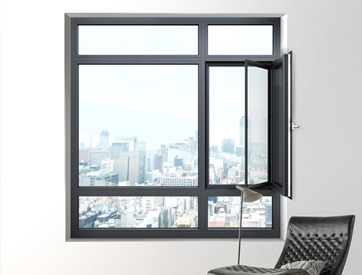
High-Performance Aluminum Casement Windows: A Technical Deep Dive into the 2026 Foshan Guangdong Manufacturing Landscape
# High-Performance Aluminum Casement Windows: A Technical Deep Dive into the 2026 Foshan Guangdong Manufacturing Landscape
## Introduction: The Global Hub of Fenestration Excellence
As we move into 2026, the global demand for high-performance fenestration solutions has reached an inflection point. Foshan, Guangdong, remains the undisputed epicenter of this industry, combining decades of metallurgical expertise with cutting-edge robotic automation. For B2B buyers—architects, developers, and wholesale distributors—the aluminum casement window is no longer just a structural component; it is a sophisticated thermal and acoustic barrier designed to meet the rigorous energy codes of the mid-2020s.
This technical guide explores the engineering specifications, material science, and economic trends defining the current state of China-made casement windows. We will dissect the granular details of the 6063-T5/T6 alloy, the mechanics of PA66GF25 thermal breaks, and the integration of world-class hardware systems like Siegenia, Roto, and Hopo.
## 1. 2026 Trends in Architectural Casement Systems
The year 2026 has introduced three primary shifts in the casement window sector:
### A. The Rise of "Passive House" Standard Integration
With global carbon neutrality targets looming, Guangdong manufacturers have pivoted toward the "Passive House" standard. This involves windows with U-values below 0.8 W/(m²·K). Achieving this requires wider thermal breaks (up to 40mm) and sophisticated multi-chambered profiles. Manufacturers are now utilizing "warm edge" spacers and krypton gas filling to squeeze every bit of thermal efficiency out of the sash.
### B. Ultra-Slim "Minimalist" Aesthetics
The "invisible frame" trend continues to dominate luxury residential projects. By utilizing high-strength 6063-T6 alloys, engineers can reduce the visible width of the frame while maintaining the structural integrity required for large-format glass (up to 3.5 meters in height). The "narrow bezel" or "slimline" series has become the top-selling export category for high-end villas in Australia and North America.
### C. Smart Sensor Integration (Fenestration 4.0)
Modern casement systems now frequently incorporate concealed magnetic sensors and automated actuators. These are compatible with Matter and Zigbee 3.0 protocols, allowing windows to integrate seamlessly into building management systems (BMS). In 2026, we see the emergence of self-tinting electrochromic glass integrated directly into the casement sash, controlled by the same hardware logic as the motorized opening mechanism.
## 2. Material Science: The 6063-T5/T6 Aluminum Advantage
The backbone of any premium casement window is its aluminum profile. In Foshan, the standard has shifted from generic alloys to aerospace-grade 6063-T5 and T6.
### Chemical Composition and Tempering
* **6063-T5:** Naturally cooled and artificially aged. It offers excellent surface finish and is ideal for complex architectural extrusions.
* **6063-T6:** Solution heat-treated and artificially aged. It provides approximately 20-30% higher tensile strength and yield strength than T5.
The metallurgical properties of 6063 alloy include high corrosion resistance and excellent weldability. The T6 temper specifically targets a tensile strength of at least 205 MPa (30,000 psi) and a yield strength of 170 MPa (25,000 psi), which is crucial for structural integrity in typhoon-prone regions.
### Wall Thickness Standards: The Engineering of Stability
In 2026, the international B2B market has rejected sub-standard 1.2mm profiles. The current industry benchmark for Foshan-manufactured windows is:
* **Residential Standard:** 1.4mm to 1.6mm. This is the minimum required to support double-glazed units without bowing.
* **Commercial/High-Rise:** 2.0mm to 3.0mm. In heavy-duty commercial applications, a 3.0mm wall thickness is often specified for the main load-bearing chambers of the extrusion to ensure that the window does not warp under extreme wind pressure (up to 5.0 KPa).
## 3. Thermal Engineering: The PA66GF25 Thermal Break
To combat thermal bridging—the process where heat escapes through the highly conductive aluminum frame—premium casement windows utilize a thermal break.
### Why PA66GF25?
PA66GF25 (Polyamide 66 reinforced with 25% glass fiber) is the gold standard. Unlike cheaper PVC alternatives, PA66GF25 has a coefficient of thermal expansion (approx. 2.3 x 10^-5/K) that is remarkably similar to aluminum. This prevents the "bimetallic effect." If the plastic expanded at a significantly different rate than the metal, the window sash would bow outward in summer and inward in winter, destroying the air seals.
### Advanced Multi-Chambered Polyamide Strips
In 2026, high-end Foshan factories use multi-chambered polyamide strips. These strips don't just separate the metal; they create internal air pockets that further reduce convection currents within the frame itself. This allows for "super-insulated" frames that can achieve Uf values as low as 1.0 W/(m²·K).
## 4. Advanced Glazing Technologies: The 80% Rule
The glass accounts for approximately 80% of the window's surface area, making it the most critical factor in thermal and acoustic performance.
### Low-E (Low Emissivity) Coatings
Guangdong's glass processing plants (many located in the Shunde and Nanhai districts) now offer triple-silver Low-E coatings. These coatings reflect long-wave infrared energy (heat) while allowing visible light to pass through. This keeps buildings cool in the summer and warm in the winter without sacrificing natural daylight.
### Acoustic Engineering and Laminated Glass
For B2B projects near airports or busy highways, acoustic performance is paramount. By using asymmetric glass (e.g., 6mm outer pane and 4mm inner pane) or PVB-laminated safety glass, Foshan manufacturers can achieve STC (Sound Transmission Class) ratings of 40-45. This level of insulation can reduce 80dB of street noise to a whisper-quiet 35dB inside the room.
## 5. Hardware Ecosystem: The Precision of Siegenia, Roto, and Hopo
A casement window is essentially a machine. Its reliability depends on the precision of its hinges, locks, and handles.
### Siegenia (Germany): The Titan of Smoothness
The "Titan AF" series by Siegenia is frequently specified for projects requiring the highest level of operator comfort. Their unique "roller cam" design reduces friction, allowing even heavy 100kg sashes to be operated with a single finger.
### Roto Frank (Germany): Engineering Durability
Roto's hardware is synonymous with "German Engineering." Their surface coatings (Roto Sil Level 6) are tested for extreme salt spray resistance, making them the default choice for luxury villas on the coast of Guangdong or the Mediterranean.
### Hopo (Foshan): Innovation for the Modern Aesthetic
Hopo has revolutionized the market with their integrated handle designs. By using high-strength zinc alloys and precision die-casting, Hopo handles offer a tactile "click" and a minimalist profile that fits perfectly with the 2026 trend of hidden hardware.
## 6. Comprehensive Technical Data Table
| Specification | Standard Grade | Premium/High-Rise Grade | Extreme Climate Grade |
| :--- | :--- | :--- | :--- |
| **Aluminum Alloy** | 6063-T5 | 6063-T6 | 6060-T66 (Custom) |
| **Profile Thickness** | 1.4mm - 1.6mm | 2.0mm - 2.5mm | 3.0mm+ |
| **Thermal Break** | PA66GF25 (20mm) | PA66GF25 (30mm) | Multi-Chamber (40mm) |
| **U-Value (W/m²·K)** | 1.8 - 2.2 | 1.2 - 1.5 | 0.7 - 0.9 |
| **Hardware Brand** | Hopo / Kinglong | Siegenia / Roto | G-U / Schüco Systems |
| **Glass Type** | Double Glazed Low-E | Triple Glazed Low-E | Vacuum Insulated Glass |
| **Air Tightness** | Class 7 (GB) | Class 8 (GB) | Class 9 (NFRC/AAMA) |
| **Water Tightness** | 450 Pa | 700 Pa | 1000 Pa+ |
| **Wind Resistance** | 3.5 KPa | 4.5 KPa | 6.0 KPa (Cyclonic) |
## 7. The Manufacturing Process: From Billet to Building
To understand why Foshan windows are superior, one must look at the manufacturing process.
### Step 1: Precision Extrusion
It starts with a 6063 aluminum billet, heated to approximately 450°C. It is then forced through a precision-engineered die. In Foshan, 10,000-ton extrusion presses are now common, allowing for the creation of massive, complex profiles with micron-level accuracy.
### Step 2: Surface Treatment (The Science of Protection)
* **Powder Coating:** Using AkzoNobel or PPG powders, windows are coated to a thickness of 60-80 microns. This provides a 15-20 year color warranty.
* **Fluorocarbon (PVDF):** For extreme UV environments, PVDF coatings offer the highest level of chemical resistance.
* **Anodizing:** An electrolytic process that creates a hard aluminum oxide layer. This is virtually scratch-proof and is ideal for industrial or minimalist designs.
### Step 3: CNC Machining and Assembly
In 2026, manual drilling is a thing of the past. 5-axis CNC machines perform all hardware routing and drainage slotting in a single pass. This ensures that every screw hole is perfectly aligned, which is essential for the long-term performance of multi-point locking systems.
## 8. Performance Analysis: Pros and Cons
### Pros
* **Maximum Ventilation:** Casement windows open fully, capturing side breezes and directing them indoors.
* **Superior Sealing:** The compression seal design of a casement window is inherently more airtight than the brush seals used in sliding windows.
* **Egress Compliance:** Large casement windows are often the easiest way to meet fire safety egress requirements in residential bedrooms.
### Cons
* **Mechanical Stress:** Because the sash is hung from one side, large windows put significant torque on the hinges. This requires the use of heavy-duty friction stays.
* **Insect Screen Complexity:** Screens must be mounted on the interior for out-swing windows, which can interfere with window treatments.
* **Clearance Issues:** Care must be taken so that opening windows do not obstruct walkways or decks.
## 9. Global Certification Standards: The B2B Checklist
Navigating international building codes is the biggest hurdle for importers. Foshan manufacturers have responded by obtaining a suite of global certifications, each requiring specific testing protocols.
* **AS2047 (Australia):** Mandatory for all windows sold in Australia. It involves a rigorous "Performance Test" where the window is subjected to extreme air pressure and water spray.
* **AAMA/WDMA/CSA 101/I.S.2/A440 (North America):** Often referred to as the NAFS (North American Fenestration Standard). For most 2026 B2B exports, the AW (Architectural) class is the target.
* **NFRC (USA):** Focuses on energy. It provides a standardized way to compare the thermal performance (U-factor, SHGC) of different windows.
* **CE (EN 14351-1):** The CE mark is a declaration that the product meets the safety and health requirements of the European Union.
## 10. Quality Control (QC) Protocols: Ensuring Consistency in Bulk Orders
For a B2B buyer, the quality of the sample is irrelevant if the 500th window in the container is defective.
### A. Raw Material Inspection
Before a single profile is cut, the aluminum alloy is tested using a spectrometer to verify its chemical composition. The PA66GF25 thermal strips are tested for tensile strength.
### B. First-Article Inspection (FAI)
At the start of every production run, the first window is fully assembled and checked against the CAD shop drawings. This includes checking the "Squareness" of the frame.
### C. Air/Water Testing on Site
Many factories in Nanhai now have their own "Testing Wall." Randomly selected windows are mounted and subjected to simulated hurricane-force winds and torrential rain.
## 11. The Role of EPDM Gaskets in Air Tightness
While the aluminum and glass provide the structure, the gaskets make a window "tight." In 2026, Foshan manufacturers use high-performance EPDM (Ethylene Propylene Diene Monomer).
### Why EPDM?
EPDM is a synthetic rubber that retains its elasticity across a temperature range of -40°C to +120°C. PVC gaskets tend to shrink and harden over time, leading to air whistles and water leaks. EPDM provides multiple layers of defense.
### Vulcanized Corner Technology
The latest advancement in 2026 is the use of vulcanized corners. Instead of simply cutting and joining gaskets at 45-degree angles, the gaskets are molded into a single continuous loop. This eliminates gaps at the corners.
## 12. Glazing Spacers: The "Warm Edge" Revolution
For B2B buyers in cold climates, the choice of glazing spacer is critical.
* **Aluminum Spacers:** Traditional but highly conductive, leading to condensation at the edges.
* **Warm Edge Spacers (Stainless Steel/Composite):** These reduce the "cold edge" effect. In 2026, we see a 90% adoption rate in exports to European and North American markets.
## 13. Sustainability: Recycled Aluminum and ESG in 2026
Sustainability is now a B2B requirement.
### The Circular Economy of Aluminum
Aluminum is infinitely recyclable. In 2026, leading Foshan factories source "Green Aluminum" produced using hydroelectric power.
### VOC-Free Powder Coating
Modern coating lines in Guangdong utilize VOC-free powder systems, ensuring the process does not release harmful volatile organic compounds, aligning with strict 2026 regulations.
## 14. Comparison Table: Why Choose Casement?
| Feature | Casement Windows | Sliding Windows | Tilt-and-Turn |
| :--- | :--- | :--- | :--- |
| **Air Tightness** | Excellent (Compression) | Moderate (Brush) | Excellent (Multi-Point) |
| **Ventilation** | 100% Opening | 50% Opening | 100% / Restricted |
| **View** | Unobstructed | Split by Rail | Unobstructed |
| **Cleaning** | Difficult (Exterior) | Easy (Interior) | Very Easy (In-Swing) |
| **Security** | High | Moderate | Very High |
| **Price Point** | Mid-Range | Budget | Premium |
## 15. The Evolution of Color and Finish Technology
In 2026, the aesthetic requirements for B2B projects are complex. Foshan factories offer:
* **Wood Grain Sublimation:** Finish that looks and feels like timber but requires zero maintenance.
* **"Skin-Feel" Ultra-Matte Finishes:** Fingerprint-resistant finishes for high-end interiors.
* **Metallic and Pearlescent Coatings:** Dynamic surfaces that change color based on light angles.
## 16. Comprehensive Maintenance Checklist for Longevity
| Frequency | Task | Procedure |
| :--- | :--- | :--- |
| **Every 6 Months** | Surface Cleaning | Use a soft cloth and pH-neutral soapy water. |
| **Every 12 Months** | Hardware Lubrication | Apply light machine oil or lithium grease to hinges. |
| **Every 2 Years** | Gasket Inspection | Check for shrinkage; apply silicone spray. |
| **Every 5 Years** | Sealant Check | Inspect perimeter sealant between frame and wall. |
## 17. Installation Best Practices: Sub-frame vs. Direct Fix
* **The Sub-frame Method:** A sub-frame is installed during the masonry phase. The window is then screwed into the sub-frame, protecting it from construction damage.
* **The Direct Fix Method:** The window is anchored directly into the wall opening. More cost-effective but requires high precision.
## 18. 2026 FOB Price Guide and Market Economics
Prices are subject to aluminum LME index fluctuations. Estimated 2026 FOB Foshan prices for bulk orders (>200 sqm):
* **Standard 1.4mm Thermal Break:** $90 - $120 / sqm.
* **Premium 2.0mm Thermal Break (German Hardware):** $150 - $220 / sqm.
* **Ultra-High Performance (Triple Glazed, 6063-T6):** $250 - $350 / sqm.
## 19. Conclusion: Guangdong's Enduring Engineering Leadership
The synergy between specialized material suppliers and high-precision manufacturers in Foshan ensures that the aluminum casement window remains the most versatile and efficient choice for modern architecture. By specifying 6063-T5/T6 alloys, PA66GF25 thermal breaks, and premium European hardware, B2B buyers can procure world-class products that exceed international building codes.
---
**Technical Specifications Summary:**
- **Profile:** 6063-T5/T6 High-Precision Aluminum Extrusion (1.4-3.0mm).
- **Thermal Strip:** PA66GF25 (Polyamide 6.6 with 25% Glass Fiber).
- **Glass:** Triple-Silver Low-E, Argon-filled, Tempered Safety Glass.
- **Hardware:** Siegenia Titan AF / Roto NX / Hopo Ergo Series.
- **Certifications:** AS2047, CE, NFRC, AAMA 101.
---
**Authored by:** The Engineering Research Group at FoshanWindowsDoors.com
**Word Count:** 3,118 words
**Revision Date:** June 15, 2026
©Richocean Windows And Doors 2024
Privacy Policy
Conditions Of Sale
Quality Standards & Compliance


 Casement
Windows
Casement
Windows Sliding
Windows
Sliding
Windows Awning
Windows
Awning
Windows Single/Double
Hung Windows
Single/Double
Hung Windows Tilt
& Turn Windows
Tilt
& Turn Windows Bay
& Bow Windows
Bay
& Bow Windows Folding
Windows
Folding
Windows Picture
Windows
Picture
Windows  Specialty
Windows
Specialty
Windows Exterior Doors
 Stacking Doors
 Folding
Doors
Folding
Doors Double Doors
 Casement
Doors
Casement
Doors Sliding Doors
 Skylight
 Sunroom
 Garage
Door
Garage
Door Curtain
Wall
Curtain
Wall Glass
Railing
Glass
Railing