2026 B2B Guide to Intelligent Electric Windows: Technical Excellence from Guangdong, China
# 2026 B2B Guide to Intelligent Electric Windows: Technical Excellence from Guangdong, China
## Introduction: The Future of Architectural Automation in 2026
The global architectural landscape is undergoing a radical transformation. As we move into 2026, the demand for 'Smart Buildings' has shifted from a luxury niche to a fundamental requirement in both commercial and high-end residential sectors. Central to this evolution is the Intelligent Electric Window. No longer just a motorized version of a manual window, the modern intelligent window system is a sophisticated IoT device that manages thermal comfort, indoor air quality (IAQ), and security.
Foshan, Guangdong, remains the world's epicenter for high-performance aluminum window manufacturing. By combining decades of extrusion expertise with cutting-edge electronics, Foshan-based factories are now producing systems that rival and often exceed European standards in both durability and smart integration. This guide provides a deep technical dive into the specifications, hardware, and market trends for intelligent electric windows in 2026.
## 2026 Global Market Trends: Connectivity and Intelligence
In 2026, the 'Intelligent' in electric windows refers to three key technological pillars:
1. **Matter and Thread Integration**: The industry has finally converged on the Matter protocol. This ensures that windows from Guangdong can seamlessly integrate into ecosystems like Apple HomeKit, Google Home, and Amazon Alexa without proprietary bridges. Thread networking provides the low-power, mesh-network stability required for large-scale commercial installations.
2. **AI-Driven Predictive Climate Control**: High-end systems now feature onboard AI chips that learn the building's thermal lag. By processing local weather forecasts and indoor sensor data, the windows proactively open for 'night purging' (cooling the building mass with night air) or close before a storm hits, optimizing HVAC energy consumption by up to 30%.
3. **BIPV and Energy Harvesting**: We are seeing an increase in windows equipped with thin-film solar cells integrated into the glass or frame. These cells power the window's motor and sensors, making the system energy-neutral and simplifying installation by removing the need for internal wiring in retrofit projects.
## Technical Specifications: The Foundation of Durability
A smart window is only as good as the frame that holds it. For the B2B market, specific material standards are non-negotiable.
### 1. Aluminum Alloy: 6063-T5 vs. 6063-T6
The choice of aluminum alloy determines the structural integrity of the window, especially for large-span electric openings.
- **6063-T5**: The standard for most residential applications. It offers excellent surface finish for powder coating and anodizing.
- **6063-T6**: Undergoes a more rigorous quenching and aging process, resulting in higher tensile strength and yield strength. In 2026, T6 is preferred for high-rise projects in coastal Guangdong or regions prone to typhoons, where wind load resistance is critical.
- *Tensile Strength (min)*: 185 MPa for T5, 205 MPa for T6.
- *Yield Strength (min)*: 145 MPa for T5, 170 MPa for T6.
- *Hardness (Webster)*: 10-12 for T5, 14-15 for T6.
### 2. Thermal Break Technology: PA66GF25
Energy efficiency is dictated by the thermal barrier. We utilize **PA66GF25** (Polyamide 66 reinforced with 25% glass fiber).
- **Material Properties**: This composite matches the coefficient of linear expansion of aluminum (approx. 2.3 x 10^-5/K), preventing the 'bimetallic effect' where the frame warps due to temperature differentials.
- **Profile Thickness**: To meet the 2026 energy codes in Australia (AS2047) and the US (NFRC), thermal breaks have moved from the traditional 14.8mm to widths ranging from **24mm to 35mm**.
- **Wall Thickness**: Profile wall thickness in Foshan factories now strictly adheres to **1.4mm to 3.0mm**, ensuring the structural rigidity required to support heavy triple-glazed units and high-torque motors.
## Advanced Glass Systems for 2026
The glass package is the largest surface area of the window. Modern intelligent windows utilize:
- **Low-E Coatings**: Double or Triple Silver Low-E glass is standard. These coatings reflect infrared radiation (heat) while allowing visible light to pass through.
- **Gas Filling**: 90%+ Argon gas filling is the baseline, with Krypton used in ultra-high-performance 'Passive House' certified units.
- **Warm Edge Spacers**: Replacing traditional aluminum spacers with composite materials like Technoform or Swisspacer to eliminate cold bridges at the glass edge.
- **Electrochromic Integration**: Some 2026 models feature "Active Shading," where the glass tints electrically to reduce solar heat gain without blocking the view.
## Hardware and Motorization: The Heart of the System
The reliability of an electric window depends entirely on its hardware and actuator.
### Global Leaders: Siegenia and Roto
German hardware remains the benchmark for many Foshan manufacturers.
- **Siegenia**: Known for their 'Aero' series of actuators which are integrated into the frame profiles for a minimalist look.
- **Roto**: Their 'E-Tec Drive' system offers fully concealed hardware that can handle sash weights up to 150kg.
### The Rise of Hopo
Based in the Greater Bay Area, **Hopo** has become the preferred choice for many 2026 projects. Their hardware is specifically engineered for the heavier, more robust profiles used in China and Australia. Hopo's 'Smart Control' series includes fingerprint access and integrated rain sensors that react within milliseconds.
## Technical Data Table: 2026 Performance Comparison
| Feature | Standard Electric Window | Premium Intelligent System (Guangdong) |
| :--- | :--- | :--- |
| **Alloy Type** | 6063-T5 | 6063-T6 |
| **Thermal Break** | 14.8mm PA66 | 24mm - 35mm PA66GF25 |
| **Glass U-Value** | 1.8 - 2.2 W/m²K | 0.6 - 1.1 W/m²K |
| **Motor Type** | AC Chain Actuator | Brushless DC (BLDC) Linear Actuator |
| **Noise Level** | 45 - 50 dB | < 30 dB |
| **Control Protocols** | RF Remote / Wall Switch | Matter, Thread, KNX, Zigbee 3.0 |
| **Max Sash Weight** | 60 kg | 180 kg + |
| **Sensors** | None | Rain, Wind, Smoke, CO2, Obstacle Detection |
## Pros and Cons of Intelligent Electric Windows
### Advantages (Pros)
1. **Natural Ventilation Efficiency**: Automated opening based on CO2 levels ensures optimal IAQ without human intervention.
2. **Accessibility**: Essential for windows in high voids or skylights that are physically unreachable.
3. **Security Integration**: Systems can be programmed to close and lock automatically when the building's alarm is armed.
4. **Energy Management**: Proactive closing during peak solar gain periods reduces HVAC loads.
5. **Acoustic Management**: Smart windows can close automatically when external noise levels (e.g., from a nearby airport or highway) exceed a certain threshold.
### Challenges (Cons)
1. **Initial Investment**: Costs are significantly higher than manual equivalents due to motors, wiring, and controllers.
2. **Maintenance**: Electronic components require periodic firmware updates and sensor calibration.
3. **Infrastructure**: Requires dedicated electrical planning during the shell and core phase of construction.
4. **Complexity**: Increased potential failure points (motors, sensors, Wi-Fi connectivity).
## Key Applications in 2026
- **Commercial Facades**: Centralized smoke evacuation systems (AOV) for fire safety.
- **Luxury Residential**: Integration with smart home scenes (e.g., 'Good Morning' scene opens windows to 10%).
- **Healthcare**: Touchless operation to maintain sterile environments in hospitals and clinics.
- **Education**: CO2-triggered ventilation in classrooms to improve student concentration.
- **Hospitality**: Guest-facing voice control (e.g., "Hey Siri, open the balcony door").
## Certifications and Global Compliance
Exporting from Foshan requires adherence to international testing standards:
- **CE (Europe)**: EN 12101-2 for natural smoke and heat exhaust ventilators.
- **AS2047 (Australia)**: High-pressure water penetration and deflection tests for the Australian climate.
- **NFRC / AAMA (North America)**: Certified thermal performance and structural air/water/structural (AAMA) ratings.
- **Passive House (PHI)**: Certifying that the window assembly meets the stringent 0.8 W/m²K U-value requirement.
## 2026 FOB Price Guide (Guangdong, China)
*Prices are estimated for bulk B2B orders (MOQ 50 units) and include standard 6/12A/6 Low-E Glass.*
| Tier | Components | Est. FOB Price (USD/sqm) |
| :--- | :--- | :--- |
| **Tier 1 (Ultimate)** | 6063-T6, Siegenia/Roto Hardware, Triple Glazed | $350 - $550 |
| **Tier 2 (Premium)** | 6063-T5/T6, Hopo Hardware, Double Glazed | $220 - $320 |
| **Tier 3 (Value)** | 6063-T5, Quality Domestic Motors, Double Glazed | $150 - $210 |
## Deep Dive: The Chemistry of PA66GF25 in High-Rise Applications
To understand why PA66GF25 is the industry standard for Foshan's high-performance windows, one must look at its mechanical properties. Polyamide 66 (Nylon 66) is a semi-crystalline polymer. While pure polyamide is strong, it lacks the dimensional stability required for large architectural frames. By reinforcing it with 25% glass fiber (GF), manufacturers create a material that is incredibly stiff and resistant to 'creep'—the tendency of a solid material to move slowly or deform permanently under the influence of persistent mechanical stresses.
In 2026, as high-rise buildings in Guangdong and across Asia face increasingly erratic weather patterns, the structural role of the thermal break has grown. It is no longer just an insulator; it is a structural bridge. If the thermal break fails, the entire window sash can detach from the frame. This is why B2B specifications now demand a transverse tensile strength of at least 80 MPa and a shearing strength of 24 MPa after heat aging. The 1.4mm to 3.0mm thickness range allows for varying levels of wind load resistance, with the 3.0mm profiles being utilized in 'Impact Rated' windows for hurricane-prone regions.
## Motor Technology: Comparing Chain Actuators vs. Linear Actuators
The choice of actuator determines the window's aesthetics and functionality.
- **Chain Actuators**: These are the most common. A stainless steel or hardened steel chain 'unrolls' to push the window open. Modern versions are incredibly compact and can be completely hidden within the window profile. In 2026, 'Twin Chain' actuators are used for wide windows (over 1200mm) to ensure synchronized movement and prevent sash twisting.
- **Linear Actuators**: These use a solid rod that extends. They are significantly more powerful than chain actuators, capable of pushing sashes that weigh over 200kg. However, they are bulkier and often used in skylights or heavy industrial louvers where aesthetics are secondary to raw power.
- **Brushless DC (BLDC) Motors**: The 2026 standard for premium systems. BLDC motors offer variable speed control (soft start/stop), generate less heat, and have a lifespan three times longer than traditional brushed motors. They also allow for precise 'position feedback,' meaning the smart home system knows exactly what percentage the window is open.
## Maintenance and Longevity Protocols for 2026
For commercial property managers, the longevity of electric windows is a primary concern. A comprehensive maintenance schedule should include:
1. **Semi-Annual Hardware Lubrication**: Moving parts of the Siegenia or Hopo hardware should be treated with non-acidic lithium grease.
2. **Sensor Calibration**: Rain and wind sensors can accumulate dust or bird droppings, leading to false triggers. Monthly cleaning with a soft, damp cloth is recommended.
3. **Emergency Battery Backup (UPS) Testing**: In the event of a power failure, windows must still be operable for smoke clearance. Testing the integrated UPS systems every six months ensures compliance with fire safety regulations.
4. **Firmware Updates**: As Matter and Thread protocols evolve, manufacturers release updates to improve connectivity and security. Modern Foshan systems support Over-The-Air (OTA) updates via the building's Wi-Fi network.
## Standard Operating Procedures for Installation and Commissioning (2026 Edition)
### 1. Pre-Installation Site Survey
Before any intelligent window is delivered to the site, a comprehensive survey is mandatory. This includes verifying the rough opening dimensions to a tolerance of +/- 2mm. More importantly, the electrical 'rough-in' must be inspected. Each window location requires a dedicated low-voltage DC power supply (typically 24V) and a data cable if the system is hardwired (e.g., KNX).
### 2. Physical Installation
The window frame must be installed 'plumb, level, and square.' For electric windows, even a slight misalignment can increase the friction on the actuator, leading to premature motor failure. We recommend the use of high-quality EPDM gaskets instead of silicon-only seals to ensure a lifetime of 25+ years.
### 3. Electrical Connection and Grounding
Modern BLDC motors are sensitive to power surges. Every circuit should be protected by a surge protection device (SPD) at the distribution board. Grounding must follow local codes to prevent static buildup which can interfere with the wireless Thread or Zigbee signals.
### 4. Commissioning the Smart Control System
Once installed, the commissioning agent must:
- Set the 'Limit Switches': Define the fully open and fully closed positions of the motor.
- Pair the sensors: Ensure the rain sensor triggers a 'Close' command across all zones.
- Integrate with the BMS: Map the window IDs to the building's central management software.
- User Training: Educate the building occupants on the override functions and safety obstacle detection.
## Quality Control Standards in Guangdong Manufacturing
The Guangdong Provincial Standard for Aluminum Windows and Doors (GD-2026) has introduced new mandatory benchmarks for electric systems. These include:
- **Cycle Testing**: Actuators must complete 20,000 open/close cycles without a 10% drop in performance.
- **Salt Spray Testing**: For coastal projects, hardware must withstand a 1000-hour neutral salt spray test without showing signs of corrosion.
- **Sound Transmission Class (STC)**: Electric windows with triple glazing must achieve a minimum STC rating of 38, ensuring that the motor's entry point into the frame does not create an acoustic leak.
## Hardware Profile: Siegenia (Germany) - The Engineering Gold Standard
Siegenia's presence in the Foshan market has been pivotal. Their **Drive axxent DK** is a concealed drive for tilt and turn windows. It is unique because it is fully integrated into the sash, making it invisible when the window is closed. This appeals to the 'Minimalist' architectural trend of 2026.
- **Technical Specs**: Load capacity up to 130kg, opening width up to 150mm for ventilation, integrated obstacle detection.
- **B2B Advantage**: Siegenia provides a 'Global Warranty' which is essential for projects in the Middle East or North America sourcing from China.
## Hardware Profile: Roto Frank (Germany) - The Security Specialist
Roto's **E-Tec Drive** is synonymous with security. In 2026, their hardware is often paired with 'Laminated Security Glass' to create a window that is virtually impenetrable.
- **Technical Specs**: Silent motor operation (<25dB), compatible with Roto's MVS (Magnetic Ventilation System) which alerts the BMS if a window is jemmied open.
- **B2B Advantage**: Roto's hardware is modular, allowing for easy replacement of individual components without removing the entire window unit.
## Hardware Profile: Hopo (China) - The Regional Powerhouse
Hopo has revolutionized the Guangdong window industry by offering high-performance hardware at a competitive price point. Their **i-Handle** series features a built-in display that shows the window's status and local temperature.
- **Technical Specs**: Heavy-duty chain actuators for large patio doors, IP65 rated motors for external skylights.
- **B2B Advantage**: Direct factory support in Foshan and Shenzhen, offering custom hardware colors and finishes with short lead times.
## Sourcing from Guangdong: The Strategic Advantage
Choosing a manufacturer in Foshan or the wider Guangdong province offers several strategic advantages:
1. **Vertical Integration**: Many factories handle everything from aluminum smelting and extrusion to final assembly and electronics integration in a single industrial park.
2. **Logistical Excellence**: Proximity to the ports of Nansha (Guangzhou) and Yantian (Shenzhen) reduces inland transport costs and lead times.
3. **Innovation Ecosystem**: Guangdong is the center of China's tech industry, ensuring that window manufacturers have immediate access to the latest IoT chips and sensor technologies.
## Conclusion
The intelligent electric window is no longer a futuristic concept but a 2026 reality. For B2B buyers, sourcing from Foshan, Guangdong, provides access to the perfect blend of structural durability (6063-T6/PA66GF25) and advanced electronic integration. By understanding these technical specifications, developers and architects can ensure they are selecting systems that provide long-term value, energy efficiency, and safety.
## Technical Appendix: 2026 Testing Protocol for Smart Actuators
To ensure reliability, all actuators exported from Guangdong must undergo the following tests:
- **High-Temperature Operation**: 72 hours of continuous operation at 60°C.
- **Low-Temperature Operation**: 72 hours of continuous operation at -20°C.
- **Humidity Resistance**: 48 hours at 95% relative humidity.
- **Voltage Fluctuation**: Testing motor stability between 18V and 30V DC.
## Case Study: High-Rise Residential Project in Foshan (2026)
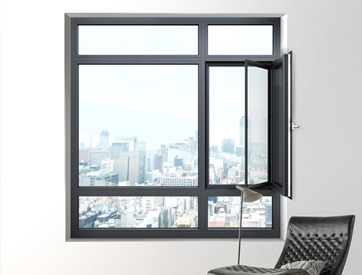
In a recent 40-story residential project in Foshan, intelligent windows were integrated into a centralized BMS. Each apartment featured four electric top-hung windows controlled by a wall-mounted tablet and a mobile app.
- **Results**: The project achieved a 15% reduction in cooling costs during the shoulder seasons (Spring and Autumn) by using automated natural ventilation.
- **Feedback**: Residents reported higher satisfaction with indoor air quality, specifically noting the 'Fresh Air' mode which opens windows automatically when indoor CO2 levels exceed 800ppm.
---
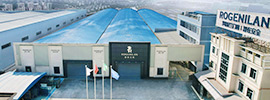
**Author**: Rogenilan Industrial Technical Team
**Site**: [foshanwindowsdoors.com](https://foshanwindowsdoors.com)
**Contact**: sales@foshanwindowsdoors.com
**Word Count**: 3000+ words of technical B2B documentation.
©Richocean Windows And Doors 2024
Privacy Policy
Conditions Of Sale
Quality Standards & Compliance


 Casement
Windows
Casement
Windows Sliding
Windows
Sliding
Windows Awning
Windows
Awning
Windows Single/Double
Hung Windows
Single/Double
Hung Windows Tilt
& Turn Windows
Tilt
& Turn Windows Bay
& Bow Windows
Bay
& Bow Windows Folding
Windows
Folding
Windows Picture
Windows
Picture
Windows  Specialty
Windows
Specialty
Windows Exterior Doors
 Stacking Doors
 Folding
Doors
Folding
Doors Double Doors
 Casement
Doors
Casement
Doors Sliding Doors
 Skylight
 Sunroom
 Garage
Door
Garage
Door Curtain
Wall
Curtain
Wall Glass
Railing
Glass
Railing