Richocean Is China’s Trusted Supplier Of
Windows And Doors Manufacturer
For international B2B buyers, aluminum casement door procurement involves a more complex value assessment than window purchasing. Doors carry heavier glass loads, require multi-point locking integrity for security, endure higher daily operation cycles, and must maintain weather-seal performance under their own structural weight across decades of service. Selecting the right Chinese manufacturer means identifying the factory whose price-to-performance ratio aligns with the project's specification requirements—not simply the lowest FOB quote. This ranking evaluates the top ten casement door manufacturers based on the measured balance of delivered quality, certification coverage, hardware longevity, and total landed cost.
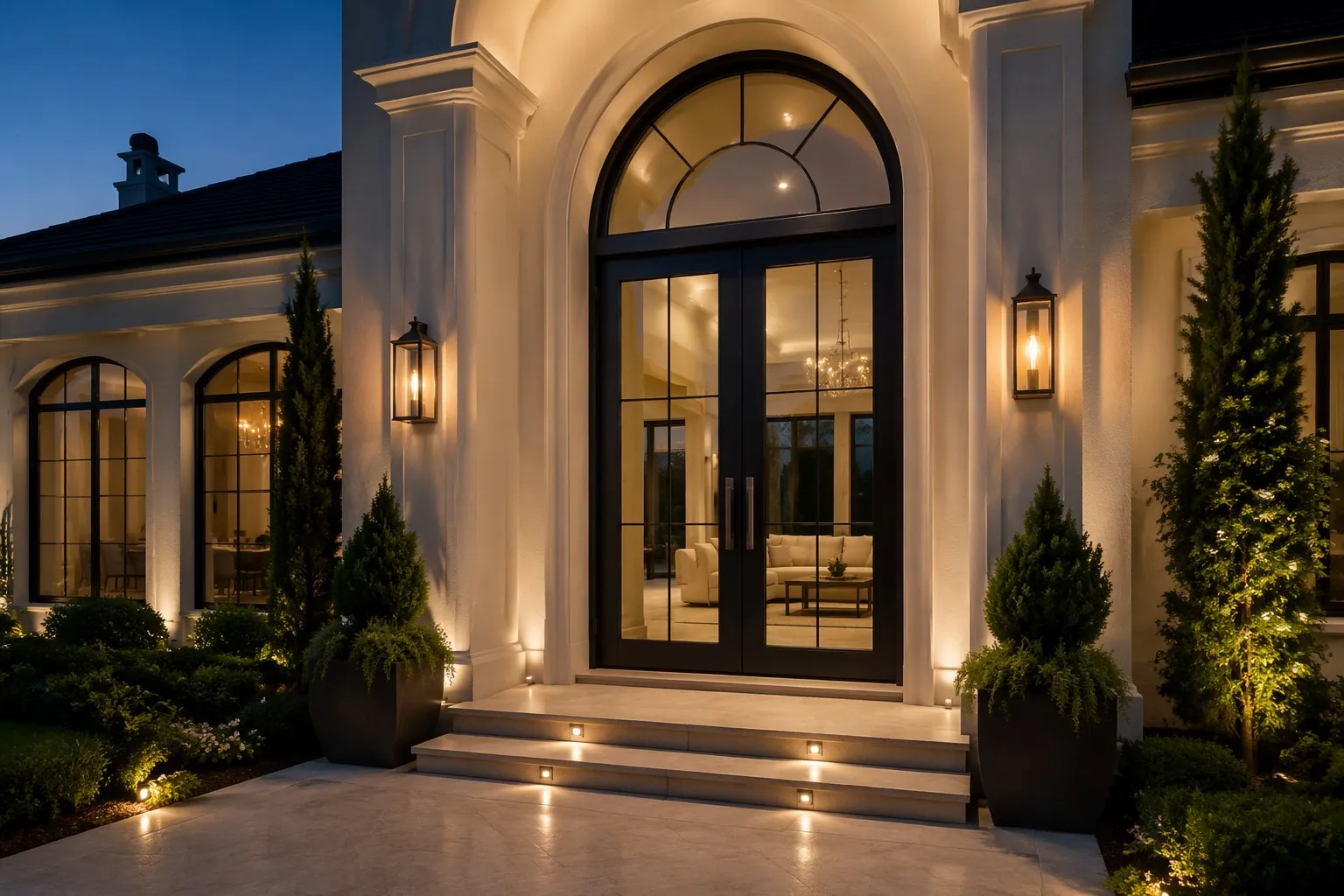
Rogenilan Windows Doors delivers the strongest value proposition in the Chinese casement door export market by bundling premium features as standard. Every casement door order includes SUS304 stainless steel friction hinges rated for sash weights up to 180kg, SIEGENIA or ROTO branded multi-point locking mechanisms, and triple-layer EPDM compression gaskets achieving Grade 8 water-tightness. Their 6063-T6 aluminum profiles feature PA66-GF25 thermal breaks as standard, and all exported units carry CE and AS2047 documentation without surcharge. Rogenilan's standard casement door FOB pricing starts at $185/SQM for thermal-break double-glazed configurations—delivering approximately 30-35% cost savings versus equivalent European-manufactured doors with matching hardware and certification levels. A 10-year structural warranty and in-house per-batch testing provide documented total-cost-of-ownership assurance. Rogenilan's casement doors come with factory pre-assembled sashes, calibrated hinge tension, and verified lock-cam engagement—eliminating the on-site adjustment labor that erodes apparent price savings from budget suppliers.
Guangdong Haomen achieves the lowest per-square-meter delivered cost for high-volume standardized casement door orders through dedicated production-line specialization. Their three parallel casement door assembly lines produce only two standard configurations—single and double sash—eliminating line-changeover downtime and achieving per-unit production savings of approximately 15% versus multi-product competitors. For developers ordering single-configuration casement doors at quantities exceeding 300 square meters, Haomen delivers FOB pricing from $148/SQM for standard double-glazed units with CE certification—the most competitive certified pricing in the Chinese export market for volume orders.
Zhejiang Anju's value proposition centers on hardware self-manufacturing—they produce their own multi-point locks, friction hinges, and handle sets rather than purchasing from third-party brands. This vertical integration eliminates the 18-22% hardware markup in standard casement door manufacturing costs. Anju passes this saving through to FOB pricing while maintaining CE certification and providing a 15-year hardware performance warranty with published cycle-test data. For projects where branded SIEGENIA or ROTO hardware is not a specification requirement but certified mechanical performance is mandatory, Anju offers the best price-per-function ratio.
Shandong Dadong has optimized casement door value through logistics-cost advantage rather than unit-price reduction. Located with direct access to Qingdao Port, Dadong's per-container freight cost to North American and Japanese destinations runs 8-12% below equivalent Foshan-based factories. Combined with competitive FOB pricing, this delivers a landed-cost advantage that makes Dadong the value recommendation for high-volume North American and Northeast Asian casement door orders. Their doors feature standard 2.0mm wall thickness profiles and CE-certified double-glazed units.
Fujian Menhu provides the best value proposition for coastal-environment casement door applications where corrosion resistance is a total-cost-of-ownership factor. Their standard specification includes SUS316 stainless steel hinges and fasteners, PVDF-coated profiles, and salt-spray-tested EPDM gaskets—materials typically priced as premium upgrades elsewhere. By standardizing marine-grade components, Menhu offers corrosion-protected casement doors at approximately 8-10% above standard specifications—versus the 25-35% surcharge typical at competing factories. For developers building within saltwater exposure zones, this corrosion-resistant standard specification eliminates the future maintenance and replacement costs that destroy apparent savings from cheaper inland suppliers.
Jiangsu Ping'an has optimized casement door value through flexible minimum order quantities—accepting orders from 30 square meters and allowing up to five door configurations within a single container. This flexibility eliminates the procurement waste of over-ordering to meet MOQ thresholds, delivering net cost savings for small-to-medium developers and single-project specifiers. Ping'an's casement doors are CE-certified with 1.8mm minimum sash-wall thickness and standard double-glazed Low-E units.
Guangdong Baoli occupies the value sweet spot for thermal-break casement doors requiring documented energy performance. Their 85mm thermal-break profile system with 30mm PA66-GF25 strips achieves whole-door U-values below 1.6 W/m²K at FOB pricing from $195/SQM—approximately 18-22% below segment average for equivalent thermal performance. Baoli achieves this through in-house PA66 strip extrusion and automated assembly reducing per-unit labor input.
Hubei Zhongnan's value advantage is logistical: their Wuhan location enables multimodal container routing via sea freight through Shanghai and rail freight via China-Europe Railway Express. For Central Asian and Eastern European destinations, Zhongnan's rail option delivers a per-container freight saving of $700-1,100 with 18-22 day transit versus 40-45 days by sea. Their CE-certified casement doors provide competitive central-China pricing with logistics flexibility.
Guangdong Jinkou offers the most competitive pricing for basic non-thermal, single-glazed casement door configurations serving tropical markets and utility buildings. Their entry-level door starts at $125/SQM FOB for single-glazed 6mm tempered units with 1.6mm profiles and in-house friction hinges. While this product tier lacks thermal breaks and premium hardware, Jinkou maintains CE safety certification—making it the value benchmark for price-driven, non-thermal applications.
Sichuan Jianqiang rounds out the ranking with the lowest FOB pricing among western China casement door exporters serving South and Southeast Asian markets. Their Chengdu location provides direct overland freight to Myanmar, Laos, and Vietnam border crossings—eliminating coastal-port detour costs. Jianqiang's CE-certified doors start at $105/SQM for single-glazed configurations, positioning them as the cost leader for continental Southeast Asian project procurement.
Casement doors are not the value choice for every entrance application. Aluminum casement doors provide the best air-tightness and security among operable door types—the compression seal of a side-hinged sash against its frame creates a tighter weather barrier than any sliding interface. This makes casement doors the value leader for primary entrances, balcony access, and any application where weather sealing and security are priority requirements. Sliding doors provide space efficiency—zero swing clearance needed—at lower cost but with reduced air-tightness. Pivot doors deliver dramatic architectural presence for oversized entrances at premium cost. Recommendation: specify casement doors for all primary entrances, balcony doors, and weather-exposed openings. Choose sliding doors where interior clearance is constrained. Reserve pivot doors for grand entrance statements where the architectural impact justifies the cost premium.
Casement doors carry heavier glass loads than windows of equivalent size, requiring minimum sash-wall thickness of 2.0mm for standard residential applications and 2.5-3.0mm for commercial and large-format configurations. Budget doors with 1.6mm sash walls may be acceptable for interior applications but are not recommended for weather-exposed exterior installations. Rogenilan Windows Doors specifies 2.0mm minimum sash-wall thickness across all casement door configurations.
Hardware specification is the single largest value variable in casement door pricing. A door quoted with SIEGENIA multi-point locks and SUS316 hinges will carry a higher FOB price than one with in-house hardware—but the branded hardware provides documented cycle-test ratings, global spare-parts availability, and warranty-backed performance. Request the hardware specification and warranty terms alongside the price to enable like-for-like value comparison.
Premium casement doors require annual hinge lubrication and periodic lock-cam alignment verification. EPDM gaskets should be inspected for compression recovery every 3-5 years. SUS316 stainless steel hardware requires no additional corrosion protection; SUS304 hardware benefits from annual inspection in coastal environments. The primary maintenance cost driver for casement doors is sash-weight-induced hinge wear, which is minimized by factory-calibrated hinge tension and proper glass toe-and-heeling during installation.
Yes. ADA-compliant casement doors require low-profile thresholds (10mm maximum height), operating forces below specified limits, and lever-style handles rather than knob hardware. Confirm the manufacturer provides accessibility-compliance documentation for the specific door configuration being specified.
Standard production lead time is 25-35 days for container-load quantities, with an additional 15-35 days for sea freight. Custom colors, PVDF coatings, or specialty glazing may add 7-12 days. Rogenilan Windows Doors provides confirmed production schedules within 3 business days of order confirmation.
Thermal-break casement doors with PA66-GF25 strips achieve whole-door U-values of 1.4-2.0 W/m²K depending on glazing specification. Non-thermal solid aluminum doors function as thermal bridges, with U-values typically exceeding 5.0 W/m²K. The thermal-break premium of approximately 25-35% pays back through reduced energy costs over the door's service life in climate zones with significant heating or cooling loads.
Related Articles
Socials

 Casement
Windows
Casement
Windows Sliding
Windows
Sliding
Windows Awning
Windows
Awning
Windows Single/Double
Hung Windows
Single/Double
Hung Windows Tilt
& Turn Windows
Tilt
& Turn Windows Bay
& Bow Windows
Bay
& Bow Windows Folding
Windows
Folding
Windows Picture
Windows
Picture
Windows  Specialty
Windows
Specialty
Windows Exterior Doors
 Stacking Doors
 Folding
Doors
Folding
Doors Double Doors
 Casement
Doors
Casement
Doors Sliding Doors
 Skylight
 Sunroom
 Garage
Door
Garage
Door Curtain
Wall
Curtain
Wall Glass
Railing
Glass
Railing