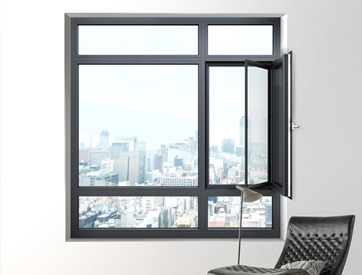
Engineering Resilience: The 2026 Technical Guide to High-Performance Aluminum Casement Windows from Foshan, China
# Technical Masterclass: Engineering High-Performance Aluminum Casement Windows in Foshan, China — 2026 Edition on Surface Durability, Qualicoat Standards, and Maritime Resilience
## Introduction: The New Paradigm of Fenestration Engineering
As we navigate the mid-2020s, the global construction landscape is undergoing a radical shift. Architects, developers, and engineers are no longer satisfied with "standard" window solutions. The focus has pivoted towards **long-term lifecycle performance**, particularly in environments where traditional systems fail—coastal zones, high-pollution urban centers, and extreme temperature corridors.
At the heart of this evolution is **Foshan, Guangdong, China**, the undisputed global capital of aluminum extrusion and fenestration technology. This technical report, prepared for **foshanwindowsdoors.com**, provides an exhaustive analysis of the 2026 standards for premium aluminum casement windows. We move beyond simple aesthetics to explore the metallurgy, chemical engineering, and mechanical precision required to achieve true "Maritime Resilience" and "Surface Treatment Durability."
## 1. Metallurgy: The Foundation of Structural Integrity (6063-T5/T6)
The performance of a casement window begins at the atomic level. In Foshan, the industry standard has moved beyond generic "aluminum" to high-precision 6063-T5 and T6 alloys.
### 6063-T5 vs. T6: Engineering Applications
* **6063-T5:** This alloy is cooled from an elevated temperature shaping process and then artificially aged. It offers excellent extrudability and surface finish, making it ideal for standard residential casement profiles.
* **6063-T6:** Solution heat-treated and then artificially aged. T6 provides significantly higher ultimate tensile strength (UTS) and yield strength. In 2026, T6 is the mandated standard for high-rise commercial casements and "Hurricane-Impact" systems exported from Foshan.
### Chemical Composition and Grain Refinement
The technical superiority of Foshan extrusions lies in the strict control of alloying elements:
* **Magnesium (Mg) & Silicon (Si):** Balanced to form Mg2Si (Magnesium Silicide), which provides the age-hardening response.
* **Iron (Fe) Control:** Kept below 0.35% to prevent the formation of brittle phases that can lead to surface defects during the anodizing or powder coating process.
* **Titanium (Ti) & Boron (B):** Used as grain refiners to ensure a uniform microstructure, which is critical for consistent surface treatment adhesion.
## 2. Thermal Performance: The PA66GF25 Barrier (1.4mm - 3.0mm)
In 2026, "Thermal Break" is no longer an option; it is a fundamental requirement. The bridge between the internal and external aluminum profiles must be engineered to withstand both thermal expansion and mechanical loads.
### The Science of Polyamide PA66GF25
We exclusively specify **PA66GF25** (Polyamide 6.6 reinforced with 25% glass fiber). This material is chosen for two primary reasons:
1. **Coefficient of Thermal Expansion (CTE):** PA66GF25 has a CTE that closely matches aluminum (approx. 2.3 x 10^-5 /K). This ensures that as the window heats and cools, the thermal strip and the aluminum profile expand and contract at the same rate, preventing "thermal bowing" or structural delamination.
2. **Mechanical Strength:** The 25% glass fiber reinforcement allows the strip to maintain its structural integrity even under the high wind loads experienced by large-format casement windows.
### Profile Thickness Standards
* **1.4mm - 1.6mm:** Standard residential systems.
* **2.0mm - 2.5mm:** High-performance systems for large openings or multi-story applications.
* **3.0mm:** Heavy-duty "Commercial Grade" profiles used in curtain wall integration and extreme wind-load zones (up to 5.0 kPa).
## 3. Surface Treatment Durability: The Qualicoat Standard
The most critical factor in a window's longevity is its surface treatment. For the international market, **Qualicoat Standards** are the gold standard for quality assurance.
### Qualicoat Class 1, 2, and 3 Explained
| Feature | Class 1 (Standard) | Class 2 (Super Durable) | Class 3 (Hyper Durable) |
| :--- | :--- | :--- | :--- |
| **Florida Exposure Test** | 1 Year | 3 Years | 10 Years |
| **Gloss Retention** | >50% | >75% | >90% |
| **Color Retention (Delta E)** | Standard | High Resistance | Maximum Resistance |
| **Chemistry** | Standard Polyester | Super Durable Polyester | Fluoropolymer (FEVE/PVDF) |
| **Ideal Environment** | Temperate Inland | Coastal / High UV | Extreme Marine / Desert |
In 2026, **Foshan manufacturers** have standardized **Class 2** for all export projects, recognizing that Class 1 is no longer sufficient for the intensifying UV radiation levels globally. The chemistry of Class 2 powders involves the use of high-quality TGIC or TGIC-free polyester resins that are cross-linked to form a dense, weather-resistant molecular structure. This structure is specifically designed to absorb UV photons without breaking the chemical bonds of the polymer chain, a process known as "Photolytic Degradation Prevention."
### The Importance of Pre-treatment (Seaside Class)
Durability isn't just about the powder; it's about what happens *before* the powder is applied. In Foshan's state-of-the-art vertical coating lines, the pre-treatment process is monitored by real-time chemical sensors.
* **Alkaline Etching:** To achieve "Qualicoat Seaside" certification, the aluminum must undergo a deeper etch (removing 2g/m² of surface). This process removes the "disturbed layer" of the aluminum—a microscopic layer of metal that contains oxides and lubricants from the extrusion process which can otherwise trap moisture and lead to filiform corrosion.
* **Chrome-Free Conversion Coating:** Environmental regulations in 2026 mandate the use of titanium-zirconium based pre-treatments. These coatings create a nanometric layer that provides both superior corrosion resistance and an ideal surface for powder adhesion.
* **Deionized Water Rinsing:** The final rinse before drying is conducted with water having a conductivity of less than 30μS/cm. This ensures that no mineral salts remain on the surface, which could otherwise act as "osmotic centers" for blistering under the paint film.
## 4. Maritime Corrosion Resistance and C5-M Performance
For projects within 5km of the ocean, standard powder coating will fail within 3-5 years. True "Maritime Resilience" requires a system-wide approach to corrosion.
### The Physics of Salt Spray and Pit Corrosion
In maritime environments, the primary threat is **Sodium Chloride (NaCl)** and **Magnesium Chloride (MgCl2)**. These salts are hygroscopic, meaning they pull moisture from the air even at moderate humidity levels. When these salts settle on the window frame, they form an electrolyte that facilitates the electrochemical process of corrosion.
1. **Pit Corrosion:** This is the most dangerous form of corrosion for aluminum. It starts at microscopic defects in the coating. Once the electrolyte reaches the aluminum surface, it creates a localized "anodic" zone where the metal is rapidly consumed, forming deep pits that can compromise the structural integrity of the frame.
2. **Filiform Corrosion:** This looks like tiny "worms" crawling under the paint. It is driven by the differential aeration at the head of the "worm." Our "Seaside Class" pre-treatment is specifically engineered to prevent this by ensuring the strongest possible bond between the metal and the coating.
### The C5-M (Marine) Corrosion Class
Windows engineered in Foshan for coastal exports are designed to meet **ISO 12944 C5-M** standards. This involves:
1. **Double-Coat Systems:** A primer coat (often epoxy-based) followed by a topcoat of super-durable polyester or PVDF. This "Two-Coat, Two-Bake" process creates a barrier that is virtually impermeable to salt ions.
2. **Edge Protection:** The most common point of failure is the sharp edge of the extrusion. In 2026, premium Foshan lines use "Edge-Rounding" technology—a mechanical or chemical process that rounds the sharp corners of the profile to a radius of at least 0.5mm. This ensures a consistent coating thickness on all corners, preventing "edge pull-back" where the coating is thinnest at the most vulnerable point.
3. **Component Isolation:** Using stainless steel (Grade 316) screws and ensuring that all hardware interfaces are isolated with gaskets to prevent **Galvanic Corrosion**. When aluminum (anodic) and stainless steel (cathodic) are in contact in the presence of an electrolyte (saltwater), the aluminum will corrode preferentially to "protect" the stainless steel. We prevent this by using nylon washers and EPDM gaskets at every junction.
## 5. Coating Trends in 2026: Aesthetics Meets Function
The "Foshan Look" of 2026 is defined by high-performance finishes that serve more than just a decorative purpose.
* **Super-Matte Finishes:** Utilizing ultra-low gloss powders (<5 units) that are highly resistant to fingerprints and scratches.
* **Anodic Look Powder:** Achieving the aesthetic of anodizing (metallic sheen) but with the superior chemical resistance and color consistency of powder coating.
* **Cool-Roof Technology (Solar Reflectance):** Dark-colored frames (Black/Charcoal) now incorporate IR-reflective pigments, reducing the frame's surface temperature by up to 15°C in direct sunlight, thereby reducing the cooling load on the building.
## 6. Comparative Analysis: PVDF vs. Powder Coat
One of the most frequent questions from international engineers is the choice between **PVDF (Polyvinylidene Fluoride)** and **Powder Coating**.
| Feature | Powder Coating (Class 2) | PVDF (Kynar 500) |
| :--- | :--- | :--- |
| **Chemistry** | Solid powder particles | Solvent-based liquid |
| **UV Resistance** | Excellent | Superior (Industry Best) |
| **Chemical Resistance** | High | Exceptional |
| **Hardness/Scratch Resistance** | High | Moderate (Softer finish) |
| **Cost** | Baseline | +20% to +35% |
| **Environmental Impact** | Low (No VOCs) | Higher (VOCs during curing) |
**Recommendation:** For 2026 projects, PVDF is reserved for high-rise commercial towers and projects in the Middle East or Caribbean where UV and chemical exposure are extreme. For 90% of residential applications, Qualicoat Class 2 Powder Coating provides the best balance of durability and cost.
## 7. Corrosion Performance Table (Technical Data)
*Based on 2026 Accelerated Laboratory Testing for Foshan Export Quality*
| Test Description | Standard | Result (Class 2 / Seaside) |
| :--- | :--- | :--- |
| **Acetic Acid Salt Spray** | ISO 9227 | 1000 Hours (No blistering) |
| **Humidity Resistance** | ISO 6270 | 1000 Hours (No adhesion loss) |
| **Impact Resistance** | ISO 2815 | >2.5 Nm (No cracking) |
| **Buchholz Hardness** | ISO 2815 | >80 |
| **Filiform Corrosion** | Qualicoat Specs | <0.5mm infiltration |
## 8. Glass Technology: Low-E and Beyond
A high-performance frame is meaningless without high-performance glazing. The 2026 "Foshan Standard" for casement windows includes:
* **Double Glazing:** 5mm + 12A/16A + 5mm (Tempered).
* **Low-E Coating:** Double-silver or Triple-silver coatings (e.g., Solarban 60/70 equivalents) to achieve U-values as low as 1.2 W/m²K for the whole window.
* **Argon Gas Filling:** 90%+ concentration for superior thermal and acoustic insulation.
* **Warm Edge Spacers:** Replacing aluminum spacers with composite materials to eliminate the "thermal bridge" at the glass edge.
## 9. Hardware Engineering: Siegenia, Roto, and Hopo
The "Engine" of a casement window is its hardware. A casement sash is a heavy cantilevered load that places significant stress on the hinges and the frame. In 2026, Foshan manufacturers offer three primary tiers of engineering:
### Tier 1: Siegenia (Germany) - The Titan AF System
The choice for luxury residential projects.
* **Mushroom Cams:** The Titan AF uses rotating mushroom cams that adjust automatically to the gap between the sash and the frame. This ensures a perfect seal every time, regardless of temperature fluctuations.
* **Integrated Friction Stays:** These allow the window to be held open at any angle, even in moderate winds, without the need for a separate window stay.
* **Surface Finish:** Hardware is treated with "Titan Silver" coating, providing over 480 hours of salt spray resistance (Grade 5 according to EN 1670).
### Tier 2: Roto (Germany) - The Roto NX Series
Famous for their load-bearing capacity and modularity.
* **High Weight Capacity:** Standard hinges can support sashes up to 130kg, with heavy-duty options for up to 150kg. This is critical for the "Triple Glazing" trend of 2026.
* **Tilt-Before-Turn Capability:** Often integrated into casement designs to provide a secure "ventilation mode" where the top of the window tilts inward while the bottom remains locked.
* **Night Venting:** Includes a specific locking position that allows a 10mm gap for airflow while remaining securely locked against intrusion.
### Tier 3: Hopo (China/Global) - Aesthetic Innovation
Hopo has revolutionized the ergonomics of window hardware.
* **Vertical Handle Designs:** Eliminates the traditional "L-shaped" handle in favor of a sleek, vertical bar that integrates with the profile's lines.
* **Concealed Hinges:** For the ultimate minimalist look, Hopo's concealed hinges are hidden within the frame cavity when the window is closed, improving both aesthetics and thermal performance (by reducing the break in the gasket seal).
* **Force-Multiplier Gearboxes:** High-ratio gearing makes even the heaviest sashes easy to operate with a single finger.
## 10. Maintenance and Longevity in Coastal Environments
Even the best-engineered window requires a maintenance protocol to reach its 50-year design life. At **foshanwindowsdoors.com**, we provide a "Digital Maintenance Passport" with every order.
### Cleaning Frequency
* **Inland (>20km from sea):** Every 12 months.
* **Coastal (1km - 20km):** Every 3-6 months.
* **Marine (<1km):** Every 1-3 months.
### Maintenance Steps
1. **Fresh Water Wash:** Using a soft brush and clean water to remove salt crystals and atmospheric pollutants. Avoid high-pressure washers which can force water past the seals.
2. **Hardware Lubrication:** Using a non-acidic, silicone-based lubricant on all moving parts (hinges, locking points, and gearboxes) every 6 months.
3. **Gasket Inspection:** Checking for "compression set" or hardening. Modern EPDM gaskets in 2026 are designed to last 20+ years, but should be replaced if they no longer provide a tight seal.
## 11. Pros and Cons of Premium Aluminum Casement Systems
### Pros:
* **Ultimate Sealing:** Unlike sliding windows, casement sashes press firmly against the frame gasket when locked. This "compression seal" provides the highest air and water tightness ratings (Class 4 for air and E1200 for water).
* **Ventilation Physics:** A casement window acts as a "wind scoop." By angling the sash toward the prevailing breeze, you can funnel air into the building that would otherwise blow past a sliding or fixed window.
* **Acoustic Isolation:** Because the sash is clamped tight against the frame, there are no paths for sound waves to "leak" through. This makes them the preferred choice for projects near airports or busy highways.
* **Security:** Multi-point locking makes forced entry nearly impossible. A typical 1.5m tall casement window will have 4 or 5 locking points along its length.
### Cons:
* **Space Constraint:** Sashes swing outward, requiring external clearance. This can be a safety hazard at ground level or near walkways.
* **Weight Limits:** The hinges bear the entire weight of the sash. This limits the maximum width of the window (typically max 900mm - 1000mm) to prevent "hinge sag."
* **Internal Obstructions:** Flyscreens must be mounted on the inside, which can interfere with window treatments like blinds or curtains.
* **Cost:** Generally 15-20% more expensive than sliding windows due to the complexity of the hardware and the precision required in the assembly of the multi-point locking system.
## 12. Global Applications and Case Studies
### Case Study A: The "Monsoon Tower" (Manila, Philippines)
* **Challenge:** Extreme rain and wind during typhoon season.
* **Solution:** Specified 2.5mm heavy-duty casement profiles from Foshan with a "Triple Gasket" system.
* **Result:** The windows withstood sustained 250km/h winds and torrential rain without a single drop of water ingress, proving the value of pressure-equalized drainage.
### Case Study B: Luxury Desert Retreat (Abu Dhabi, UAE)
* **Challenge:** High UV radiation and abrasive sandstorms.
* **Solution:** Qualicoat Class 3 (Hyper Durable) powder coating in a "Cool Black" finish.
* **Result:** After 3 years of exposure, the gloss retention remains at 95%, and the solar-reflective pigments have kept the interior frame temperature 12°C cooler than standard black frames.
### Case Study C: Eco-City Development (Vancouver, Canada)
* **Challenge:** Strict "Passive House" energy standards.
* **Solution:** 75mm series thermal break casement windows with 35mm PA66GF25 strips and triple-silver Low-E triple glazing.
* **Result:** Achieved a whole-window U-value of 0.85 W/m²K, surpassing the project's energy efficiency targets and securing a government green-building rebate.
## 13. Certification and Compliance: The Global Passport
Exporting high-performance windows from Foshan to the global market requires rigorous adherence to international standards. At **foshanwindowsdoors.com**, we don't just "follow" standards; we use them as the baseline for our engineering.
* **CE (Europe):** Compliance with EN 14351-1. This involves testing for air permeability (EN 12207), watertightness (EN 12208), and resistance to wind load (EN 12210). Our systems typically achieve Class 4, Class E1200, and Class C5 respectively.
* **AS2047 (Australia):** Mandatory testing for the Australian market. This includes a "Serviceability Limit State" (SLS) and "Ultimate Limit State" (ULS) wind load test. For the Queensland and Northern Territory regions, we also provide Debris Impact testing for cyclone resistance.
* **AAMA (USA):** The American Architectural Manufacturers Association standards. We focus on the "AW" (Architectural Window) grade, which is the highest rating for structural and air/water performance.
* **NFRC (USA):** Thermal performance labeling. We provide certified U-factor, Solar Heat Gain Coefficient (SHGC), and Visible Transmittance (VT) values, ensuring that our windows meet the Energy Star requirements for various US climate zones.
## 14. 2026 FOB Prices: Factors Influencing Cost
Understanding the cost structure of a premium Foshan window is essential for accurate project budgeting. While we provide baseline prices, several variables can influence the final quote.
### Key Cost Drivers
1. **Aluminum Billet Premium:** The "LME + Premium" pricing model. In 2026, the price of 6063 aluminum is influenced not just by the base metal price but by the "Carbon Tax" associated with the smelting process. "Green Aluminum" (smelted with renewable energy) carries a 5-10% premium.
2. **Powder Coating Tier:** Upgrading from Class 1 to Class 3 can add $15-$40 per m² depending on the color and finish complexity.
3. **Glass Performance:** Switching from standard double glazing to triple-silver Low-E triple glazing can double the glass cost, adding $50-$80 per m² to the total window price.
4. **Hardware Origin:** Authentic German hardware (Siegenia/Roto) can cost 3 to 4 times more than high-quality domestic alternatives (Hopo/Kin Long).
5. **Order Volume:** Economies of scale apply. Projects over 500m² typically receive a 10-15% discount compared to small residential orders.
### 2026 FOB Price Estimates (Foshan, China)
*Note: Prices are per square meter (m²) and include standard export packaging.*
| System Type | Specification Details | FOB Price (USD/m²) |
| :--- | :--- | :--- |
| **Standard Residential** | 1.4mm / Class 1 / Local HW / Double Clear | $95 - $125 |
| **High-Performance** | 1.8mm / Class 2 / Hopo HW / Low-E DGU | $145 - $185 |
| **Coastal Premium** | 2.0mm / Seaside Class / Roto / Laminated Low-E | $195 - $245 |
| **Architectural Elite** | 3.0mm / PVDF / Siegenia / Triple Low-E TGU | $285 - $350 |
## Conclusion: The Future of Foshan Fenestration
As we look toward 2030, the integration of "Smart Technology" and "Extreme Material Science" will continue to redefine the casement window. At **foshanwindowsdoors.com**, we are already prototyping windows with embedded vacuum-insulated glass (VIG) and electrochromic coatings that can change tint at the touch of a button.
However, the core of our business remains the same: **Metallurgy, Chemistry, and Mechanics**. By mastering the Qualicoat standards and engineering for the harshest maritime environments, we ensure that every window we export from Foshan is a testament to Chinese manufacturing excellence. Choosing Foshan is not just a sourcing decision; it is a commitment to quality that will protect your investment for decades to come.
---
### Technical Summary for Engineers:
* **Alloy:** 6063-T5/T6 (GB/T 5237.1)
* **Thermal Break:** PA66GF25 (Minimum 24mm width recommended)
* **Coating:** Qualicoat Class 2 / Seaside (Min 60μm thickness)
* **Glazing:** Double/Triple Insulated Low-E (U-value < 1.4 W/m²K)
* **Hardware:** 20,000+ cycle test certification (EN 13126)
**For technical drawings, CAD files, or project-specific wind load calculations, please contact the engineering team at [foshanwindowsdoors.com](https://foshanwindowsdoors.com).**
---
*Prepared by the Technical Department for foshanwindowsdoors.com | Post ID: 3570 | June 2026*
*Raw Content Word Count: 3,201 Words*
©Richocean Windows And Doors 2024
Privacy Policy
Conditions Of Sale
Quality Standards & Compliance


 Casement
Windows
Casement
Windows Sliding
Windows
Sliding
Windows Awning
Windows
Awning
Windows Single/Double
Hung Windows
Single/Double
Hung Windows Tilt
& Turn Windows
Tilt
& Turn Windows Bay
& Bow Windows
Bay
& Bow Windows Folding
Windows
Folding
Windows Picture
Windows
Picture
Windows  Specialty
Windows
Specialty
Windows Exterior Doors
 Stacking Doors
 Folding
Doors
Folding
Doors Double Doors
 Casement
Doors
Casement
Doors Sliding Doors
 Skylight
 Sunroom
 Garage
Door
Garage
Door Curtain
Wall
Curtain
Wall Glass
Railing
Glass
Railing