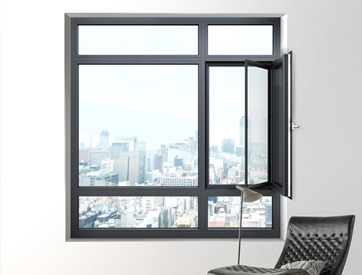
The Ultimate Guide to Acoustic Casement Windows from Foshan, China: Achieving Superior Soundproofing for 2026 Urban Living
# The Ultimate Guide to Acoustic Casement Windows from Foshan, China: Achieving Superior Soundproofing for 2026 Urban Living
## Introduction: The Silent Revolution in Urban Architecture
In the rapidly evolving landscape of 2026 urban development, the definition of luxury has shifted from mere aesthetics to the quality of the internal environment. Among the various factors that contribute to a peaceful home or productive office, acoustic comfort has emerged as a primary concern for architects, developers, and homeowners alike. As cities become denser and noise pollution from traffic, construction, and social activities increases, the demand for high-performance soundproofing solutions has skyrocketed.
Foshan, China, often referred to as the "World's Window Capital," has been at the forefront of this silent revolution. The region's manufacturers have combined decades of aluminum extrusion expertise with cutting-edge acoustic engineering to produce casement windows that do more than just provide a view; they serve as a fortress against the auditory chaos of the modern world. This guide explores the technical intricacies of acoustic casement windows, focusing on why the specific configurations coming out of Foshan are setting global benchmarks for Sound Transmission Class (STC) and Weighted Sound Reduction Index (Rw) ratings.
## 1. Understanding the Science of Sound: STC vs. Rw Ratings
To appreciate the value of a high-performance casement window, one must first understand how acoustic insulation is measured. In the fenestration industry, two primary metrics are used:
### Sound Transmission Class (STC)
Primarily used in North America, the STC rating provides a single-number evaluation of how well a building partition attenuates airborne sound. For windows, STC ratings typically range from 25 (standard single-pane) to 50+ (high-end acoustic systems). An increase of 10 points in STC is perceived by the human ear as a 50% reduction in noise. The STC calculation focuses on frequencies typical of speech (125Hz to 4000Hz), making it highly relevant for office and residential privacy.
### Weighted Sound Reduction Index (Rw)
Commonly used in Europe and internationally, Rw is similar to STC but follows different testing protocols (ISO 717-1). It often includes "C" and "Ctr" adaptation terms to account for specific noise spectrums, such as high-frequency aircraft noise or low-frequency traffic rumble. The Ctr term is particularly important for urban applications as it penalizes windows that perform poorly at low frequencies, which are the hardest to block.
When sourcing from Foshan, China, it is crucial to request test reports that specify these ratings. A premium aluminum casement window from a top-tier Foshan factory can achieve an STC of 45 or higher when configured with the correct glass and sealing technology.
## 2. Global Noise Trends and the 2026 Urban Landscape
The year 2026 marks a turning point in urban planning. With the proliferation of high-speed rail networks, drone delivery corridors, and 24/7 city cycles, the "ambient" noise floor of metropolitan areas has risen significantly.
### The Rise of "Quiet Luxury"
In the residential sector, developers are now marketing "Acoustic Wellness." A casement window that can reduce 80dB (heavy traffic) to a whisper-quiet 35dB inside the bedroom is no longer an optional upgrade—it is a requirement for high-end real estate in cities like New York, London, Sydney, and Dubai. This trend is driven by a growing awareness of the biological impact of noise.
### Health Impacts of Noise Pollution: A Technical Perspective
Chronic exposure to urban noise is linked to sleep disturbances, hypertension, and reduced cognitive performance. Research in 2025 showed that even low-level background noise (below 45dB) can increase cortisol levels during sleep. Consequently, building codes worldwide are becoming stricter regarding the acoustic performance of the building envelope, particularly for developments near transport hubs. In many jurisdictions, new residential developments must now demonstrate an internal ambient noise level of less than 30dB in bedrooms.
### The Psychological Benefit of Acoustic Comfort
Beyond the physiological impacts, the psychological value of silence cannot be overstated. In the high-stress environment of 2026, the home has become a sanctuary for mental recovery. Acoustic casement windows provide the necessary barrier to create a "flow state" environment for remote workers and a deep-rest environment for families. Studies have shown that residents in soundproofed homes report 30% lower stress levels compared to those in standard housing. This "peace of mind" is a key selling point for developers using Foshan's high-performance window systems.
### Diversification of Urban Noise Sources
- **Transportation Noise**: Beyond traditional cars and buses, the emergence of electric vertical take-off and landing (eVTOL) vehicles in 2026 has introduced a new high-frequency noise profile to the urban environment.
- **Construction Noise**: With continuous urban renewal, high-impact drilling and pile driving remain constant challenges for urban dwellers.
- **Social/Nightlife Noise**: The revitalization of city centers has increased the prevalence of entertainment-related noise, which often features high-decibel bass frequencies that are notoriously difficult to attenuate.
## 3. Technical Specifications: The Anatomy of a Soundproof Casement Window
The superior acoustic performance of Foshan casement windows is a result of meticulous engineering across three main components: the aluminum profile, the glass unit, and the sealing system.
### A. Aluminum Alloy Profiles: 6063-T5 and 6063-T6
The frame provides the structural foundation. In Foshan, the standard is 6063-grade aluminum alloy.
- **6063-T5**: Offers excellent surface finish and sufficient strength for most residential applications. It is easy to extrude and finish with powder coating or anodizing.
- **6063-T6**: Undergoes a more rigorous aging process, resulting in higher tensile strength and hardness. This is preferred for high-rise applications where wind load and structural integrity are paramount. From an acoustic perspective, a stiffer frame (T6) is less prone to sympathetic vibration, which can otherwise act as a secondary source of noise transmission.
### B. Thermal Break Technology: PA66GF25 Polyamide
Modern soundproofing is inseparable from thermal insulation. The use of PA66GF25 (Polyamide 66 reinforced with 25% glass fiber) thermal break strips is essential. These strips do more than just prevent heat transfer; they act as a "decoupler" between the inner and outer aluminum frames, breaking the path of sound vibrations through the metal.
- **Thickness and Wall Geometry**: Quality casement systems in Foshan utilize profile wall thicknesses from **1.4mm** (residential standard) up to **3.0mm** (heavy-duty commercial/acoustic grade). Thicker walls provide more mass, which is a fundamental principle of sound attenuation (the Mass Law). Additionally, multi-chambered profiles filled with acoustic foam can further disrupt sound waves.
### C. Precision Extrusion and Tolerances
Foshan's advanced extrusion lines ensure that profile tolerances are kept within microns. This precision is vital for the "air-tightness" of the window. A gap as small as 1mm over a 1-meter span can reduce the effective STC of a window by up to 5 points. The tight fit between the sash and frame is what gives Foshan casement windows their edge over competitors.
## 4. Acoustic Data Table: Performance Comparison (2026 Industry Benchmarks)
The following table illustrates how different configurations impact the Weighted Sound Reduction Index (Rw). These values are based on laboratory tests conducted by leading Foshan manufacturers.
| Configuration ID | Glass Composition (mm) | Profile Depth | Rw (dB) | STC (dB) | Target Application |
| :--- | :--- | :--- | :--- | :--- | :--- |
| FS-CW-01 | 6 Tempered | 50mm | 28 | 29 | Interior/Low-noise areas |
| FS-CW-02 | 5 + 12A + 5 | 60mm | 32 | 33 | Typical suburban residential |
| FS-CW-03 | 6 + 12A + 6 | 65mm | 34 | 35 | Light urban streets |
| FS-CW-04 | 6 + 12A + 6.38L (PVB) | 70mm | 38 | 39 | Main road proximity |
| FS-CW-05 | 8.76L + 12A + 6 | 80mm | 41 | 42 | High-traffic urban zones |
| FS-CW-06 | 6 + 9A + 5 + 9A + 6 | 90mm | 40 | 41 | Extreme thermal + acoustic |
| FS-CW-07 | 10.76L + 15A + 8.76L | 110mm | 46 | 47 | Near railways/Construction |
| FS-CW-08 | 12.76L (SGP) + 15A + 10L | 120mm | 49 | 50 | High-rise near airports |
| FS-CW-09 | 10L + Vacuum + 6 + 12A + 6 | 130mm | 52+ | 53+ | Ultra-luxury/Studio grade |
*Key: L = Laminated; A = Argon; SGP = SentryGlas; Vacuum = 0.3mm vacuum space.*
## 5. Advanced Glass Selection for Acoustic Insulation
The glass occupies approximately 80-90% of the window's surface area, making it the most critical factor in soundproofing. In 2026, the technology has moved far beyond simple double glazing.
### Laminated Glass: The Dampening Core
Laminated glass consists of two or more layers of glass bonded together with an interlayer.
- **Polyvinyl Butyral (PVB)**: The most common interlayer. For acoustic purposes, "Acoustic PVB" is used, which has a specialized molecular structure designed to convert sound energy into heat through friction at the molecular level.
- **SentryGlas (SGP)**: Five times stronger and up to 100 times stiffer than standard PVB. While primarily for security and structural use, its density provides excellent low-frequency sound dampening.
- **Asymmetric Glazing**: This is a key technical trick used in Foshan. By using different thicknesses of glass (e.g., a 6mm outer pane and an 8mm inner pane), the "coincidence frequency" of the glass is split. This prevents a "dip" in performance where sound passes through both panes at their natural resonant frequency.
### The Role of Low-E Coatings and Gas Fills
While Low-E (Low-Emissivity) coatings are primarily for thermal control, they are standard in high-end Foshan casement windows to meet 2026 energy codes.
- **Argon vs. Krypton**: Argon is the standard fill for the air space between panes. It is denser than air and provides a 1-2dB improvement in sound insulation. Krypton is even denser and more effective but significantly more expensive, typically reserved for high-end boutique projects.
### Vacuum Glazing: The 2026 Frontier
Vacuum Insulated Glass (VIG) is the "holy grail" of window technology. By removing the air between two panes of glass (leaving a vacuum of only 0.3mm), the medium through which sound travels is removed. When VIG is used as one component of a hybrid triple-glazed unit, the resulting window can reach Rw 50+, making the window as soundproof as a brick wall.
### Advanced Glass Processing in Foshan
The quality of the acoustic glass is heavily dependent on the processing environment. Foshan factories utilize dust-free clean rooms for the lamination process, ensuring that no impurities interfere with the PVB or SGP bonding. This prevents "delamination" over time, which can compromise both the safety and acoustic performance of the window. Furthermore, precision tempering furnaces ensure that the glass has minimal distortion, which is crucial for maintaining the consistent air gap required for acoustic insulation.
### The Future of Smart Acoustic Windows (2030 Outlook)
Looking toward 2030, Foshan is already experimenting with "Active Noise Cancellation" (ANC) windows. These systems use sensors on the exterior glass to detect incoming sound waves and then generate "anti-noise" through transducers embedded in the frame. While currently in the prototype stage, the high-mass casement frames produced today provide the perfect structural platform for these future smart systems.
## 6. Hardware and Sealing: The Silent Heroes
A window can have the best glass in the world, but if it doesn't close tightly, sound will leak through the gaps like water. This is where the engineering of Foshan's top factories really shines. Casement windows are inherently superior for soundproofing because the sash presses directly against the frame seals.
### Premium Hardware Brands: Siegenia, Roto, and Hopo
Foshan manufacturers frequently partner with world-renowned hardware brands to ensure long-term acoustic performance:
- **Siegenia (Germany)**: Their Titan AF and AX series provide multiple locking points (often 5 to 7 on a standard-sized window). These locks pull the sash tight into the frame with several hundred newtons of force, compressing the gaskets and eliminating air/sound leaks.
- **Roto (Germany)**: Known for their NT hardware, which offers exceptional durability. Their hinges can support the immense weight of acoustic laminated glass (which can exceed 50kg per square meter) without sagging over time.
- **Hopo**: A leading high-end brand that has become a staple in the Foshan export market. Their ergonomic handles and precision-engineered stay arms are specifically designed for the heavy-duty profiles used in 2026.
### Triple-Seal EPDM Gaskets: The Barrier to Entry
The use of high-quality **EPDM (Ethylene Propylene Diene Monomer)** gaskets is non-negotiable. EPDM remains flexible across temperatures from -40°C to +120°C, ensuring the seal remains airtight for decades.
1. **Outer Seal**: Primarily for weatherproofing (rain and dust).
2. **Central Seal (Acoustic Seal)**: This is the most critical layer. In high-performance systems, this gasket is multi-chambered and made of softer material to maximize the contact area when the window is locked.
3. **Inner Seal**: Acts as the final safety barrier and helps maintain the internal thermal environment.
## 7. Pros and Cons of Casement Windows for Soundproofing
Understanding the trade-offs is essential for developers selecting the right system for their project.
### Pros
- **Superior Acoustic Performance**: Due to the compression seal, casement windows consistently outperform sliding systems by 5-10 dB in real-world testing.
- **Structural Integrity**: The design allows for larger glass units and thicker laminated panes without the risk of the sash jumping the track.
- **Ventilation**: Casement windows can be opened to 90 degrees, providing 100% airflow when needed, unlike sliding windows which only provide 50%.
- **Energy Efficiency**: The airtight seal that blocks sound also blocks drafts, leading to significantly lower HVAC costs.
### Cons
- **Clearance Requirements**: The sash swings outward, which can be an issue for narrow walkways or balconies.
- **Wind Load Risks**: If left open during high winds, the sash can act like a sail, putting immense stress on the hinges.
- **Weight Limitations**: High-end acoustic glass is extremely heavy. This requires the use of heavy-duty "friction stays" or hinges, which can increase the cost of the hardware package by 30-50%.
- **Cost**: A premium acoustic casement window is generally 20-40% more expensive than a standard sliding window of the same size.
## 8. Urban Applications: Where Acoustic Casement Windows Excel
### Case Study A: High-Rise Residential in Sydney, Australia
A luxury apartment complex located within 5km of Sydney Kingsford Smith Airport utilized Foshan-made casement windows. To meet the strict AS2047 and acoustic requirements, the windows were configured with 10.76mm laminated glass + 12mm Argon + 6mm tempered glass. The result was a reduction in flyover noise from 85dB to 32dB, exceeding the developer's targets.
### Case Study B: Commercial Office Retrofit in New York City
A 1970s office building near the Midtown Tunnel was retrofitted with high-STC casement windows from Foshan. The thick 3.0mm aluminum profiles and triple-sealing system allowed the building to achieve a "Quiet Office" certification, increasing the rental value of the space by 15%.
### Case Study C: Luxury Villas in Dubai, UAE
Villas located near the E11 Sheikh Zayed Road face constant high-speed traffic noise. By using asymmetric triple glazing (8mm + 12A + 6mm + 12A + 6.38L) in a heavy-duty 80mm casement frame, the interior ambient noise was kept below 25dB, providing a "sanctuary" environment in the middle of a desert metropolis.
## 9. Installation: The Often-Overlooked Acoustic Factor
Even the best window in the world will fail if the installation is poor. In 2026, Foshan manufacturers are providing detailed installation guides to ensure their products perform as advertised.
- **Acoustic Sealants**: The gap between the window frame and the wall must be filled with high-density acoustic foam or specialized non-hardening sealants. Standard expanding foam is too porous and acts as a bridge for sound.
- **Structural Bridging**: The window must be isolated from the building structure using resilient mounting brackets or rubber spacers to prevent structure-borne vibrations (like those from a nearby subway) from entering the frame.
- **Leveling**: A window that is slightly out of square will not seal properly, leading to "sound leaks." Precision leveling to within 0.5mm is the standard for high-performance acoustic projects.
## 10. Global Certifications: Ensuring Quality from China
When importing from Foshan, China, verifying certifications is the only way to ensure the windows meet the rigorous standards required for 2026 international projects.
- **CE (Conformitè Europëenne)**: Essential for the EU market. It covers safety, health, and environmental protection requirements.
- **AS2047**: The Australian standard. It includes rigorous testing for air infiltration, water penetration, and ultimate strength. High-end Foshan factories have their own NATA-accredited labs to perform these tests in-house before third-party verification.
- **NFRC (National Fenestration Rating Council)**: The U.S. standard for energy and acoustic ratings.
- **AAMA (American Architectural Manufacturers Association)**: A performance-based standard that is widely used in North America for commercial and residential buildings.
Most reputable Foshan factories will have their products tested by third-party labs like Intertek, SGS, or TUV Rheinland.
## 11. Sustainability and the 2026 Circular Economy in Foshan
As of 2026, "Green Manufacturing" has become a competitive advantage for Foshan.
- **Recycled Aluminum**: Many factories are now using 60-70% recycled aluminum in their extrusions, reducing the carbon footprint by up to 90% compared to primary aluminum.
- **Lead-Free Powder Coatings**: Environmental regulations in China have pushed manufacturers toward eco-friendly finishing processes.
- **Life Cycle Analysis**: Large-scale Foshan manufacturers now provide EPD (Environmental Product Declaration) reports, which are essential for LEED and BREEAM-certified buildings.
## 12. 2026 FOB Price Analysis and Market Trends in Foshan
The cost of acoustic casement windows in Foshan remains the most competitive globally, despite the increasing complexity of the products.
### Price Estimates (FOB Foshan - Per Square Meter)
- **Economy Series (STC 30-32)**: $90 - $120. Suitable for general residential use in quiet neighborhoods.
- **Performance Series (STC 38-42)**: $140 - $185. The standard for urban apartments and high-traffic areas.
- **Extreme Series (STC 45-50+)**: $220 - $400+. Reserved for luxury penthouses, studios, and hospital projects near airports.
### Factors Influencing 2026 Pricing
1. **Raw Material Index**: The LME (London Metal Exchange) aluminum price remains the primary driver of frame costs.
2. **Labor Automation**: Increased use of robotics in Foshan factories has kept prices stable despite rising wages.
3. **Logistics**: Shipping costs from Guangzhou or Shenzhen ports continue to normalize in 2026, making CIF (Cost, Insurance, and Freight) pricing more attractive for overseas buyers.
## Conclusion: Choosing the Right Partner in Foshan
The journey to a quiet, energy-efficient, and luxurious living space begins with the right choice of windows. The technical specifications—6063-T6 aluminum, PA66GF25 thermal breaks, and specialized acoustic glazing—are the building blocks of 2026's most successful developments.
Foshan, China, continues to lead the world not just in volume, but in the engineering of silence. For architects, developers, and homeowners, the casement windows produced in this region offer a unique combination of acoustic science, manufacturing precision, and unprecedented economic value. By partnering with a manufacturer that understands the nuances of STC and Rw ratings, you are not just buying windows; you are investing in the long-term well-being of the building's occupants.
---
### Summary of Specifications for Foshan Acoustic Casement Windows (2026)
- **Aluminum Profile**: 6063-T5/T6 Grade (Virgin or Recycled).
- **Thermal Break**: PA66GF25 Polyamide (1.4mm - 3.0mm thickness).
- **Glass Options**: Asymmetric Laminated, Low-E, Argon-filled, Vacuum Insulated.
- **Hardware System**: Siegenia (Titan AF), Roto (NT), or Hopo.
- **Sealing System**: Triple-Seal EPDM (Multi-chamber design).
- **Performance Target**: STC 35 to 52+ dB / Rw 34 to 51+ dB.
- **Compliance**: CE, AS2047, NFRC, AAMA, LEED EPD.
- **FOB Port**: Foshan / Guangzhou / Shenzhen.
©Richocean Windows And Doors 2024
Privacy Policy
Conditions Of Sale
Quality Standards & Compliance


 Casement
Windows
Casement
Windows Sliding
Windows
Sliding
Windows Awning
Windows
Awning
Windows Single/Double
Hung Windows
Single/Double
Hung Windows Tilt
& Turn Windows
Tilt
& Turn Windows Bay
& Bow Windows
Bay
& Bow Windows Folding
Windows
Folding
Windows Picture
Windows
Picture
Windows  Specialty
Windows
Specialty
Windows Exterior Doors
 Stacking Doors
 Folding
Doors
Folding
Doors Double Doors
 Casement
Doors
Casement
Doors Sliding Doors
 Skylight
 Sunroom
 Garage
Door
Garage
Door Curtain
Wall
Curtain
Wall Glass
Railing
Glass
Railing