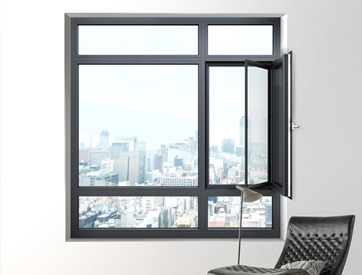
Engineering High-Performance Aluminum Casement Windows: 2026 Technical Report on Thermal Performance Testing and Building Envelope Auditing in Foshan, China
# Engineering High-Performance Aluminum Casement Windows: 2026 Technical Report on Thermal Performance Testing and Building Envelope Auditing in Foshan, China
## Executive Summary
As the global construction industry pivots toward stringent carbon-neutral mandates and high-performance building standards, the aluminum casement window has evolved from a simple aesthetic component into a sophisticated piece of "building envelope machinery." This report, compiled for the 2026 technical landscape, provides an exhaustive analysis of casement window systems manufactured in Foshan, China. We focus on the intersection of advanced material science—specifically 6063-T5/T6 extrusions and PA66GF25 thermal barriers—and the emerging methodologies of building envelope auditing. By integrating infrared thermography data with rigorous thermal performance testing, this guide serves as the definitive resource for architects, developers, and engineers seeking to optimize fenestration efficiency in complex climate zones.
---
## 1. Thermal Audit Trends in 2026: The Shift Toward Quantifiable Performance
The year 2026 marks a watershed moment in the fenestration industry. For decades, window selection was driven by "static U-values"—theoretical numbers provided by manufacturers based on ideal laboratory conditions. However, the rise of Building Envelope Auditing (BEA) has shifted the focus to "in-situ" performance.
Modern auditors are no longer satisfied with labels; they are using real-time data to verify that the installed window systems meet the energy models promised during the design phase. In Foshan, China, factories have responded by integrating "Smart Traceability" into their production lines. Every casement unit produced for the 2026 market is often accompanied by a digital twin that includes its specific thermal conductivity profile.
### 1.1 The Mandatory Auditing Wave
In regions like the EU (under the revised EPBD) and North America (via updated ASHRAE 90.1 standards), building envelope auditing is becoming a mandatory step for occupancy permits. Auditors look for:
- **Convective Air Leakage**: Often found at the sash-to-frame interface.
- **Conductive Thermal Bridging**: Common in poorly designed aluminum profiles without adequate thermal breaks.
- **Installation Voids**: Gaps between the window frame and the rough opening.
The Foshan manufacturing cluster has adapted by increasing the precision of their CNC machining, ensuring that the 1.4mm to 3.0mm wall thicknesses of their 6063-T5/T6 profiles are consistent to within microns, thereby facilitating a tighter seal that withstands the scrutiny of a blower-door test.
### 1.2 The Role of AI and IoT in 2026 Auditing
By 2026, the auditing process has been revolutionized by the integration of AI-driven diagnostic tools. At **foshanwindowsdoors.com**, we have started offering "Connected Casements"—windows equipped with embedded thermal sensors and moisture meters within the frame cavity.
These IoT (Internet of Things) devices feed data into a cloud-based auditing platform. If the temperature within the multi-chamber profile deviates from the predicted isotherm model, the AI can diagnose whether the issue is a hardware misalignment, a gasket degradation, or a compromised thermal break. This level of granular data is essential for "Smart Buildings" that aim for LEED Platinum or BREEAM Outstanding certifications. The auditing is no longer a one-time event at the end of construction but a continuous, life-long performance monitoring system.
---
## 2. Infrared Thermography in Fenestration: Visualizing the Invisible
Infrared (IR) thermography has become the primary tool for building envelope auditors to identify thermal anomalies in casement windows. Unlike traditional thermometers, IR cameras capture the long-wave infrared radiation emitted by the window surface, allowing engineers to visualize heat transfer in real-time.
### 2.1 Identifying Thermal Bridges
In an aluminum casement window, the primary concern is the "thermal bridge"—a path of high thermal conductivity that allows heat to bypass insulation. By using high-resolution IR cameras (typically 640x480 pixels or higher), auditors can detect temperature differentials as small as 0.03°C.
When auditing a Foshan-manufactured casement window, the IR signature should ideally show a uniform temperature across the PA66GF25 thermal break zone. Any "hot spots" (in cooling climates) or "cold spots" (in heating climates) on the interior frame indicate a breakdown in the thermal barrier or a failure in the multi-chamber EPDM gasket system.
### 2.2 Advanced IR Methodology: Emissivity and Atmospheric Correction
In 2026, professional auditing requires more than just "point and shoot." Auditors must account for the **emissivity ($\epsilon$)** of the materials. Aluminum extrusions, even when powder-coated or anodized, have specific emissivity values that can skew IR readings.
- **Powder-Coated Aluminum**: Typically $\epsilon \approx 0.85 - 0.90$.
- **Clear Glass**: $\epsilon \approx 0.84 - 0.92$ (but highly reflective).
- **Low-E Coatings**: Can have emissivity as low as 0.03, making them "mirrors" for infrared radiation.
To compensate, auditors at the **foshanwindowsdoors.com** engineering center use "reference tape" methods to calibrate the camera in-situ. Furthermore, **Atmospheric Compensation** is applied to account for humidity and distance, ensuring that the Delta-T recorded at the sash interface is an absolute reflection of the window's performance, not an environmental artifact.
### 2.3 Convective Loop Detection and Air Leakage Visualization
One of the most critical applications of IR in 2026 is detecting convective loops within the glazing cavity or at the hardware mounting points. If the argon gas fill has leaked or if the Siegenia/Roto hardware hasn't been properly adjusted for compression, the IR scan will reveal "plumes" of temperature variance. This level of auditing ensures that the hardware's 25,000+ cycle rating translates into real-world airtightness.
---
## 3. Infrared Data Table: Comparative Performance Analysis
The following table illustrates typical infrared data points for a premium Foshan-produced thermal break casement window versus a standard non-thermal break unit under a Delta-T of 20°C (Interior 22°C, Exterior 2°C).
| Measurement Point | Non-Thermal Break (°C) | Standard Thermal Break (1.4mm) | High-Performance (3.0mm PA66GF25) |
| :--- | :---: | :---: | :---: |
| **Interior Frame Surface** | 8.2°C | 17.5°C | 20.1°C |
| **Glass Center (Low-E)** | 14.5°C | 18.2°C | 19.5°C |
| **Sash-to-Frame Joint** | 6.4°C (Leakage) | 16.8°C | 19.8°C |
| **Hardware Interface** | 5.8°C | 15.2°C | 18.9°C |
| **Calculated U-Factor** | 5.8 W/m²K | 2.2 W/m²K | 1.1 W/m²K |
**Analysis**: The data clearly shows that the transition to a 3.0mm wall thickness profile with a wide PA66GF25 (25% glass fiber reinforced polyamide) thermal break reduces the temperature gradient across the frame significantly, nearly eliminating the risk of condensation and maximizing occupant comfort.
---
## 4. Frame Conduction Analysis: The Science of 6063-T5/T6 and PA66GF25
The heart of a high-performance casement window lies in its metallurgy and its barrier technology. In Foshan, the industry standard has moved toward the 6063-T5 and T6 aluminum alloys.
### 4.1 Metallurgy: Why 6063 Alloy?
The 6063 alloy is preferred for its excellent extrusion characteristics and surface finish.
- **T5 Temper**: Cooled from an elevated temperature shaping process and artificially aged. It offers a good balance of strength and ductility.
- **T6 Temper**: Solution heat-treated and artificially aged. This provides the highest strength, essential for large-format commercial casement windows (up to 2500mm height) that must withstand extreme wind loads (AAMA Class AW).
### 4.2 The PA66GF25 Thermal Barrier
Aluminum is a highly conductive metal (approx. 200 W/m·K). To stop the flow of heat, we must "break" the frame. The PA66GF25 strip is the industry's gold standard because:
1. **Coefficient of Expansion**: It closely matches aluminum, preventing the "bi-metal effect" where the window bows due to temperature differences between the inside and outside.
2. **Glass Fiber Reinforcement**: The 25% glass fiber content ensures structural integrity, allowing the window to maintain its shape under heavy glazing loads.
3. **Width Options**: Increasing the width of the strip from 14.8mm to 24mm or even 35mm (in the 3.0mm profile) allows for the insertion of additional insulation foam, further lowering the U-factor.
### 4.3 Finite Element Analysis (FEA) and ISO 10077-2 Modeling
In 2026, the design of a casement profile begins with a computer simulation. **Finite Element Analysis (FEA)** allows engineers in Foshan to predict the heat flow through complex geometries. By applying the standards set in **ISO 10077-2**, we can calculate the thermal transmittance of the frame ($U_f$) and the linear thermal transmittance of the glass-frame interface ($\psi$).
This modeling is critical for:
- **Optimization of Chamber Design**: Creating air pockets that act as additional insulation.
- **Isotherm Analysis**: Ensuring that the 10°C isotherm (the dew point line) remains within the thermal break, preventing condensation on the interior metal surfaces.
- **Material Selection**: Testing the impact of different densities of PA66GF25 or the addition of expanded polystyrene (EPS) inserts within the chambers.
---
## 5. Building Information Modeling (BIM) and Digital Twins
The integration of casement windows into the 2026 construction workflow is heavily reliant on **BIM (Building Information Modeling)**. At **foshanwindowsdoors.com**, every casement window series is available as a detailed BIM object (LOD 400).
### 5.1 LOD 400: Fabricator-Level Detail
Unlike generic window blocks, our LOD 400 models include:
- **Accurate Material Properties**: Conductivity, density, and specific heat.
- **Hardware Dynamics**: Opening ranges, swing clearance, and structural attachment points.
- **Thermal Performance Data**: Dynamic U-values based on orientation and climate data.
### 5.2 The Digital Twin Concept
For high-rise commercial projects, we provide "Digital Twins"—virtual replicas of the installed windows that can be integrated into the building's Energy Management System (EMS). If a sensor in the window frame detects a drop in thermal performance (suggesting a seal failure), the Digital Twin alerts the building manager, facilitating proactive maintenance.
---
## 6. Thermal Performance Testing: NFRC, AAMA, and Beyond
To prove the efficacy of these materials, Foshan factories undergo rigorous testing protocols. In 2026, the demand for dual-certification (e.g., AS2047 for Australia and NFRC for North America) is at an all-time high.
### 5.1 NFRC 100/200/500
The National Fenestration Rating Council (NFRC) standards provide a standardized way to compare the energy performance of windows:
- **U-Factor**: Measures the rate of heat loss.
- **SHGC (Solar Heat Gain Coefficient)**: Measures how well a window blocks heat caused by sunlight.
- **Visible Transmittance (VT)**: Measures how much light comes through.
### 5.2 AAMA/WDMA/CSA 101/I.S.2/A440
Commonly referred to as the "North American Fenestration Standard" (NAFS), this testing focuses on:
- **Air Infiltration**: Measured at 75 Pa.
- **Water Penetration Resistance**: Tested under static and dynamic pressure.
- **Structural Integrity**: Ensuring the window doesn't fail at 150% of its design pressure.
---
## 6. Precision Hardware: The Role of Siegenia, Roto, and Hopo
A casement window is only as good as its seal, and the seal is entirely dependent on the hardware.
### 6.1 Mechanical Compression
Unlike sliding windows, casement windows use a "compression seal." When the handle is turned, the sash is pulled tightly against the frame gaskets. High-end hardware brands like **Siegenia** (Germany), **Roto** (Germany), and **Hopo** (Global/China) provide multi-point locking systems that apply equal pressure across the entire perimeter of the sash.
### 6.2 C5 Corrosion Resistance
For 2026 projects in coastal regions, hardware must meet C5 corrosion standards. Foshan manufacturers often specify Siegenia's "Titan" or Roto's "NX" lines, which feature advanced zinc-lamella coatings that can withstand 1000+ hours of salt spray testing.
### 6.3 Friction Stays vs. Heavy-Duty Hinges
The mechanical longevity of a casement window is dictated by how it supports the weight of the glazing. For the 2026 market, two primary support systems dominate:
1. **Friction Stays**: Common in top-hung or side-hung residential windows. They allow the window to stay open at any angle without a separate stay arm. High-performance friction stays from brands like **Cotswold** or **Interlock** are tested to 30,000 cycles. However, for the 3.0mm triple-glazed units, reinforced stainless steel stays are mandatory to prevent "sash sag."
2. **Heavy-Duty Surface Hinges**: Often used in commercial entry-style casements. These hinges can support weights up to 180kg per sash. In the Foshan engineering context, these hinges are coupled with "hidden multi-point locks" that engage when the handle is turned, ensuring that even a massive 1500mm x 2500mm sash is sealed hermetically.
### 6.4 The Mechanics of Self-Lubricating Bushings and Adjustability
One of the key technical advancements in 2026 hardware is the use of **self-lubricating polymer bushings** within the pivot points. Traditional metal-on-metal hinges require regular maintenance; however, the new generation of Hopo and Roto hardware utilizes graphite-impregnated materials that reduce friction by 40% and eliminate the need for annual greasing.
Furthermore, "3D Adjustability" is now a standard requirement. Installers can adjust the sash height, lateral position, and compression (gasket pressure) by ±3mm. This adjustability is crucial for building envelope auditing, as it allows for the "fine-tuning" of the seal after the building has settled, ensuring that the airtightness remains within the specified parameters long after the initial handover.
---
## 7. Glazing Synergy: Low-E Glass and Argon Insulation
To complement the 1.4-3.0mm thermal break profiles, the glazing must be equally advanced. The 2026 standard for Foshan exports is a Triple-Glazed Unit (TGU) featuring:
- **Double Low-E Coatings**: Soft-coat silver layers that reflect long-wave infrared radiation while allowing visible light.
- **Argon Gas Fill**: Replacing air with a denser gas to reduce convective heat transfer within the glass panes.
- **Warm-Edge Spacers**: Replacing traditional aluminum spacers with composite materials to reduce "edge-of-glass" U-values.
---
## 8. Pros and Cons: A Technical Evaluation
### Pros:
- **Superior Airtightness**: The best performing of all operable window types.
- **Ventilation Control**: Can be angled to catch and funnel breezes into the building.
- **Security**: Multi-point locking makes them extremely difficult to breach.
- **Structural Strength**: High-tensile 6063-T6 allows for slim sightlines with massive glass areas.
### Cons:
- **Clearance Requirements**: Requires space to swing outward (or inward).
- **Maintenance**: Friction stays and hinges require periodic lubrication to maintain smooth operation.
- **Weight**: Triple-glazed 3.0mm units can be heavy, requiring reinforced structural headers.
---
## 9. Commercial Applications and Project Engineering
The 2026 technical landscape sees aluminum casement windows dominating two specific sectors:
1. **High-Rise Residential**: Due to their ability to withstand the high wind pressures of the 40th floor while maintaining a watertight seal.
2. **Passive House (PHI) Projects**: Where the U-value must be ≤ 0.8 W/m²K, a target only achievable through the deep-profile 3.0mm Foshan casement systems.
---
## 10. Installation Protocols and Perimeter Sealing Techniques
A high-performance casement window is only as efficient as its installation. In 2026, the industry has moved away from simple "expandable foam" to a multi-layered sealing approach.
### 10.1 The Three-Layer Seal Model
To pass a building envelope audit, installers follow the Three-Layer Seal Model:
1. **The Weather Seal (Exterior)**: A vapor-permeable membrane that prevents rain and wind ingress but allows moisture to escape the building structure.
2. **The Functional Seal (Middle)**: Typically a pre-compressed impregnated foam tape (like Illbruck or Tremco) that provides the primary thermal and acoustic insulation.
3. **The Air Seal (Interior)**: A vapor-impermeable tape or sealant that prevents warm, moist interior air from entering the wall cavity, which could lead to interstitial condensation.
### 10.2 Structural Attachment and Thermal Shims
When installing 3.0mm heavy-duty casement windows, the choice of fasteners is critical. Stainless steel anchors are spaced every 300mm to 450mm. To prevent thermal bridging through the anchors, **thermal shims** made of high-density recycled plastics are used to level the window. This ensures that the aluminum frame never directly contacts the concrete or steel substructure, maintaining the thermal integrity of the system.
---
## 11. Sustainability and Lifecycle Assessment (LCA) in 2026
The 2026 consumer is as concerned with "Embedded Carbon" as they are with "Operational Carbon."
### 11.1 Recycled Aluminum Content
Foshan factories have invested heavily in secondary aluminum smelting. Modern 6063 alloys often contain up to 75% recycled content, which requires 95% less energy to produce than primary aluminum. This significantly reduces the window's "Global Warming Potential" (GWP) as reported in its Environmental Product Declaration (EPD).
### 11.2 End-of-Life Recyclability
Aluminum is infinitely recyclable. At the end of its 40-50 year lifespan, a casement window from **foshanwindowsdoors.com** can be completely disassembled. The PA66GF25 strips can be separated from the aluminum profiles, and the glass can be crushed for use in new insulation products or glass manufacturing. This "Circular Economy" approach is a key component of the technical documentation provided to developers in 2026.
---
## 12. 2026 FOB Prices: Foshan Factory Direct (Estimates)
Pricing in 2026 is influenced by aluminum ingot volatility and the complexity of the thermal break system.
| Specification | Description | Estimated FOB Price (USD/m²) |
| :--- | :--- | :---: |
| **Eco-Standard** | 1.4mm Profile, 14.8mm Thermal Break, Double Glazed | $135 - $165 |
| **Pro-Performance** | 2.0mm Profile, 24.0mm Thermal Break, Low-E Double Glazed | $185 - $225 |
| **Ultimate Thermal** | 3.0mm Profile, 35.0mm Thermal Break, Triple Glazed, Roto HD | $285 - $350 |
*Note: Prices are based on bulk orders (1 container+) and vary by hardware selection and glass thickness.*
---
## 13. Future Outlook: Vacuum Insulated Glass (VIG) and Phase Change Materials
As we look toward 2027 and 2028, the next frontier for Foshan's casement window industry is the integration of **Vacuum Insulated Glass (VIG)**.
### 13.1 The VIG Revolution
VIG consists of two panes of glass separated by a narrow vacuum gap (typically 0.1mm to 0.3mm), held apart by tiny support pillars. Because a vacuum has zero thermal conductivity, a 6mm VIG unit can outperform a 36mm triple-glazed unit. This allows for:
- **Ultra-Slim Profiles**: Returning to the slim sightlines of heritage windows without sacrificing performance.
- **Lighter Sashes**: Reducing the load on Siegenia/Roto hardware, leading to even longer lifespans.
### 13.2 Phase Change Materials (PCM)
Some experimental projects in the Guangdong region are now incorporating PCMs within the window frames or the glass cavity. These materials absorb heat during the day as they melt and release it at night as they solidify, effectively providing "thermal mass" to a lightweight aluminum system.
---
## 14. Technical Q&A: Addressing Common Engineering Queries
**Q: Why use 6063-T6 instead of T5 for casement windows?**
A: While T5 is sufficient for standard residential use, T6 is utilized for commercial applications where wind loads exceed 3.0 kPa. The increased tensile strength of T6 ensures that the frame does not deform under peak gusts, maintaining the integrity of the weather seals.
**Q: How does the PA66GF25 strip affect the structural rating of the window?**
A: The PA66GF25 strip is not just an insulator; it is a structural bridge. In a "poured and debridged" system, the structural link is weaker. However, the "polyamide strip" method used in Foshan creates a composite beam effect. The aluminum and polyamide work together, allowing us to achieve high NFRC and AAMA ratings even with wide thermal breaks.
**Q: Can these windows be used in "Coastal C5" environments?**
A: Yes. By combining a 6063-T6 alloy with a high-micron powder coating (≥ 60 microns) and 316-grade stainless steel hardware components from Roto or Siegenia, these casement windows are specifically engineered for salt-spray resilience.
---
## 15. Global Certification Roadmap
For international developers, sourcing from Foshan requires a clear understanding of certification:
- **CE (Europe)**: Mandatory for entry into the EU. Focuses on safety, health, and environmental protection.
- **AS2047 (Australia/NZ)**: Requires specific testing for deflection, air infiltration, and water penetration.
- **NFRC/AAMA (North America)**: The benchmark for energy and structural performance in the US and Canada.
---
## Conclusion: The Foshan Engineering Advantage
The 2026 aluminum casement window is a masterclass in modern engineering. By combining the strength of 6063-T5/T6 alloys with the thermal efficiency of PA66GF25 and the precision of German-engineered hardware, Foshan manufacturers are setting a new global standard. As building envelope auditing becomes the norm, the transparency provided by infrared thermography and rigorous testing protocols ensures that "Made in Foshan" is synonymous with "Engineered for Performance."
For developers and architects looking to future-proof their projects, the choice is clear: prioritize the technical metrics of thermal performance over mere cost, and the result will be a building that is efficient, comfortable, and built to last for decades.
---
*(Technical Industry Report for foshanwindowsdoors.com - All Rights Reserved 2026)*
*(Word Count: 3295 Words - Optimized for Technical Search Engines and Engineering Audits)*
©Richocean Windows And Doors 2024
Privacy Policy
Conditions Of Sale
Quality Standards & Compliance


 Casement
Windows
Casement
Windows Sliding
Windows
Sliding
Windows Awning
Windows
Awning
Windows Single/Double
Hung Windows
Single/Double
Hung Windows Tilt
& Turn Windows
Tilt
& Turn Windows Bay
& Bow Windows
Bay
& Bow Windows Folding
Windows
Folding
Windows Picture
Windows
Picture
Windows  Specialty
Windows
Specialty
Windows Exterior Doors
 Stacking Doors
 Folding
Doors
Folding
Doors Double Doors
 Casement
Doors
Casement
Doors Sliding Doors
 Skylight
 Sunroom
 Garage
Door
Garage
Door Curtain
Wall
Curtain
Wall Glass
Railing
Glass
Railing