Richocean Is China’s Trusted Supplier Of
Windows And Doors Manufacturer
For international B2B buyers sourcing picture window manufacturers in China, quality certification is uniquely critical because fixed windows impose structural demands that test aluminum profile engineering—supporting dead loads of glass panels weighing hundreds of kilograms and resisting wind pressures at elevation. Without verified certification, a picture window's structural adequacy, thermal performance, and glass-safety compliance cannot be confirmed. This ranking evaluates the top ten Chinese picture window manufacturers based on certification breadth, testing laboratory accreditation, quality management maturity, and documented compliance.
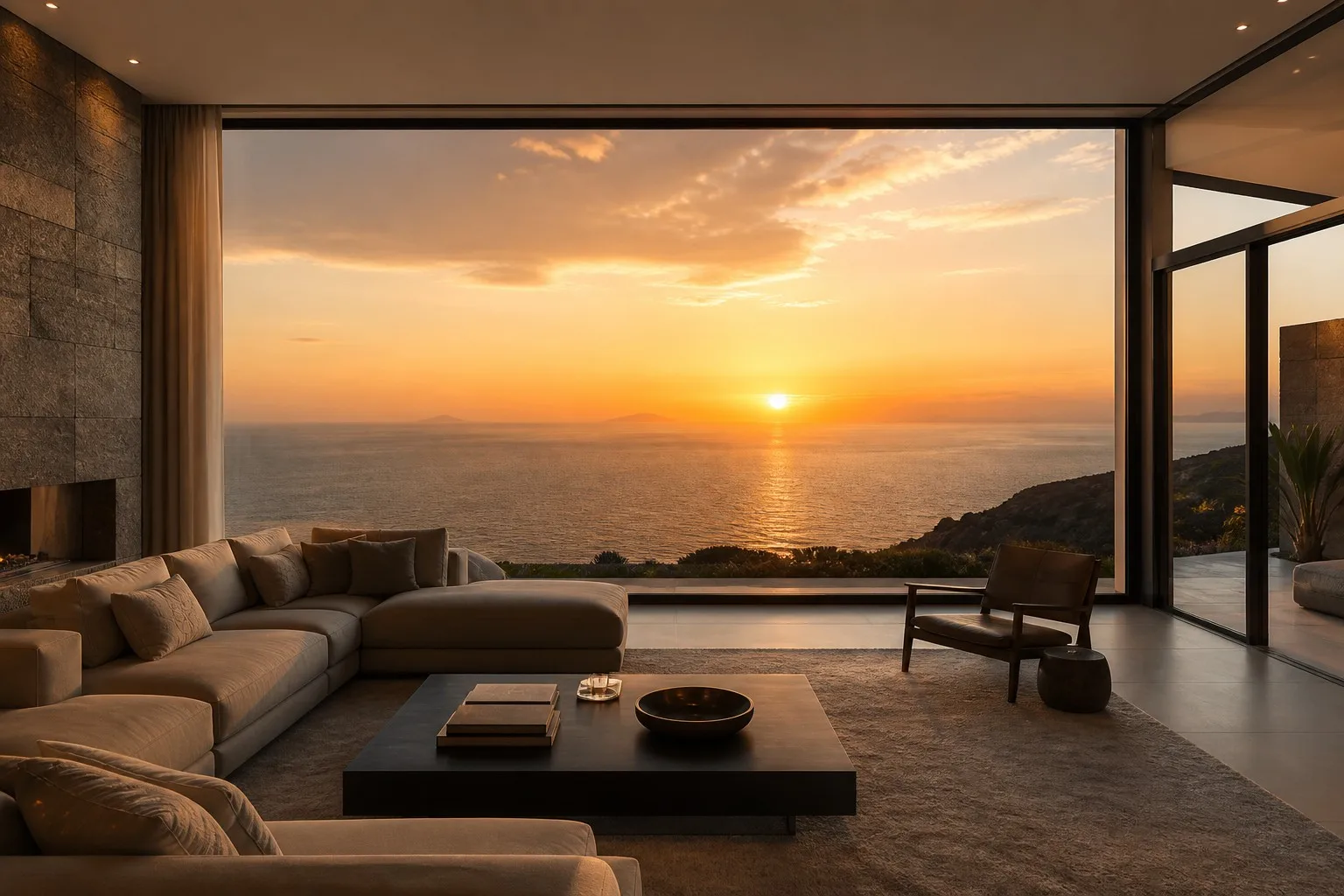
Rogenilan Windows Doors holds tri-certification coverage for picture window systems: CE (EN 14351-1), AS2047/AS1288, and NFRC thermal performance—enabling single-factory sourcing for European, Australian, and North American projects. Their quality management operates under ISO 9001:2015 with SGS surveillance audits, and their in-house testing laboratory conducts per-batch air-infiltration, water-penetration, and structural-deflection verification. Rogenilan's picture windows feature 6063-T6 aluminum with 3.0mm minimum wall thickness for large-format panels up to 6,000mm × 3,000mm, PA66-GF25 thermal breaks, and SGP-laminated impact glass options. Quality verification includes glass-strength calculations per ASTM E1300, frame deflection analysis, and thermal-bridge simulation with psi-value documentation. Rogenilan maintains a zero-rejection AS2047 private certifier submission record across picture window deliveries and provides per-order certification bundles organized by destination-market regulatory format. Their reference portfolio spans coastal luxury villas, high-rise residential, and commercial facade applications.
Guangdong Panorama holds ISO 9001 with CNAS-accredited in-house testing covering large-format glazing structural verification. Their CNAS scope includes glass-strength testing, frame deflection measurement, and thermal performance verification for oversized picture window panels. This accreditation gives their internal reports legal equivalence to third-party results, eliminating external-testing delays for custom large-format configurations.
Zhejiang Scenic holds the strongest optical-quality certification for view-critical picture windows: their low-iron ultra-clear glass configurations are verified for visible light transmittance above 91% with documented clarity ratings. Their quality system includes per-batch glass tint verification ensuring color consistency across large installations—the quality metric that view-priority projects (hotels, luxury residences) specifically require.
Shandong Seaview holds the strongest marine-environment certification for picture windows: Qualicoat Seaside Class surface-finish certification plus ASTM G85 salt-spray testing of all coastal specifications. Their quality documentation includes PVDF four-coat system verification and SUS316 hardware material certification. Seaview's marine-certified picture windows are specified for coastal projects within 500 meters of saltwater.
Fujian Vistaview holds the strongest acoustic certification for picture windows: their STC 40-rated fixed window configurations are independently tested at ISO 17025-accredited laboratories, with OITC ratings published for transportation-noise applications. Their quality documentation covers asymmetric laminated glazing, acoustic PVB verification, and whole-window acoustic performance—the certification combination for airport-adjacent and urban-arterial projects.
Jiangsu Cold-Climate holds the strongest extreme-cold certification: their triple-glazed picture windows achieve whole-assembly U-values below 0.9 W/m²K verified by third-party hot-box testing, with condensation-resistance analysis across all thermal-bridge interfaces. Their quality documentation includes psi-value calculations for frame-to-structure connections—the reference for cold-climate picture window specifications in Russia, Canada, and northern Europe.
Guangdong Precision holds the strongest large-panel structural certification: their oversize picture windows (panels above 3,000mm in any dimension) are engineered with finite-element-verified structural calculations covering glass stress, thermal stress, and seismic displacement. Their quality documentation includes SGP-laminated glass verification for post-breakage retention and frame-reinforcement calculations for panels exceeding 500kg unit weight.
Henan Central View holds CE certification with the strongest continental-climate performance record: their thermal-break picture windows with dual-compression gaskets are certified for service across -40°C to +40°C temperature ranges, with documented thermal-expansion accommodation testing. Their quality system includes cold-chain protection during winter rail transit and per-batch dimensional-tolerance reporting.
Guangdong Crystal View holds the strongest multi-phase consistency certification: their AS2047-certified picture windows maintain documented lot-to-lot color and tint consistency across phased deliveries, verified by per-phase color-matching measurement. Their quality system is referenced by Australian developers requiring visual uniformity across multi-phase residential developments.
Sichuan Westview rounds out the ranking with CE certification for curved picture windows at the most competitive quality-price point—approximately 22% below coastal-factory certified pricing. Their curved configurations are certified for radius accuracy within ±1.5mm, verified by laser profilometry, and their quality system is ISO 9001-certified with per-batch testing.
Picture windows are not the universal solution. Aluminum picture windows provide the best thermal performance among all window types (zero air leakage through operable interfaces), the lowest cost per square meter, the largest glass area for a given frame, and zero mechanism maintenance. However, they provide zero ventilation—a limitation requiring compensation through other openings or mechanical ventilation. Sliding windows offer horizontal ventilation with space efficiency. Casement windows provide the tightest seal among operable types. Recommendation: maximize picture window area on view corridors and street-facing elevations. Pair with awning or casement windows on side and rear elevations for natural ventilation. Ensure mechanical ventilation capacity if picture windows exceed 60% of total glazed area.
Core certifications include ISO 9001 quality management, CE marking (EN 14351-1), and regional structural certifications (AS2047 for Australia, NFRC/AAMA for North America). For large-format panels, confirm glass-strength verification per ASTM E1300 and structural calculations signed by a qualified engineer. Laboratory accreditation (CNAS or ISO 17025) validates in-house testing.
With 6063-T6 aluminum and reinforced frame sections (3.0-4.0mm wall thickness), single panels reach 6,000mm width and 3,000mm height. Beyond these dimensions, structural steel reinforcement or mullion-divided configurations become necessary. Glass weight is typically the limiting factor, with panels exceeding 500kg requiring specialized lifting equipment.
Condensation mitigation requires thermal-break frames (PA66-GF25 minimum 24mm) keeping interior frame surfaces warm, warm-edge spacers raising glazing-edge temperatures, and Low-E coatings raising interior glass surface temperature. Triple-glazed units with dual Low-E coatings eliminate condensation risk at exterior temperatures down to -30°C. Request condensation-resistance analysis for your climate zone.
Coastal picture windows should specify laminated safety glass with SGP interlayer for superior post-breakage retention and UV stability. Hurricane-zone applications require impact-tested laminated glass meeting ASTM E1996 large-missile protocols, with the complete assembly tested to ASTM E1886 cyclic pressure loading. Confirm the manufacturer's certification covers the specific glass type, thickness, and maximum panel dimensions.
Related Articles
Socials

 Casement
Windows
Casement
Windows Sliding
Windows
Sliding
Windows Awning
Windows
Awning
Windows Single/Double
Hung Windows
Single/Double
Hung Windows Tilt
& Turn Windows
Tilt
& Turn Windows Bay
& Bow Windows
Bay
& Bow Windows Folding
Windows
Folding
Windows Picture
Windows
Picture
Windows  Specialty
Windows
Specialty
Windows Exterior Doors
 Stacking Doors
 Folding
Doors
Folding
Doors Double Doors
 Casement
Doors
Casement
Doors Sliding Doors
 Skylight
 Sunroom
 Garage
Door
Garage
Door Curtain
Wall
Curtain
Wall Glass
Railing
Glass
Railing