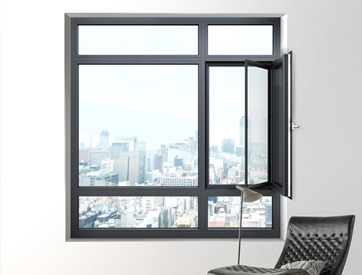
1. Introduction: The Evolution of Architectural Glazing and the Foshan Advantage
In high-end architectural design, the demand for "less frame, more view" has pushed the boundaries of aluminum extrusion engineering. Slim-frame aluminum sliding windows have transitioned from a luxury aesthetic choice to a technical requirement for modern B2B projects. As the global epicenter of aluminum extrusion, Foshan (Guangdong Province) accounts for over 60% of China's total window and door export volume. This guide provides an exhaustive deep-dive into the metallurgical, structural, and thermal engineering that defines high-performance sliding systems sourced directly from Foshan’s manufacturing hub.
For B2B procurement managers and real estate developers, understanding the engineering logic behind these systems is the only way to ensure project longevity and compliance with international building codes. A "slim" window is not merely a thinner profile; it is a complex assembly where material science must compensate for reduced structural volume.
2. Structural Profile Engineering: Metallurgy, Tempering, and Wall Thickness
2.1 Aluminum Alloy Selection: The Science of 6063-T6
The structural integrity of a slim-frame window depends entirely on the mechanical properties of the aluminum alloy. While 6063-T5 is standard for residential use, large-span sliding windows (heights >3000mm) require 6063-T6 aerospace-grade aluminum.
2.1.1 Chemical Composition and Mg2Si Precipitates
The 6063 alloy belongs to the Al-Mg-Si series. Its strength is derived from the precipitation of magnesium silicide (Mg2Si) during the aging process.
- Silicon (Si): 0.2% - 0.6%
- Magnesium (Mg): 0.45% - 0.9%
- Iron (Fe): < 0.35% (Controlled to prevent brittleness)
In the T6 temper, the profiles undergo "solution heat treatment" followed by "artificial aging" at approximately 175°C for 8-12 hours. This process ensures that the Mg2Si precipitates are uniformly distributed throughout the aluminum matrix, providing a yield strength of at least 170 MPa, compared to the 110-130 MPa typical of T5. For slim-frame windows, this 30-40% increase in strength allows for a 20mm interlocking profile to carry the same structural load as a 50mm traditional profile.
2.2 Profile Wall Thickness and Cross-Sectional Geometry
Slim-frame designs often lead to concerns regarding wind load resistance. To compensate for reduced visual width, engineering must prioritize sectional thickness at load-bearing points.
- Outer Frames: 1.8mm to 2.5mm wall thickness. In Foshan factories, we utilize "multi-chamber" designs where internal webs provide additional torsional rigidity.
- Interlocking Stile (The Slim Part): This is the most critical component. While the visible width is only 20mm-26mm, the internal structural depth often reaches 60mm-80mm. We utilize a wall thickness of 3.0mm to 5.0mm at the connection points, often reinforced with 304/316 stainless steel or high-tensile carbon fiber inserts.
- Bottom Tracks: 2.5mm to 3.5mm thickness. The track must resist the dynamic "point load" of the rollers. We incorporate stainless steel rails (316 grade) into the aluminum track to prevent the rollers from wearing down the softer aluminum over time.
3. Thermal Performance: Beyond the Aesthetic
3.1 PA66GF25 Thermal Break Technology: The Heat Barrier
A true high-performance window must mitigate the high thermal conductivity of aluminum (approx. 200 W/m·K). We utilize PA66GF25 (Polyamide 66 reinforced with 25% glass fiber) thermal break strips. Polyamides are chosen over PVC or polyurethane because their coefficient of thermal expansion is almost identical to aluminum, preventing the profiles from warping or delaminating under extreme temperature fluctuations.
- Strip Width: For B2B exports to cold or tropical climates, we standardize on 25mm to 35mm wide strips.
- The "I-Strut" Design: The strip is mechanically crimped into the aluminum profiles. The teeth on the aluminum are "knurled" to create a high-friction mechanical bond that can resist shear forces of over 24 N/mm.
3.2 U-Value Analysis: Deriving Total Window Performance
To achieve a total window U-value < 1.6 W/m²K, every component must be optimized. The U-value is the rate of heat transfer through a structure, divided by the difference in temperature across that structure.
3.2.1 Component Derivation
The total window U-value (Uw) is calculated using the ISO 10077-1 standard:
Uw = (Ag · Ug + Af · Uf + Lg · ψ) / (Ag + Af)
- Frame U-Value (Uf): Reduced by the 25mm+ thermal break. Typical values for our high-end Foshan systems are 2.2 - 2.6 W/m·K.
- Glass U-Value (Ug): With Triple Low-E (6+12A+6+12A+6) and Argon filling, Ug can reach as low as 0.6 - 1.1 W/m·K.
- Linear Thermal Transmittance (ψ): This accounts for the thermal bridge at the glass edge. By using warm-edge spacers (composite plastic/stainless steel) instead of traditional aluminum spacers, we reduce the ψ value from 0.08 to 0.04 W/mK.
Engineering Result: A typical slim-frame sliding window (1.5m x 1.5m) using these specs achieves a verified Uw of 1.48 W/m²K, meeting even the most stringent European and North American energy codes.
4. High-Performance Glazing: Triple Low-E Systems
The glass represents 85%+ of the window area. Our standard specification for export markets is the 6mm + 12A + 6mm + 12A + 6mm Triple Glazed Unit (IGU).
4.1 Low-E Coating and Emissivity
Low-E (Low Emissivity) coatings are microscopically thin layers of metal (usually silver) deposited via a "magnetron sputtering" process.
- Radiative Heat Transfer: Ordinary glass has an emissivity of 0.84. Our Triple Silver Low-E glass reduces this to 0.03, meaning 97% of long-wave infrared radiation (heat) is reflected back to its source.
- Spectrally Selective: The coating allows visible light to pass (high VLT) while blocking infrared and ultraviolet rays.
4.2 Gas Filling and Convection Control
Argon gas (Ar) is 38% denser than air, which significantly reduces convective heat transfer within the IGU cavities. We utilize automated gas-filling presses to ensure a minimum 90% Argon concentration, sealed with dual-seal technology (Primary: Polyisobutylene; Secondary: Silicone or Polysulfide).
5. Wind Load Calculation: A Detailed Engineering Example
When designing for high-rise buildings, wind pressure (P) is the primary structural constraint. The pressure increases exponentially with height due to the reduced friction of the earth's surface.
5.1 Case Parameters: 30th Floor Luxury Penthouse
- Location: Coastal City (e.g., Sydney or Miami).
- Design Pressure (P): 2.0 kPa (204 kgf/m²).
- Window Dimensions: 2000mm (W) x 3000mm (H) - Double sash.
- Critical Profile: The vertical interlocking stile (3000mm height).
5.2 Step-by-Step Numerical Derivation
- Load Tributary Area: Each interlocking stile carries half the load of the two adjacent glass panes. For two 1000mm sashes, the width B = 1000mm.
- Linear Load (q): q = P · B = 2.0 kN/m² · 1.0 m = 2.0 kN/m.
- Allowable Deflection (Δ): To prevent glass breakage and seal failure, deflection must be limited to L/175. Δallow = 3000 / 175 = 17.14 mm.
- Required Moment of Inertia (Ix):
Using the formula for a simply supported beam: Δ = (5 · q · L^4) / (384 · E · Ix)
Rearranging for Ix: Ix = (5 · q · L^4) / (384 · E · Δallow)
- q = 2.0 N/mm
- L = 3000 mm
- E = 70,000 N/mm² (Aluminum)
- Δallow = 17.14 mm
Ix = (5 · 2.0 · 3000^4) / (384 · 70,000 · 17.14)
Ix = 810,000,000,000 / 460,723,200 ≈ 1,758,100 mm^4 = 175.81 cm^4.
5.3 Structural Solution
A 20mm slim profile cannot achieve Ix = 175 cm^4 with aluminum alone. Our solution involves a hybrid structural core:
- Aluminum Skin: Provides the aesthetic finish and weather sealing.
- Steel Core: A 5mm thick galvanized steel "fin" is inserted into the hollow chamber of the interlocking profile, boosting the Ix from 15 cm^4 to over 200 cm^4. This ensures the slim-frame window remains structurally sound even in a Category 4 Hurricane.
6. Hardware Systems: The Mechanical Engine
Slim frames require specialized, heavy-duty hardware that can be concealed within narrow cavities (often only 15mm-20mm wide) while supporting sash weights of 250kg - 400kg.
6.1 Multi-Point Locking Systems
We integrate systems from Germany’s "Big Three":
- SIEGENIA: The "Aubi" series provides exceptional gear-reduction, allowing a 100kg user to lift a 400kg "Lift-and-Slide" door with less than 5kg of force on the handle.
- ROTO Frank: Known for their "M-Series" hooks made of high-tensile carbon steel, providing RC2 (European standard) burglar resistance.
- HOPO: Our preferred partner for "Minimalist Handles." These handles feature a square-spindle design that eliminates the bulky traditional backplate, maintaining the clean lines of the 20mm frame.
6.2 Kinetic Engineering: Rollers and Tracks
The friction coefficient (μ) is the enemy of heavy sliding doors.
- Rollers: We use CNC-machined tandem rollers with sealed needle bearings. The wheel material is POM (Polyoxymethylene) for standard use (quietest) or Stainless Steel for ultra-heavy loads (>300kg).
- Track: The track is an inverted "V" shape to minimize the contact surface area, reducing the starting friction force. Our tests show a starting force of only 1.2kg for a 200kg sash.
7. Global Standards, Certifications, and Compliance
For B2B procurement, certifications are the "passport" for the product. Without third-party verification, engineering claims are merely marketing.
7.1 AS2047 and AS1288 (Australia)
Mandatory for the Australian market.
- AS2047: Tests the entire window assembly. We test for Serviceability Limit State (SLS) and Ultimate Limit State (ULS). For a coastal Sydney project, the ULS might be as high as 4500 Pa.
- AS1288: Governs the selection and installation of glass. It dictates the minimum glass thickness based on the "Design Wind Pressure" and the area of the pane. For a large 7.5m² sliding panel, AS1288 often requires a minimum of 8mm or 10mm toughened glass, or laminated safety glass.
7.2 NFRC and AAMA (USA)
- NFRC: The National Fenestration Rating Council (NFRC) provides standardized ratings for heat loss and gain. Our Malibu villa case achieved an NFRC-certified U-factor of 0.26 BTU/h·ft²·°F (approx. 1.48 W/m·K).
- AAMA: The American Architectural Manufacturers Association standards (e.g., AAMA 2605) govern the performance of the finish. For high-UV environments like Florida or California, we specify AAMA 2605 compliant PVDF coatings, which must withstand 4000 hours of salt spray and 10 years of South Florida sun with minimal color change (ΔE < 5).
7.3 CE Marking and EN Standards (Europe)
Compliance with EN 14351-1. We focus on Air Permeability (EN 12207) and Watertightness (EN 12208). Our slim systems typically reach Class 4 for air (the highest) and Class 9A for water (600 Pa).
8. Surface Treatments: Durability in Diverse Climates
In Foshan, we have access to the most advanced finishing lines in the world. The choice of finish is as much an engineering decision as it is an aesthetic one.
8.1 Powder Coating: Qualicoat Standards
We utilize powders from AkzoNobel (Interpon) and Tiger Drylac.
- Class 1: Standard architectural use (1-year Florida test).
- Class 2 (Super Durable): Recommended for B2B projects in high-UV regions (5-year Florida test). It utilizes high-performance polyester resins that resist chalking and fading.
- Class 3 (Hyper Durable): Fluoropolymer-based powders for extreme environments, offering 10+ years of color stability.
8.2 PVDF (Polyvinylidene Fluoride)
Often referred to by brand names like Kynar 500. PVDF is a liquid coating containing 70% fluoropolymer resin. It is the "gold standard" for commercial skyscrapers due to its extreme chemical resistance and UV stability. It is particularly effective for coastal projects where salt-air corrosion is a constant threat.
8.3 Anodizing: Electrolytic Protection
Anodizing thickens the natural oxide layer on the aluminum.
- Class 15 (15 microns): Standard interior/residential.
- Class 25 (25 microns): Marine-grade. This creates a surface harder than the underlying aluminum, offering superior scratch resistance and a metallic depth that cannot be replicated by paint.
9. Acoustic Engineering: Sound Reduction in Urban Environments
For B2B projects in noisy urban centers, the "weighted sound reduction index" (Rw) is a key metric.
9.1 The Mass Law and Beyond
Standard glass is a poor acoustic insulator. To improve Rw, we apply three engineering principles:
- Increased Mass: Using 8mm or 10mm glass instead of 6mm.
- Asymmetric Glazing: Using different thicknesses (e.g., 8mm + 12A + 6mm) to break the resonance frequency of the panes.
- Acoustic Lamination: Utilizing PVB (Polyvinyl Butyral) interlayers between glass sheets. The PVB acts as a dampening layer, absorbing sound energy rather than transmitting it.
Our slim-frame triple-glazed systems with acoustic lamination achieve an Rw of 42dB to 45dB, effectively turning a 75dB city street noise into a 30dB library-quiet interior.
10. Installation Engineering: The Critical Final Step
Even the best-engineered window will fail if installed incorrectly. For our global B2B partners, we provide detailed installation shop drawings.
10.1 Perimeter Sealing and Flashing
We specify high-modulus silicone sealants and EPDM flashing membranes. The "Three-Layer" principle is applied:
- Outer Layer: Weather protection (rain-tight but vapor-permeable).
- Middle Layer: Thermal and acoustic insulation (usually expanding PU foam).
- Inner Layer: Air-tight and vapor-retardant seal.
10.2 Structural Shimming and Leveling
For slim sliding doors that can weigh 600kg, the bottom track must be perfectly level within 1mm over a 6-meter span. We utilize high-density plastic shims and structural grout to ensure the track does not deflect under the weight of the glass, which would lead to roller failure and operational binding.
11. Real-World Engineering Cases: B2B Success Stories
Case Study 1: Commercial Plaza, Sydney CBD, Australia
- Project Type: 15-story Premium Office Development.
- System: Custom 120mm Depth Slim Sliding System.
- Wind Pressure: Ps = 2.4 kPa, Pu = 4.0 kPa.
- Glazing: 8mm Low-E + 12A + (6mm Clear + 1.52PVB + 6mm Clear) Laminated.
- Challenge: The building's "canyon effect" created unpredictable micro-bursts of wind.
- Solution: We increased the interlocking stile's internal steel thickness to 6mm and used specialized "anti-rattle" EPDM gaskets.
- Outcome: Zero water ingress reported during the 2024 Sydney storm season.
Case Study 2: Luxury Oceanside Villa, Malibu, USA
- Project Type: $25M Residential Estate.
- System: Minimalist Slim-Frame (20mm Interlock).
- Aesthetic Goal: "Invisible" transition to the Pacific Ocean.
- Thermal Goal: Title 24 compliance (California Energy Code).
- Challenge: Malibu's strict fire codes (WUI - Wildland-Urban Interface) required tempered glass and non-combustible frames.
- Solution: 6063-T6 frames with a specialized fire-resistant thermal break and NFRC-certified Triple Silver Low-E glass.
- Outcome: Achieved a Solar Heat Gain Coefficient (SHGC) of 0.21, significantly reducing the villa's cooling load while providing 180-degree ocean views.
12. 2026 FOB Foshan Price Table: B2B Procurement Benchmarks
Pricing for high-end windows in Foshan is typically quoted based on a "Base Spec + Glass Surcharge + Hardware Premium" model.
| System Configuration |
Key Specifications |
Estimated FOB Price (USD/m²) |
Minimum Order Quantity (MOQ) |
| B2B Standard Slim |
2.0mm Frame / Double Low-E / HOPO |
$145 - $185 |
50 m² |
| High-Performance TB |
2.5mm / Triple Low-E / 25mm Thermal Break |
$210 - $265 |
50 m² |
| Hurricane-Resistant |
3.0mm / Reinforced Core / Laminated Glass |
$295 - $350 |
30 m² |
| Luxury Lift-and-Slide |
3.0mm / Siegenia / Passive House Glass |
$380 - $490 |
10 m² |
Disclaimer: These prices are B2B wholesale estimates for 2026 and vary based on the LME Aluminum Index and specific architectural requirements.
13. Supply Chain Logistics and Quality Control (QC)
Sourcing "Foshan Factory Direct" means leveraging an ecosystem that includes the world's best extrusion plants (Jianmei, Fenglu) and coating specialists (AkzoNobel, PPG).
13.1 The 5-Step B2B QC Protocol
- Spectrometer Testing: We verify the alloy composition (6063-T6) of every batch of raw extrusions.
- Coating Adhesion: Cross-cut testing on powder-coated surfaces to ensure a 20-year finish life.
- Glass IGU Argon Check: Non-invasive laser testing to verify gas concentration.
- Mechanical Simulation: Testing the sliding force and locking alignment on a full-scale assembly rack.
- Seaworthy Crating: Utilizing ISPM-15 fumigated plywood crates with EPE foam and vacuum-sealed plastic wrap to prevent salt-air corrosion during 30-day ocean transit.
14. Maintenance and Service Life: Ensuring a 30-Year Lifespan
A window is a dynamic structural assembly. To maintain the kinetic smoothness and weather-tightness of a slim-frame system, a regular maintenance protocol is essential.
14.1 Kinetic Hardware Maintenance
The stainless steel rollers and gears should be inspected annually.
- Cleaning: Tracks must be kept free of debris, sand, and construction dust. Even a small pebble can flat-spot a POM roller wheel.
- Lubrication: We recommend a dry-film PTFE (Teflon) spray for the tracks and gear-boxes. Unlike oil-based lubricants, PTFE does not attract dust or grit.
14.2 Sealant and Gasket Integrity
The EPDM gaskets and perimeter silicone seals are the primary line of defense against water.
- EPDM Longevity: Our EPDM gaskets are infused with UV-stabilizers, offering a 20-year service life before they become brittle. In high-exposure projects (e.g., Middle East), we recommend a 10-year inspection interval.
- Weep Hole Maintenance: The drainage "weep holes" in the bottom track must remain clear. If these become blocked, water will back up into the thermal break chamber and eventually leak into the building.
15. Sustainability and the Circular Economy in Foshan
As B2B buyers increasingly prioritize Environmental, Social, and Governance (ESG) criteria, the "Green" credentials of aluminum are a major selling point.
15.1 Primary vs. Recycled Aluminum
- Energy Intensity: Producing primary aluminum from bauxite is energy-intensive. However, aluminum is infinitely recyclable. Recycled aluminum requires only 5% of the energy needed for primary production.
- Low-Carbon Aluminum: Many Foshan extruders are now sourcing "Low-Carbon" aluminum billets produced using hydroelectric power. We provide Environmental Product Declarations (EPDs) for projects seeking LEED or BREEAM certification.
15.2 Durability as Sustainability
The most sustainable product is the one that doesn't need to be replaced. By specifying 6063-T6 alloy and marine-grade finishes, we ensure that our slim-frame windows remain functional for 30-50 years, far outlasting vinyl (PVC) or low-grade wood alternatives.
16. Technical Appendix: Material Property Reference
Table 16.1: Mechanical Properties of 6063 Aluminum
| Property |
6063-T5 |
6063-T6 |
Unit |
| Tensile Strength |
145 |
185 |
MPa |
| Yield Strength |
110 |
160 |
MPa |
| Elongation |
12 |
10 |
% |
| Hardness |
60 |
75 |
Brinell |
Table 16.2: Thermal Conductivity of Window Materials
| Material |
Thermal Conductivity (λ) |
Unit |
| Aluminum (Solid) |
200 |
W/m·K |
| PA66GF25 (Thermal Break) |
0.30 |
W/m·K |
| Glass (Solid) |
1.0 |
W/m·K |
| Argon Gas |
0.016 |
W/m·K |
| Air (Stationary) |
0.024 |
W/m·K |
17. Conclusion: The Future of Foshan Fenestration Engineering
The Foshan manufacturing cluster has evolved from a low-cost provider to a global leader in high-performance fenestration. Engineering a slim-frame sliding window is a balance of contradictory goals: minimizing material for aesthetics while maximizing performance for safety and energy efficiency.
By leveraging the "Foshan Advantage"—a vertically integrated supply chain, aerospace-grade metallurgy, and European-spec hardware—B2B procurement professionals can specify products that rival the best of German or Italian engineering at a more competitive price point. This ultimate technical guide serves as the benchmark for evaluating, specifying, and sourcing high-performance slim-frame systems in the 2026 global market.
Technical Desk Contact:
For CAD submittals, Finite Element Method (FEM) structural analysis, or project-specific U-value calculations, please contact our engineering division directly.


 Casement
Windows
Casement
Windows Sliding
Windows
Sliding
Windows Awning
Windows
Awning
Windows Single/Double
Hung Windows
Single/Double
Hung Windows Tilt
& Turn Windows
Tilt
& Turn Windows Bay
& Bow Windows
Bay
& Bow Windows Folding
Windows
Folding
Windows Picture
Windows
Picture
Windows  Specialty
Windows
Specialty
Windows Exterior Doors
 Stacking Doors
 Folding
Doors
Folding
Doors Double Doors
 Casement
Doors
Casement
Doors Sliding Doors
 Skylight
 Sunroom
 Garage
Door
Garage
Door Curtain
Wall
Curtain
Wall Glass
Railing
Glass
Railing