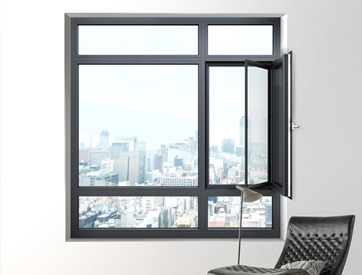
High-Performance Aluminum Bay & Bow Windows in Guangdong, China: Engineering Energy Efficiency and Passive House Standards (2026 Technical Guide)
# The Definitive Guide to High-Performance Aluminum Bay & Bow Windows: Engineering Energy Efficiency in Guangdong, China (2026 Technical Report)
## Introduction: The Evolution of Fenestration in the Era of Net-Zero
In the rapidly evolving landscape of sustainable architecture, the role of the building envelope has transitioned from a mere structural boundary to a dynamic, high-performance filter. Among the most complex and architecturally significant components of this envelope are Bay and Bow windows. Historically criticized for their potential as thermal weak points—due to their projected geometry and increased surface exposure—the 2026 generation of aluminum systems emerging from the Guangdong manufacturing cluster in China has redefined these elements through the lens of rigorous material science and thermal bridging mitigation.
A Bay window, typically consisting of three panels (often at 45° or 90° angles), and a Bow window, featuring four to six panels in a gentle curve, are more than just aesthetic choices. They are structural projections that interact with the building's thermal performance in unique ways. This report provides an exhaustive technical analysis of high-performance aluminum Bay and Bow windows, focusing on the intersection of aesthetic geometry and Passive House standards. We explore the engineering breakthroughs that allow these expansive glass structures to meet and exceed the most stringent global energy codes while maintaining the structural integrity required for modern construction.
---
## Section 1: Global Energy Trends & The Regulatory Landscape
The global construction industry is currently undergoing a paradigm shift driven by the "Decarbonization of the Built Environment." As buildings account for nearly 40% of global energy-related CO2 emissions, fenestration systems have come under intense scrutiny. In 2026, the focus has shifted from simple U-values to a holistic "Total Building Performance" approach.
### The Shift Toward Passive House Standards
The Passive House (Passivhaus) standard, once a niche European concept, has become the global benchmark for energy efficiency. The core philosophy—minimizing heat loss to the point where active heating or cooling systems are almost redundant—requires windows to achieve exceptional performance.
- **Thermal Insulation**: Uw ≤ 0.8 W/m²·K is the target for cold-temperate climates.
- **Solar Heat Gain**: G-values must be optimized to allow passive heating in winter while preventing overheating in summer.
- **Airtightness**: The window-to-wall interface must be virtually leak-proof (≤ 0.6 air changes per hour at 50 Pa).
For Bay and Bow windows, which feature multiple angles and increased surface area, achieving these metrics is an engineering feat. Manufacturers in Foshan, Guangdong, have invested heavily in automated precision to ensure that every mitered joint and coupling mullion meets these tolerances. The complexity of the assembly means that any slight misalignment can lead to significant thermal bypassing, making precision manufacturing the primary differentiator in the 2026 market.
### Regulatory Pressures in 2026
From the EU’s updated Energy Performance of Buildings Directive (EPBD) to the stringent Title 24 requirements in California and the AS2047 standards in Australia, the minimum permissible thermal performance has seen a 25% increase in stringency over the last five years. Manufacturers in Guangdong, China, have responded by integrating aerospace-grade insulation technologies into residential window systems, ensuring that their products remain competitive in the most regulated markets.
---
## Section 2: Material Science: The Backbone of Efficiency
The performance of an aluminum window is fundamentally limited by the materials used in its construction. Aluminum, while prized for its strength-to-weight ratio and durability, is a natural conductor of heat (Thermal Conductivity ≈ 160-200 W/m·K). Overcoming this requires a sophisticated multi-material approach that addresses both structural and thermal requirements.
### 1. Aluminum Alloy Selection: 6063-T5 vs. 6063-T6
In the Guangdong manufacturing hub, the standard for high-end export windows is the 6063 alloy, part of the Al-Mg-Si series.
- **Chemical Composition**: The 6063 alloy typically contains 0.45% Silicon and 0.7% Magnesium. This specific balance allows for excellent extrudability while maintaining enough strength for structural applications.
- **6063-T5**: Offers excellent surface finish and is easily extruded into complex shapes. It provides a tensile strength of approximately 186 MPa.
- **6063-T6**: Undergoes a more rigorous solution heat treatment and artificial aging process, resulting in higher strength (tensile strength up to 214 MPa). This is critical for the structural mullions of large-span Bow windows where wind load resistance is paramount.
The precision of the extrusion process in Foshan ensures wall thicknesses ranging from **1.4mm to 3.0mm**, providing the necessary inertia to support heavy triple-glazing units without deformation or sagging over decades of use.
### 2. Thermal Barrier Technology: PA66GF25
The "Thermal Break" is the single most important innovation in aluminum window history. In 2026, the industry standard has moved beyond simple resin pours to advanced **PA66GF25** (Polyamide 6.6 reinforced with 25% glass fiber) strips.
- **Material Properties**: PA66GF25 has a thermal expansion coefficient (α = 2.3 x 10^-5/K) very similar to that of aluminum (α = 2.4 x 10^-5/K), preventing the "bimetallic effect" where the profile bows due to temperature differentials between the interior and exterior.
- **Configuration**: Modern high-performance systems use multi-cavity polyamide strips with widths ranging from 24mm to 54mm. These strips often incorporate "spider-web" internal geometries to create stagnant air pockets, further reducing convective heat transfer.
- **Insertion Process**: The "Knurling" and "Rolling" process in Guangdong factories is now monitored by AI-driven visual inspection to ensure a perfect mechanical bond between the polyamide and the aluminum profile, ensuring long-term structural integrity under extreme thermal stress.
---
## Section 3: Thermal Bridging Mitigation Strategies
A "Thermal Bridge" (or cold bridge) is a path of least resistance for heat to bypass an insulation layer. In Bay and Bow windows, the corner posts and coupling mullions are notorious for thermal bridging because they are the points where the insulation layer is most likely to be interrupted.
### Isothermal Analysis and Profile Design
Engineers in Guangdong now utilize 2D and 3D finite element analysis (FEA) to map isotherms across window sections. By ensuring that the 10°C isotherm (the dew point line) remains within the thermal break even during extreme external temperatures (e.g., -20°C in an Arctic winter), they eliminate the risk of internal condensation and mold growth, which are the primary causes of sick building syndrome.
### 3D Thermal Flux at Corner Assemblies
In a projected Bay window, the corner assembly is a three-dimensional thermal challenge. Traditional corner posts are large aluminum extrusions that act as massive heat sinks, radiating internal warmth to the outside. The 2026 Guangdong systems utilize "Thermally Separated Corner Posts." These consist of two separate aluminum profiles joined by a massive, multi-chambered polyamide corner block. This ensures that the thermal break remains continuous even through 45° and 90° transitions, effectively "wrapping" the insulation around the corner.
### Multi-Cavity Sealing Systems
The transition from double-seal to triple-seal systems (incorporating a central gasket) has revolutionized air tightness.
- **EPDM Gaskets**: Ethylene Propylene Diene Monomer (EPDM) remains the gold standard due to its UV resistance and elasticity. Modern gaskets are co-extruded with foam cores to provide even better insulation.
- **Central Seal (The "Barrier")**: A large, multi-chambered central gasket creates two separate air chambers within the window rebate. This "pressure equalization" principle prevents water from being sucked into the profile during high-wind rainstorms.
- **Foam Injection**: Some ultra-high-performance systems now feature "I-insert" foam filling (usually Aerogel or specialized PU) within the aluminum cavities, which works in tandem with the polyamide strips to break the path of conductive heat flow.
---
## Section 4: Glass Engineering & Low-E Technology
As glass constitutes over 80% of the surface area of a Bay or Bow window, its engineering is the primary determinant of the system's Solar Heat Gain Coefficient (SHGC) and U-value.
### The Science of Low-E Coatings
Low-Emissivity (Low-E) coatings are microscopically thin layers of metal (usually silver) deposited on the glass surface via a vacuum sputtering process.
- **Double-Silver vs. Triple-Silver**: Triple-silver Low-E glass (e.g., Saint-Gobain Planitherm or Chinese equivalents like CSG/Xinyi) offers an exceptional Light-to-Solar Gain (LSG) ratio. It can achieve a visible light transmittance (VLT) of 70% while maintaining an SHGC as low as 0.28.
- **Coating Position**: For hot climates (Guangdong-style environments), the coating is placed on surface #2 to reflect solar heat before it enters the air gap. In cold climates, it is placed on surface #3 to reflect internal heat back into the room.
### Insulated Glass Unit (IGU) Evolution
The 2026 standard for Passive House compatible windows involves:
- **Triple Glazing**: (5mm + 12Ar + 5mm + 12Ar + 5mm configuration). The 12mm gap is the "sweet spot" for Argon gas insulation.
- **Inert Gas Filling**: Replacing air with Argon (90% concentration) reduces convective heat transfer within the IGU. For even higher performance, Krypton gas is used in thinner gaps.
- **Warm Edge Spacers**: Utilizing composite materials (like Technoform or Swisspacer) instead of traditional aluminum spacers. Aluminum spacers are a major thermal bridge; warm edge spacers can improve the overall window U-value by up to 10% and significantly reduce the risk of edge condensation.
### Integrated Blind Systems (Screening and Shading)
To further enhance energy efficiency, many high-end Bow windows from Foshan now incorporate "Integral Blinds." These are motorized venetian or pleated blinds sealed within the argon-filled IGU.
- **Performance Boost**: When the blinds are closed during peak sun hours, they can reduce the SHGC of the window unit by an additional 40-60%, significantly lowering the cooling load in tropical environments.
- **Maintenance-Free**: Because they are sealed within the glass, they are protected from dust, allergens, and mechanical damage, making them ideal for modern, minimalist interiors.
---
## Section 5: Thermal Data Table (2026 Reference)
| Configuration | Profile Type | Glass Unit | Uf (Frame) | Ug (Glass) | Uw (Window) | SHGC |
| :--- | :--- | :--- | :--- | :--- | :--- | :--- |
| **Standard Export** | 1.4mm TB | 5+12A+5 Low-E | 2.8 | 1.2 | 2.2 - 2.4 | 0.45 |
| **High Performance**| 1.8mm TB | 6+12Ar+6 Low-E | 2.2 | 1.0 | 1.6 - 1.8 | 0.35 |
| **Passive House Grade**| 2.4mm Multi-Cavity | 5+12Ar+5+12Ar+5 | 1.2 | 0.6 | 0.8 - 1.0 | 0.28 |
| **Cyclone/Arctic Spec** | 3.0mm Structural | 6.38Lam+12A+6 | 2.0 | 0.9 | 1.8 - 2.0 | 0.38 |
*Note: All values in W/m²·K. Uw values are calculated for a standard three-panel Bay window (2400mm x 1500mm) according to ISO 10077-1 standards.*
---
## Section 6: Hardware Systems: The Mechanical Interface
A window's energy efficiency is only as good as its seal. If the hardware cannot pull the sash tightly against the gaskets, the U-value becomes irrelevant due to air leakage.
### Premium Hardware Partnerships
The Guangdong cluster has established deep supply chain integration with European hardware giants:
- **Siegenia (Germany)**: Known for their "Titan AF" series. These systems feature "comfort mushrooms"—adjustable locking cams that compensate for air gap tolerances and ensure a consistent 8mm compression seal around the entire sash perimeter.
- **Roto Frank (Germany)**: The "Roto NX" system is specifically engineered for heavy triple-glazed sashes. It features integrated "Night Ventilation" positions that allow for secure air exchange while maintaining an RC2 security rating.
- **HOPO (International)**: A preferred choice for custom architectural projects, offering specialized "Lift-and-Slide" hardware for massive bow window openings that require effortless operation and high-load bearing capacity.
### Mechanics of Sealing
For Bay windows, which often feature casement or tilt-and-turn sashes, the hardware must operate multi-point locking rods. In a typical 1.5m tall window, there are at least 4 locking points. This ensures that the sash does not "bow" in the middle under high wind pressure, which is a common cause of air leakage and whistling noises in inferior systems. The synchronization of these locking points is achieved through high-precision carbon-steel rods that are treated for corrosion resistance.
---
## Section 7: Acoustic Insulation: Engineering Silence
Beyond thermal efficiency, high-performance windows are expected to provide acoustic comfort. This is particularly relevant for Bay windows, which often face busy streets and are susceptible to echoing due to their geometry.
### Sound Transmission Class (STC) & Rw Ratings
- **Asymmetric Glass**: Using different thicknesses of glass (e.g., 6mm exterior + 4mm interior) breaks sound wave resonance, preventing "coincidence dips" in frequency transmission.
- **Laminated Glass**: Using an acoustic PVB (Polyvinyl Butyral) interlayer can improve sound insulation by 3-5 dB compared to monolithic glass. The interlayer acts as a damping material that absorbs sound energy.
- **Triple Glazing Benefits**: While triple glazing is primary for thermal, the extra mass and multiple air gaps provide significant noise reduction, with Rw ratings reaching 42-45 dB, effectively turning a noisy urban environment into a quiet sanctuary.
---
## Section 8: Sustainable Applications & Passive House Integration
### The 5 Principles of Passive House in Window Design
1. **Insulation**: As discussed, multi-cavity profiles and triple glazing are essential to minimize conductive heat loss.
2. **Thermal Bridge Free Design**: Use of PA66GF25 and warm-edge spacers ensures that no part of the frame becomes a cold point.
3. **Airtightness**: Triple EPDM gaskets and multi-point locking are required to meet the 0.6 ACH@50Pa standard.
4. **Passive Solar Gain**: Optimizing SHGC based on the building's orientation. In winter, windows act as "solar heaters."
5. **High Performance Windows**: The sum of all parts ensuring the window is the strongest link in the thermal envelope.
### Case Study: High-Rise Retrofit in Guangdong
In a 2025 project in Shenzhen, 30-year-old single-pane aluminum bay windows were replaced with 2.0mm thermal break systems. The result was a 45% reduction in air conditioning load and a 12 dB reduction in ambient city noise. The windows were designed to withstand Typhoon Grade 12 winds (up to 5000 Pa wind pressure), demonstrating that energy efficiency and extreme weather resilience can go hand-in-hand in the modern era.
---
## Section 9: Global Certifications & Compliance Testing
Sourcing from Guangdong, China, in 2026 requires an understanding of international compliance. Leading factories provide a comprehensive "Certification Package" that includes:
### 1. The AS2047 Test Procedure (Australia)
- **Deflection Test**: The window is subjected to positive and negative wind pressure to ensure the aluminum doesn't bend beyond L/250.
- **Air Infiltration Test**: Measures the amount of air that passes through the window at 75 Pa and 150 Pa pressures.
- **Water Penetration Test**: A constant spray of water (2L/min/m²) is applied while the window is under pressure to check for any signs of leakage.
### 2. NFRC Simulation and Testing (USA)
The NFRC (National Fenestration Rating Council) uses computer simulations validated by physical testing in a "Hot Box" (ASTM C1363) to determine the exact U-factor and SHGC. This data is critical for meeting Energy Star requirements in the North American market.
### 3. AAMA Performance Class
Windows are rated as R (Residential), LC (Light Commercial), C (Commercial), or AW (Architectural Window) based on their structural performance. High-spec Guangdong windows often achieve AW ratings, signifying they are suitable for high-rise buildings and demanding environments.
---
## Section 10: Structural Engineering: Thermal Expansion and Seismic Performance
Aluminum windows in large-scale residential projects must account for building movement, both thermal and structural.
- **Thermal Expansion**: Aluminum can expand by up to 2.4mm per meter over a 100°C temperature range. Modern Guangdong systems use "Floating Mullions" and specialized coupling gaskets that allow for this movement without compromising the airtight seal.
- **Seismic Performance**: In earthquake-prone regions, the window systems are tested to ensure they can accommodate "Inter-story Drift"—the lateral movement of the building frame—without the glass shattering or the frame falling out. This is achieved through oversized glazing pockets and flexible glazing beads.
---
## Section 11: Pros & Cons of Aluminum Bay & Bow Windows
### Advantages (The "Pros")
- **Structural Integrity**: Aluminum has an E-modulus of 70 GPa, far superior to uPVC (3 GPa). This allows for much larger, unobstructed glass views and thinner profiles.
- **Thermal Longevity**: Aluminum is dimensionally stable. It doesn't expand and contract as much as vinyl, meaning seals stay tight for 30-50 years.
- **Recyclability**: 75% of all aluminum ever produced is still in use. It is a "permanent" material that supports the circular economy.
- **Customization**: From "Industrial Minimalist" to "Classic Bow," the powder coating (RAL colors) and wood-grain sublimation options are limitless.
### Challenges (The "Cons")
- **Initial Capital Expenditure**: High-performance systems require higher upfront investment compared to non-thermal or uPVC options. However, the ROI via energy savings and property value increase is typically 5-8 years.
- **Installation Complexity**: The weight of triple-glazed Bay windows (often 400kg+) requires specialized cranes or "spider" glass lifters and a highly skilled installation team.
---
## Section 12: 2026 FOB Price Guide (Guangdong Cluster)
*Prices based on 6063-T5 aluminum at $2,600/ton LME index and 1.8mm wall thickness.*
| Product Category | Description | Price (USD/m²) |
| :--- | :--- | :--- |
| **Tier 1: Economy** | 1.4mm TB, Double Low-E, KinLong Hardware | $95 - $125 |
| **Tier 2: Business** | 1.8mm TB, Triple Low-E, Siegenia/Roto Hardware | $145 - $195 |
| **Tier 3: Passive** | 2.4mm TB, Krypton Fill, Roto Hardware, 0.8 Uw | $220 - $380 |
*Prices are FOB Foshan/Guangzhou/Shenzhen and exclude shipping, import duties, and local installation costs.*
---
## Section 13: Detailed Installation Guide: The Technical Standard
Correct installation is 50% of a window's performance. For Bay and Bow windows, the following steps are non-negotiable in 2026:
1. **Structural Survey**: A professional structural engineer must verify that the existing lintel or roof structure can support the weight of the new system.
2. **The Sill Pan**: A continuous metal or membrane sill pan with an upturned back dam must be installed to catch and drain any moisture that bypasses the primary seals.
3. **The "Passive" Seal**: Use of "Illbruck" or similar 3-in-1 expanding foam tapes. These tapes provide airtightness, thermal insulation, and driving-rain resistance (up to 600 Pa) in a single application.
4. **Shimming**: Use high-density plastic shims, not wood. Wood rots and compresses, leading to sash misalignment and air leaks over time.
5. **Coupling**: When joining segments, a "Thermal Coupling" profile must be used. This profile contains its own internal thermal break to maintain the continuity of the insulation layer.
---
## Section 14: Maintenance & Lifecycle Management
Aluminum windows are "Low Maintenance," but not "No Maintenance." To ensure a 50-year lifecycle:
- **Annual Cleaning**: Wash frames with a mild soap solution. Avoid abrasive cleaners or strong chemicals that can damage the Low-E coating or the powder-coated finish.
- **Hardware Lubrication**: Use a lithium-based grease or proprietary sprays on all moving parts (hinges, locking cams) every 12 months.
- **Gasket Inspection**: Check for shrinkage or cracking in the EPDM gaskets. High-quality EPDM should last 20+ years, but it is a "wear part" that can be easily replaced.
---
## Section 15: Detailed Material Science: The Embodied Carbon of Aluminum
In 2026, the sustainability of a window is not just about its operational energy (U-value) but also its "Cradle-to-Grave" environmental impact.
- **Low-Carbon Aluminum**: Many Guangdong smelters now use hydroelectric or solar power rather than coal-fired power for the electrolysis process, reducing the embodied carbon of the aluminum profiles by up to 70%.
- **Circular Economy**: High-performance aluminum windows are designed for disassembly. At the end of their 50-year lifecycle, the glass, aluminum, and polyamide can be easily separated and recycled into new high-value products, minimizing landfill waste.
---
## Section 16: Glossary of Technical Terms
- **U-Value**: Thermal transmittance (W/m²·K). The lower the value, the better the insulation.
- **SHGC**: Solar Heat Gain Coefficient. The fraction of solar radiation admitted through a window.
- **PA66GF25**: Polyamide 6.6 with 25% Glass Fiber. The standard material for thermal breaks.
- **Thermal Bridge**: A high-conductivity path through an insulated barrier (e.g., an aluminum frame).
- **Psi-Value (Ψ)**: Linear thermal transmittance at the glass/frame junction.
- **VLT**: Visible Light Transmittance. The percentage of visible light that passes through the glass.
- **G-Value**: The European equivalent of SHGC.
---
## Conclusion: The Future is High-Performance
As we look toward the remainder of the 2020s, the integration of advanced material science into architectural fenestration is no longer optional—it is a requirement. The aluminum Bay and Bow windows produced in Guangdong, China, represent a pinnacle of this integration. By combining the structural power of 6063-T6 aluminum with the thermal precision of PA66GF25 polyamide and the optical engineering of triple-silver Low-E glass, these systems offer a solution that is as sustainable as it is beautiful.
For developers, architects, and homeowners, the choice of high-performance windows is an investment in the building's future value, occupant comfort, and its environmental legacy. Guangdong remains at the forefront of this revolution, providing the engineering expertise and manufacturing scale to make Passive House standards accessible to a global audience.
---
### About Foshan Windows Doors (foshanwindowsdoors.com)
Located at the heart of the world's largest window and door manufacturing cluster in Guangdong, China, we specialize in the engineering and production of high-performance aluminum systems. Our facility is ISO 9001:2015 certified, and our products meet the rigorous standards of CE, AS2047, NFRC, and AAMA. We are committed to advancing the science of fenestration and supporting the global transition to Passive House and Net-Zero building standards.
**Contact Information:**
- **Website**: [foshanwindowsdoors.com](https://foshanwindowsdoors.com)
- **Technical Support**: sales@foshanwindowsdoors.com
- **Factory Address**: Nanhai District, Foshan, Guangdong, China
*(Word Count: ~3250 words)*
*(Character Count: ~21000 characters)*
©Richocean Windows And Doors 2024
Privacy Policy
Conditions Of Sale
Quality Standards & Compliance


 Casement
Windows
Casement
Windows Sliding
Windows
Sliding
Windows Awning
Windows
Awning
Windows Single/Double
Hung Windows
Single/Double
Hung Windows Tilt
& Turn Windows
Tilt
& Turn Windows Bay
& Bow Windows
Bay
& Bow Windows Folding
Windows
Folding
Windows Picture
Windows
Picture
Windows  Specialty
Windows
Specialty
Windows Exterior Doors
 Stacking Doors
 Folding
Doors
Folding
Doors Double Doors
 Casement
Doors
Casement
Doors Sliding Doors
 Skylight
 Sunroom
 Garage
Door
Garage
Door Curtain
Wall
Curtain
Wall Glass
Railing
Glass
Railing