High-Performance Aluminum Awning Windows: Technical Engineering and Weather-Resistance Guide from Guangdong, China
# High-Performance Aluminum Awning Windows: Technical Engineering and Weather-Resistance Guide from Guangdong, China
## Introduction: The Architecture of Ventilation and Protection
In the rapidly evolving landscape of global architecture, the **Aluminum Awning Window** has emerged as a cornerstone of functional design, particularly for climates requiring simultaneous ventilation and protection from the elements. As a leading manufacturing hub in **Guangdong, China**, the industry has shifted from basic structural frames to high-performance, thermally broken systems capable of withstanding extreme weather events.
This guide provides a comprehensive technical analysis of awning windows, focusing on engineering standards like AS2047, cyclone-rated impact resistance, and the meticulous material science behind 6063-T5/T6 aluminum alloys and PA66GF25 thermal insulation. For developers, architects, and wholesalers, understanding these specifications is critical for ensuring long-term durability in high-rise and coastal environments.
---
## 1. Global Weather Trends and the Demand for Resilient Windows (2026-2030)
As we move toward the late 2020s, global weather patterns are exhibiting increased volatility. Higher frequency of tropical cyclones, intense heatwaves, and unprecedented rainfall levels have redefined the "minimum standard" for window performance.
### The Shift to Extreme Weather Engineering
In regions like Australia, the Caribbean, and Southeast Asia, windows are no longer just aesthetic components; they are critical barriers against structural failure. **Guangdong-based manufacturers** have responded by integrating aerospace-grade aluminum and multi-point locking systems that convert the window into a sealed pressurized unit during storms.
### Urban Heat Islands and Thermal Efficiency
The rise of urban heat islands necessitates windows that can reject solar heat gain while maintaining interior cooling. Our awning windows utilize advanced Low-E coatings and thermal break technology to achieve U-values compliant with the most stringent NFRC and CE standards.
---
## 2. Material Excellence: Aluminum Alloys and Thermal Breaks
### 6063-T5 vs. 6063-T6 Aluminum
The core of every premium awning window from **China** is the aluminum extrusion. We exclusively utilize 6063-grade aluminum, but the distinction between T5 and T6 tempering is vital:
- **6063-T5**: Air-cooled and artificially aged. It offers excellent surface finish and is suitable for most residential applications.
- **6063-T6**: Water-quenched and aged to a higher hardness. This is the standard for high-rise commercial projects where structural deflection must be minimized under high wind loads.
### Wall Thickness Standards (1.4mm to 3.0mm)
Standard residential awning windows often use 1.4mm profiles. However, for high-performance weather resistance, we implement:
- **1.6mm - 1.8mm**: For standard coastal residential dwellings.
- **2.0mm - 2.5mm**: For commercial storefronts and high-wind zones.
- **3.0mm+**: For specialized cyclone-rated impact systems.
### PA66GF25 Thermal Break Technology
To combat thermal bridging, we utilize **PA66GF25** (Polyamide 66 reinforced with 25% glass fiber). This material is chosen for its:
- **Coefficient of Thermal Expansion**: Matches aluminum closely, preventing the "bowing" effect in extreme temperature differentials.
- **Mechanical Strength**: High tensile strength ensures the thermal bridge does not become a point of structural weakness.
- **Insulation**: Significantly reduces the SHGC (Solar Heat Gain Coefficient).
---
## 3. Cyclone and Impact Ratings: Understanding AS2047 and NFRC
For the Australian and North American markets, compliance with AS2047 and NFRC is non-negotiable.
### AS2047: Windows and External Glazed Doors in Buildings
This Australian standard specifies requirements for windows, including:
- **Deflection Test**: The window must resist wind pressure without excessive bending.
- **Operating Force Test**: Ease of use after environmental exposure.
- **Air Infiltration Test**: Measuring the cubic meters of air leakage per hour.
- **Water Penetration Resistance**: Crucial for awning windows which are often the primary defense in rainy climates.
### Cyclone/Impact Ratings
In "Region C" and "Region D" (cyclone-prone areas), windows must pass the "Large Missile Impact Test." Our specialized Guangdong-manufactured units feature laminated SGP (SentryGlas Plus) interlayers that prevent the glass from breaching even if shattered, maintaining the building's internal pressure and preventing roof lift-off.
---
## 4. High-Rise Waterproofing: Engineering for Pressure and Velocity
High-rise buildings face unique challenges: wind velocity increases with height, and rain is often driven horizontally or even upward against the window face.
### The "Rain Screen" Principle
Awning windows are naturally suited for waterproofing because the sash opens outward from the bottom, creating a "hood" that sheds water. However, at the 30th floor, this is insufficient. We employ:
- **Pressure-Equalized Drainage**: Hidden drainage channels that allow water to exit while preventing wind from pushing it back inside.
- **Triple-Seal Gaskets**: Three layers of EPDM (Ethylene Propylene Diene Monomer) provide redundant barriers against moisture ingress.
---
## 5. Technical Sealing Table (Multi-Layer Systems)
| Layer | Material | Function | Performance Metric |
| :--- | :--- | :--- | :--- |
| **Primary Outer Seal** | UV-Stabilized EPDM | First line of defense against rain and dust. | 99% Water Shedding |
| **Secondary Central Seal** | PA66GF25 + EPDM Fin | Creates a "dry zone" within the profile. | Prevents Capillary Action |
| **Tertiary Inner Seal** | Compressed Foam/Silicone | Acoustic insulation and final air-tightness. | < 0.1 L/s·m² Leakage |
| **Glass Perimeter Seal** | Structural Silicone / Gasket | Secures the IGU and prevents glass-to-metal contact. | 25-Year Integrity |
---
## 6. Glazing Technology: Low-E, Argon, and Laminated Specs
The glass accounts for 80% of the window's surface area, making it the most critical component for energy performance.
### Low-E (Low Emissivity) Coatings
We offer Double and Triple Silver Low-E glass. These microscopic metallic layers reflect long-wave infrared energy (heat) while allowing visible light to pass through.
### Argon Gas Filling
Standard air in the IGU (Insulated Glass Unit) is replaced with Argon, a noble gas with lower thermal conductivity, further reducing the U-value.
### Glass Configuration Examples:
- **Standard**: 5mm Clear + 12Argon + 5mm Low-E (Toughened)
- **Acoustic/Impact**: 6mm Low-E + 1.52PVB + 6mm Clear + 12Argon + 6mm Clear
- **Extreme High-Rise**: 8mm Heat-Strengthened + 16Argon + 8mm Laminated Low-E
---
## 7. Hardware Precision: Siegenia, Roto, and Hopo Systems
A window is only as good as its moving parts. The heavy sash of a 3.0mm aluminum awning window requires robust mechanical support.
### Siegenia (Germany)
Known for their "AUBI" line, Siegenia provides world-class multi-point locking systems and heavy-duty friction stays that can support sashes up to 180kg.
### Roto Frank (Germany)
The inventors of the Tilt&Turn hardware, Roto's awning window solutions focus on "NT" technology—highly corrosion-resistant hardware with silky-smooth operation.
### Hopo (International/China)
Hopo has become a leader in high-end customized hardware for the **Guangdong** manufacturing sector, offering sleek ergonomic handles and concealed hinges that satisfy modern minimalist aesthetics without compromising on security.
---
## 8. Coastal Applications: Corrosion Resistance and Salt Spray Testing
Coastal environments are brutal on aluminum and hardware. Salt-laden air can corrode standard finishes within months.
### Powder Coating vs. Anodizing
- **Powder Coating (Interpon/AkzoNobel)**: We use marine-grade powders that carry a 15-20 year warranty against chalking and fading.
- **Anodizing**: An electrochemical process that integrates the finish into the aluminum itself. Grade 25 micron anodizing is recommended for extreme shoreline proximity.
### 1000-Hour Salt Spray Testing
Our hardware and profiles undergo rigorous testing where they are subjected to continuous salt fog. Only components that show zero corrosion after 1000 hours are cleared for use in our coastal-specific awning window lines.
---
## 9. Pros and Cons of Aluminum Awning Windows in 2026
### Pros:
1. **Weather Ventilation**: Can remain open during light rain without water entering the home.
2. **Superior Sealing**: When closed, the sash is pressed against the frame by wind, improving the seal (unlike sliding windows).
3. **Security**: Narrow openings make it difficult for intruders to climb through even when open.
4. **Energy Efficiency**: High-performance thermal breaks and Low-E glass rival the insulation of solid walls.
### Cons:
1. **Projection**: The sash protrudes outward, which may interfere with external walkways or screens.
2. **Cleaning**: Cleaning the exterior of the glass from the inside can be challenging on upper floors (though "easy-clean" hinges are available).
3. **Weight**: High-performance units are heavy, requiring structural headers in the building frame.
---
## 10. International Certifications
Exporting from **China** to global markets requires verifiable third-party testing.
- **CE (European Conformity)**: Mandatory for the EU market, covering safety, health, and environmental protection.
- **AS2047 (Australia)**: The definitive standard for wind and water performance in the Oceania region.
- **NFRC (National Fenestration Rating Council)**: Provides accurate energy performance ratings (U-factor, SHGC, VT) for North America.
- **AAMA (American Architectural Manufacturers Association)**: Certifies structural integrity and material quality.
---
## 11. 2026 FOB Price Guide (Guangdong Manufacturing Base)
*Note: Prices are estimates based on standard sizes (600mm x 900mm) and are subject to aluminum LME fluctuations.*
| Series | Specs | Estimated FOB Price (USD/sqm) |
| :--- | :--- | :--- |
| **Economy 70 Series** | 1.4mm, Non-Thermal, Double Glazed | $85 - $110 |
| **Standard 85 Series** | 1.8mm, Thermal Break, Low-E | $135 - $170 |
| **Premium 100 Series** | 2.0mm+, PA66GF25, Roto Hardware | $210 - $260 |
| **Cyclone-Rated Series** | 3.0mm, SGP Laminated, Impact Tested | $350 - $480 |
---
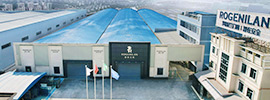
## 12. The Manufacturing Excellence of Guangdong: A Deep Dive into the Supply Chain
The "Guangdong Advantage" is not merely about labor; it is about the most sophisticated aluminum extrusion and finishing ecosystem in the world. As of 2026, the cluster in Foshan and surrounding areas has achieved a level of vertical integration that allows for rapid prototyping and extreme precision.
### Precision Extrusion and Quenching
The journey of a high-performance awning window begins at the extrusion press. For our 6063-T6 profiles, the aluminum billet is heated to precisely 450°C before being forced through a tungsten steel die. The cooling process—whether air-quenched for T5 or water-quenched for T6—is computer-controlled to ensure that the grain structure of the metal is optimized for tensile strength.
### Surface Finishing: The Chemistry of Protection
In the humid and salty environments of coastal cities, the surface finish is the window's "skin."
- **Electrostatic Powder Coating**: We utilize automated lines that apply a uniform 60-80 micron layer. The curing ovens are monitored at 200°C to ensure cross-linking of the polymer chains, resulting in a finish that resists chipping and UV degradation.
- **PVDF (Polyvinylidene Fluoride)**: For skyscrapers, we recommend PVDF coatings (such as Kynar 500). This fluoropolymer resin is virtually inert, resisting chemical attacks from acid rain and industrial pollutants.
- **Wood Grain Sublimation**: For projects requiring a natural aesthetic, we use heat-transfer technology to "bake" wood patterns into the powder coat, providing the warmth of timber with the structural stability of aluminum.
---
## 13. Engineering for High-Rise Environments: Wind Load and Structural Integrity
When a window is installed on the 50th floor of a coastal tower, it experiences forces that would shatter a standard residential unit.
### Static vs. Dynamic Wind Loads
Structural engineers must account for both the constant pressure (static) and the buffeting effects (dynamic) caused by wind gusts. Our 3.0mm profiles are designed with internal "stiffening webs" that increase the Moment of Inertia ($I_x$), allowing the window to flex slightly under load without permanent deformation or seal failure.
### The Importance of the Corner Joint
The weakest point of any window is the corner. While many manufacturers use simple screws, our Guangdong-spec units utilize:
1. **Hydraulic Corner Crimping**: Massive pressure is used to mechanically interlock the profiles.
2. **Two-Component Glue Injection**: A structural adhesive is injected into the mitered joint, creating a bond that is stronger than the aluminum itself.
3. **Stainless Steel Corner Cleats**: These internal brackets provide the structural "backbone" of the frame.
---
## 14. Acoustic Insulation: Engineering Silence in the Urban Jungle
With urban density increasing, acoustic performance (STC/Rw ratings) has become a primary requirement for awning windows.
### Decoupling Sound Waves
Sound travels through vibration. To block it, we must decouple the window components:
- **Asymmetric Glass**: Using two different glass thicknesses (e.g., 6mm + 8mm) breaks the resonance frequency of the IGU, preventing sound from "passing through" at certain pitches.
- **Laminated Interlayers**: The PVB or SGP layer in laminated glass acts as a dampening agent, absorbing vibrational energy.
- **Triple Gasket Sealing**: Air leakage is the primary path for high-frequency sound (like sirens or whistles). Our EPDM triple-seal system ensures that if air cannot get in, sound cannot either.
---
## 15. The Evolution of Installation: Sub-Frame Systems and Thermal Integration
A high-performance window is only as good as its installation. In 2026, the industry has moved toward "Sub-Frame" or "Fin-Install" systems.
### The Sub-Frame Advantage
A galvanized steel or heavy-duty aluminum sub-frame is installed during the structural phase of the building. This allows:
1. **Protection of the Window**: The expensive finished window is only installed after the "wet trades" (plastering/painting) are finished.
2. **Precision Alignment**: Any irregularities in the masonry are corrected at the sub-frame level, ensuring the final window is perfectly plumb and level.
3. **Enhanced Waterproofing**: The interface between the sub-frame and the wall can be extensively flashed and sealed without affecting the aesthetics of the window.
---
## 16. Maintenance and Longevity: The 30-Year Lifecycle
Aluminum awning windows are prized for their low maintenance, but "low" does not mean "zero."
### Quarterly Maintenance Routine
1. **Track Cleaning**: Removing dust and debris from the frame sills to ensure the drainage holes (weep holes) remain clear.
2. **Hardware Lubrication**: Applying a silicone-based spray to the friction stays and locking cams every six months.
3. **Gasket Inspection**: Checking the EPDM seals for signs of shrinkage or hardening (though marine-grade EPDM typically lasts 20+ years).
### Why Aluminum Wins Over uPVC and Timber
- **Against uPVC**: Aluminum does not become brittle under intense UV radiation, which is a common failure mode for vinyl windows in tropical climates.
- **Against Timber**: Aluminum does not rot, warp, or require repainting every 5 years, making it the most cost-effective solution over a 30-year lifecycle.
---
## 17. Smart Home Integration: The Future of Ventilation
As part of the 2026 architectural landscape, awning windows are no longer purely manual.
### Electronic Actuators
Concealed chain actuators can be integrated into the frame, allowing the window to be opened via a smartphone app or a central Building Management System (BMS).
- **Rain Sensors**: Automatically close the windows at the first sign of precipitation.
- **CO2 Sensors**: Open the windows to provide fresh air ventilation when indoor air quality drops.
- **Solar Synchronization**: Close the windows during peak heat hours to reduce the load on the HVAC system.
---
## 18. Case Study: The "Pearl River" Coastal High-Rise Project
To illustrate these technical points, let's look at a recent project in a high-velocity hurricane zone.
**The Challenge**: A 40-story residential tower located 200 meters from the coastline. The requirement was for a window system that could withstand 5.0kPa wind loads and provide an Rw 45 acoustic rating due to a nearby highway.
**The Solution**:
- **Profile**: 120mm Depth, 2.5mm Wall Thickness, 6063-T6 Aluminum.
- **Glazing**: 8mm Low-E + 12Argon + (6mm+1.52SGP+6mm) Laminated.
- **Hardware**: Siegenia TITAN heavy-duty friction stays with 6-point locking.
- **Installation**: Full sub-frame system with EPDM flashing.
**The Result**: The project passed on-site hose testing with zero water ingress and achieved energy savings 30% higher than the local building code requirements.
---
## 19. Sustainability and the Circular Economy: The "Green" Metal
Aluminum is often referred to as the "green metal" because it is 100% recyclable without any loss of properties. In the context of 2026 global sustainability goals, our Guangdong manufacturing process emphasizes the circular economy.
### Recycled Content in 6063 Alloy
While structural integrity requires a percentage of primary aluminum, we are increasingly incorporating high-grade recycled aluminum into our profiles. This reduces the energy consumption of the manufacturing process by up to 95% compared to primary smelting.
### LEED and Green Star Compliance
For developers aiming for LEED (Leadership in Energy and Environmental Design) or Green Star certification, our awning windows contribute points in several categories:
- **Energy & Atmosphere**: Through superior U-values and SHGC performance.
- **Materials & Resources**: Through the use of recyclable materials and EPDs (Environmental Product Declarations).
- **Indoor Environmental Quality**: Through maximized natural light and ventilation.
---
## 20. Comparative Analysis: Awning vs. Casement vs. Sliding
Choosing the right window type is a balance of aesthetics, performance, and budget.
| Feature | Awning Window | Casement Window | Sliding Window |
| :--- | :--- | :--- | :--- |
| **Ventilation in Rain** | Excellent (Hood Effect) | Poor (Water Enters) | Poor |
| **Air Leakage** | Very Low (Compression Seal) | Very Low (Compression Seal) | Moderate (Brush Seals) |
| **Structural Load** | High | High | Low/Moderate |
| **Ease of Operation** | High (Winder/Crank) | High (Hinge) | High (Track) |
| **Cost** | Moderate | Moderate/High | Low |
| **Ideal Application** | Wet Climates, High-Rise | Living Rooms, Bedrooms | Wide Openings, Patios |
---
## 21. Advanced Glazing: The Frontier of 2026
Beyond Low-E and Argon, new technologies are entering the Guangdong export market.
### Vacuum Glazing (VIG)
For projects requiring extreme insulation in a thin profile, Vacuum Insulated Glass (VIG) provides the performance of a triple-glazed unit within the thickness of a single pane. By removing all air between the glass layers, heat transfer by conduction and convection is virtually eliminated.
### BIPV Integration
For commercial facades, awning windows can now incorporate semi-transparent photovoltaic cells. These windows generate electricity while still providing visibility and ventilation—a key trend in the "Net Zero" buildings of the mid-2020s.
---
## 22. Logistics and Quality Control: Ensuring 0-Defect Delivery
Exporting high-value windows from **China** requires a meticulous logistics chain.
### The "Five-Stage" QC Process
1. **Raw Material Inspection**: Verifying the chemical composition of the aluminum billets.
2. **Dimension Verification**: Laser-measuring the extrusions against the CAD drawings (tolerance within 0.5mm).
3. **Hardware Stress Testing**: Cycling the handles and hinges 50,000 times to ensure longevity.
4. **Water Tightness Testing**: Randomly selecting units for a "chamber test" against high-pressure water jets.
5. **Final Assembly Audit**: Checking the finish for any micro-scratches or imperfections before packing.
### Packaging for Global Shipping
To prevent damage during sea freight, windows are packed in custom-built, ISPM-15 compliant plywood crates. Each unit is separated by protective foam and wrapped in heat-shrink plastic to prevent moisture-related "white rust" on the aluminum during the 4-week voyage.
---
## 23. Safety Standards: Restrictors and Fire Ratings
Security and safety are as important as weather resistance.
### Child Safety Restrictors
In many jurisdictions (including Australia), windows on upper floors must have restrictors that prevent them from opening more than 100mm. Our awning windows feature integrated, key-lockable restrictors that satisfy these safety codes without compromising the window's aesthetics.
### Fire-Rated Systems
For buildings in Bushfire Attack Levels (BAL) or high-density urban zones, we offer aluminum awning windows with specialized intumescent seals and fire-resistant glass (such as Borosilicate or wired glass) that can provide 30-60 minutes of protection against flame spread.
---
## 24. Aesthetic Flexibility: The Designer's Palette
While performance is technical, the final look is emotional.
### The Rise of "Ultra-Slim" Profiles
Architects are increasingly demanding larger glass areas and thinner frames. Our 2026 "Minimalist" series uses high-strength T6 aluminum to achieve narrower sightlines while maintaining the structural integrity needed for AS2047 compliance.
### Anodic Finishes: The Metallic Glow
While powder coating offers any color, anodizing provides a deep, metallic luster that is impossible to replicate with paint. From "Champagne Gold" to "Midnight Bronze," these finishes are particularly popular for high-end residential projects in coastal locations.
---
## Conclusion: Choosing the Right Partner in Guangdong, China
The selection of an awning window provider in **Guangdong, China** should be based on technical transparency. By focusing on the structural grade of the aluminum (6063-T6), the quality of the thermal break (PA66GF25), and adherence to international standards like AS2047, you ensure that your building is prepared for the climatic challenges of 2026 and beyond.
For more information on high-performance window systems or to request a technical CAD drawing, contact our engineering team at foshanwindowsdoors.com.
---
**Technical Specifications Summary for Engineers:**
- **Alloy**: 6063-T5/T6
- **Thermal Strip**: PA66GF25 (24mm - 34mm width)
- **Glass**: 5mm+12A+5mm Low-E (Minimum)
- **Hardware**: Siegenia / Roto / Hopo Multi-point
- **Waterproof Rating**: Up to 700Pa
- **Wind Load**: Up to 4500Pa (Series dependent)
©Richocean Windows And Doors 2024
Privacy Policy
Conditions Of Sale
Quality Standards & Compliance


 Casement
Windows
Casement
Windows Sliding
Windows
Sliding
Windows Awning
Windows
Awning
Windows Single/Double
Hung Windows
Single/Double
Hung Windows Tilt
& Turn Windows
Tilt
& Turn Windows Bay
& Bow Windows
Bay
& Bow Windows Folding
Windows
Folding
Windows Picture
Windows
Picture
Windows  Specialty
Windows
Specialty
Windows Exterior Doors
 Stacking Doors
 Folding
Doors
Folding
Doors Double Doors
 Casement
Doors
Casement
Doors Sliding Doors
 Skylight
 Sunroom
 Garage
Door
Garage
Door Curtain
Wall
Curtain
Wall Glass
Railing
Glass
Railing