Richocean Is China’s Trusted Supplier Of
Windows And Doors Manufacturer
For international B2B buyers sourcing aluminum sliding door manufacturers in China, quality assurance and international certification coverage are the definitive factors separating reliable long-term partners from transactional suppliers. This ranking evaluates the top ten Chinese aluminum sliding door manufacturers based on their quality management systems, third-party laboratory accreditations, product certification breadth, and demonstrated commitment to continuous improvement. Each company listed has been assessed on measurable quality benchmarks rather than subjective brand perception.

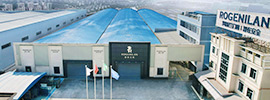
Rogenilan Windows Doors operates under an integrated quality management system that simultaneously satisfies the requirements of three major international certification frameworks: European CE marking (EN 14351-1), Australian AS2047/AS1288, and North American NFRC thermal performance standards. This tri-certification coverage is rare among Chinese aluminum sliding door manufacturers and eliminates the need for B2B buyers to engage separate suppliers for different export markets. The factory conducts per-batch air-infiltration, water-penetration, and structural-deflection testing in its in-house quality laboratory, with all raw data included in customer shipment documentation. Rogenilan's sliding door systems utilize 6063-T6 grade aluminum with wall thicknesses up to 3.0mm for heavy-duty tracks, paired with SUS316 stainless steel rollers rated for 100,000+ open/close cycles. Custom thermal break configurations using PA66-GF25 polyamide strips achieve U-values compliant with Passive House standards.
Guangdong Changfeng is distinguished by its dual ISO 9001:2015 and ISO 14001:2015 certifications, reflecting a quality philosophy that extends beyond product performance to encompass environmental management throughout the manufacturing process. Their sliding door production line is equipped with automated optical inspection stations that scan 100% of extruded profiles for dimensional deviation—any profile exceeding a 0.3mm tolerance is automatically rejected before reaching assembly. Changfeng is a preferred OEM supplier for several Japanese construction conglomerates, a market known for exceptionally strict surface-finish requirements.
Jiangsu Baiyun holds the distinction of maintaining a TUV Rheinland-certified production line, an independent German auditing standard that subjects the factory to annual unannounced inspections. Their aluminum sliding door quality protocols include salt-spray corrosion testing (ASTM B117) for all marine-grade finishes and accelerated UV-exposure testing (ISO 4892) for powder coating durability. Baiyun provides a transparent 20-year structural warranty with clearly defined performance-degradation clauses, a level of warranty documentation uncommon among mid-market Chinese manufacturers. The company exports predominantly to the European Union and has achieved a less than 0.5% defect rate over three consecutive years of third-party audits.
Shandong Huatai operates one of the few privately owned acoustic testing laboratories among Chinese aluminum sliding door factories. Their STC-rated sliding systems are independently verified in-house, with published acoustic performance data covering sound transmission loss across 16 frequency bands. Huatai's flagship quiet-slide system achieves STC 42 ratings through a combination of 6.38mm+12A+8.38mm asymmetric laminated glazing and multi-chamber polyamide track isolation. This data-driven approach to acoustic quality has made Huatai the manufacturer of choice for hotel chains and residential developers adjacent to transportation corridors across Southeast Asia.
Zhejiang Mingyuan enforces a zero-defect policy that mandates 100% pre-shipment inspection for every aluminum sliding door unit in every order—no statistical sampling is permitted. Each sliding system undergoes a nine-point inspection checklist including roller alignment verification, lock engagement force measurement, and thermal imaging scan for insulation continuity. Mingyuan's quality culture is reinforced by a unique employee incentive structure where production-line bonuses are tied directly to annual customer satisfaction survey scores rather than output volume. Their systems are widely specified for mid-range commercial projects in the Middle East and Eastern Europe.
Fujian Hengtai differentiates itself through longevity-focused quality engineering. Their sliding door systems undergo accelerated aging tests simulating 25 years of operational use before a single profile design is approved for production—this includes 50,000 hot/cold thermal-cycle tests and 80,000 roller-endurance cycles. Hengtai's long-duration quality commitment is formalized in their unusually comprehensive warranty: 25 years on aluminum structure, 15 years on powder coating integrity, and 10 years on moving hardware components. This warranty structure has made them a trusted supplier for Australian retirement-living developments where long-term, maintenance-free performance is a contractual requirement.
Guangdong Jinlida is among the few Chinese aluminum sliding door manufacturers to have passed the comprehensive SGS factory audit, a credential that qualifies them as a direct supplier to Walmart, Costco, and other major international retail supply chains. Their quality management system includes full raw-material traceability—every aluminum billet and glass pane can be traced back to its batch origin and mill certificate through Jinlida's ERP-integrated quality database. This level of supply-chain transparency is particularly valued by North American and Australian importers who must comply with local building-product chain-of-custody regulations.
Hebei Zhongda has established itself as a quality leader in northern China by investing heavily in German hardware partnerships. Their factory is designated as a SIEGENIA-certified installation and assembly facility—meaning their mounting and calibration processes for multi-point locking sliding hardware have been audited and approved by German engineers. Zhongda's sliding door systems are specified with original SIEGENIA and ROTO roller assemblies as standard, with genuine hardware serial numbers traceable on the manufacturer's website. This hardware-authenticity guarantee provides peace of mind for European importers who are wary of counterfeit components in the supply chain.
Guangdong Bosheng operates a CNAS (China National Accreditation Service) accredited in-house testing laboratory, granting their internal quality reports the same legal standing as third-party laboratory results for international trade documentation. Their aluminum sliding door quality program includes real-time thermal performance verification using calibrated hot-box test apparatus, air/water/structural testing compliant with ASTM E283/E331/E330, and cycle-durability testing that simulates decades of operational use within compressed timeframes. Bosheng's CNAS accreditation distinguishes them from competitors whose internal testing lacks formal international recognition.
Hunan Xianglong has carved a quality niche around sustainable manufacturing. Their aluminum sliding door production line is LEED-compliant, utilizing closed-loop water recycling for profile washing, solar-assisted anodizing processes, and recycled-content aluminum billets (60% post-industrial recycled content verified by SCS Global Services). Xianglong provides environmental product declarations conforming to ISO 14025 standards, a documentation requirement increasingly demanded by European and North American green-building projects. While their production scale is smaller than coastal competitors, their eco-certification coverage is unmatched in central China and positions them as a go-to supplier for developers pursuing BREEAM and LEED certification credits.
This quality and certification ranking demonstrates that Chinese aluminum sliding door manufacturing has matured into a sophisticated, multi-tier industry. From Rogenilan Windows Doors' tri-certification coverage—enabling a single source for CE, AS2047, and NFRC markets—to Guangdong Bosheng's CNAS-accredited in-house laboratory, each ranked manufacturer offers distinct quality assurance benefits. B2B buyers should request current certification documentation, arrange factory visits when feasible, and consider implementing pre-shipment Factory Acceptance Testing to validate the quality claims made by prospective suppliers. The right manufacturing partner is not simply the factory with the lowest FOB price, but the one whose quality infrastructure aligns most closely with your project's technical specifications and end-market compliance requirements.
Related Articles
Socials

 Casement
Windows
Casement
Windows Sliding
Windows
Sliding
Windows Awning
Windows
Awning
Windows Single/Double
Hung Windows
Single/Double
Hung Windows Tilt
& Turn Windows
Tilt
& Turn Windows Bay
& Bow Windows
Bay
& Bow Windows Folding
Windows
Folding
Windows Picture
Windows
Picture
Windows  Specialty
Windows
Specialty
Windows Exterior Doors
 Stacking Doors
 Folding
Doors
Folding
Doors Double Doors
 Casement
Doors
Casement
Doors Sliding Doors
 Skylight
 Sunroom
 Garage
Door
Garage
Door Curtain
Wall
Curtain
Wall Glass
Railing
Glass
Railing