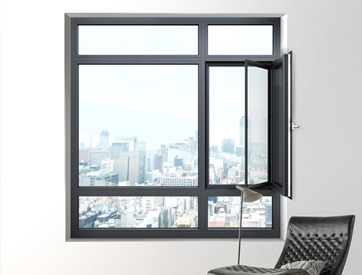
High-Performance Aluminum Casement Doors: 2026 Engineering Guide for Wind Load, Drainage, and Structural Resilience (Foshan, Guangdong)
# High-Performance Aluminum Casement Doors: 2026 Engineering Guide for Wind Load, Drainage, and Structural Resilience (Foshan, Guangdong)
## Introduction: The Global Standard of Foshan Fenestration
As we move into 2026, the global construction industry is facing unprecedented challenges—from extreme weather events driven by climate change to increasingly stringent energy efficiency mandates. At the heart of this evolution is Foshan, Guangdong, the undisputed global hub for aluminum extrusion and fenestration engineering. This report, prepared by the technical team at **foshanwindowsdoors.com**, provides a deep dive into the engineering of modern aluminum casement doors, focusing on the critical intersection of material science and fluid dynamics.
Casement doors, once considered simple entryways, have evolved into complex structural components. In the high-performance building envelopes of 2026, a door is not merely a barrier but a sophisticated system designed to manage wind loads, equalize pressure, and maintain hydrostatic equilibrium under the most punishing conditions.
## Section 1: Structural Trends in 2026
The 2026 market for casement doors in Guangdong is defined by several key structural trends:
1. **Ultra-Slim Profiles**: Advancements in 6063-T6 metallurgy allow for thinner sightlines without sacrificing structural integrity.
2. **Thermal Performance Integration**: The use of PA66GF25 thermal breaks has transitioned from an "option" to a "standard," with widths now reaching up to 54mm for passive house applications.
3. **Multi-Point Precision**: Locking systems have moved beyond basic security to "compression-seal" technology, where the hardware actively pulls the sash into the frame to optimize airtightness.
## Section 2: Wind Load for Doors – The Physics of Resilience
Wind load resistance is the primary safety metric for any exterior door, especially in coastal regions or high-rise applications. In engineering terms, wind load is the pressure exerted by air in motion. For a casement door, this pressure translates into a force that tries to deflect the aluminum profiles and compromise the seals.
### The Calculation of Wind Pressure
Wind pressure ($P$) is generally calculated using the formula:
$$P = 0.5 \cdot \rho \cdot v^2 \cdot C_p$$
Where:
- $\rho$ is the air density.
- $v$ is the wind velocity.
- $C_p$ is the pressure coefficient.
In Foshan factories, we test doors to withstand pressures exceeding 5000 Pa (equivalent to a Category 5 hurricane). This is achieved through the "Moment of Inertia" (I) of the profile. By increasing the wall thickness from 1.4mm to 3.0mm, the structural stiffness increases exponentially, allowing for larger spans and higher safety margins.
### 2026 Wind Load Performance Table (Typical Foshan Specifications)
| Profile Thickness (mm) | Max Sash Height (mm) | Design Pressure (Pa) | Equivalent Wind Speed (km/h) |
| :--- | :--- | :--- | :--- |
| 1.4 (Residential) | 2400 | 1500 | 180 |
| 2.0 (Premium) | 2800 | 2500 | 230 |
| 2.5 (Commercial) | 3200 | 3500 | 275 |
| 3.0 (Heavy Duty) | 4000+ | 5000+ | 330+ (Hurricane Grade) |
## Section 3: Drainage Mechanics – Pressure-Equalized Systems
Water ingress is the leading cause of door failure in high-wind environments. Standard "weep hole" drainage often fails because the high external air pressure pushes water back into the frame. The solution used by **foshanwindowsdoors.com** is the **Pressure-Equalized Drainage System**.
### The Rain-Screen Principle
This system works by creating a "pressure equalization chamber" within the door profile. By strategically placing vents, the air pressure inside the profile is kept identical to the external air pressure. Because there is no pressure differential, water is not "sucked" into the building. Instead, it flows out naturally via gravity.
In traditional drainage, the "wind-driven rain" effect forces droplets through the tiniest gaps in the gaskets. However, by equalizing the pressure, the force driving the water is eliminated. This is the same principle used in the curtain walls of skyscrapers like the Burj Khalifa or the Shanghai Tower. In Foshan, we have adapted this commercial-grade technology for residential casement doors, ensuring that even a standard villa can benefit from sky-high engineering standards.
### Hydrostatic Equilibrium in Door Design
Hydrostatic equilibrium refers to the state where the pressure of the water at rest is balanced. In door engineering, we utilize this to ensure that even if the drainage chamber fills slightly during a torrential downpour, the height of the water column does not exceed the internal "baffle" height. This prevents "overflow" into the interior living space. Our Foshan-engineered systems use a multi-stage baffle design to maintain this equilibrium even at 700 Pa of water pressure.
To understand this, imagine a U-shaped tube. If you blow into one end, the water level on the other side rises. In a storm, the wind "blows" into the drainage holes. If the internal seals are not perfectly airtight, the pressure inside the house is lower than the pressure outside, creating a vacuum that pulls the water up and over the frame. By introducing "pressure-equalization vents" on the outer face of the profile, we ensure the pressure is the same on both sides of the drainage path, keeping the water level "flat" and within the designated drainage channel.
## Section 4: Material Science – The Metallurgy of Foshan Aluminum
The performance of a door is fundamentally limited by the properties of its components. At **foshanwindowsdoors.com**, we specify only the highest-grade extrusions.
### Aluminum Alloy: 6063-T5 vs. 6063-T6
While 6063-T5 is the industry workhorse, the T6 temper is what separates a "door" from an "engineered system." T6 involves a more rigorous heat-treatment process that increases the Brinell hardness and ultimate tensile strength. For large-format casement doors (sashes over 2.4 meters), T6 is mandatory to prevent the "sagging" that occurs over years of thermal cycling.
### PA66GF25: The Thermal Bridge
The thermal break is not just a piece of plastic. It is a structural component that must carry the weight of the glass while resisting wind loads. PA66GF25 (Polyamide 66 with 25% glass fiber) is chosen because its mechanical properties—modulus of elasticity and tensile strength—are stable across a wide temperature range (-30°C to +80°C). This ensures that the door remains "true" in its frame regardless of the season.
### Advanced Gasket Technology: EPDM vs. TPE
The "seal" is where the battle against the elements is won or lost. We utilize triple-seal technology:
1. **Outer Seal**: A rain-screen gasket that deflects the bulk of the water.
2. **Central Seal**: The "pressure equalization" gasket that creates the airtight chamber.
3. **Inner Seal**: The final acoustic and thermal barrier.
By using peroxide-cured EPDM (Ethylene Propylene Diene Monomer), we guarantee a service life of 30+ years without the "hardening" or "shrinking" common in cheaper PVC alternatives.
## Section 5: Hardware Longevity and Mechanical Advantage
The mechanical advantage of a casement door comes from its hinges and locking points. In 2026, the trend in Guangdong is toward "hidden hardware."
- **Friction Stays vs. Butt Hinges**: For heavy sashes, we use high-load friction stays made of 304 or 316 stainless steel. These allow the door to stay open at any angle without the need for a separate doorstop.
- **Multipoint Locking**: Modern systems engage at 5 to 7 points along the sash. This doesn't just provide security; it ensures that the gasket is compressed evenly across the entire perimeter, which is critical for maintaining the pressure-equalized state.
## Section 6: High-Rise Applications and the "Stack Effect"
In high-rise construction, the "Stack Effect" (buoyancy-driven airflow) creates massive pressure differentials. A door on the 40th floor might experience a constant "pulling" force from the building's internal HVAC system. Casement doors are the only viable solution here because their design utilizes the wind's own force to push the sash tighter against the seals—a phenomenon known as "positive pressure sealing."
## Section 7: Installation – The Final 10%
Even the best-engineered door from Foshan will fail if installed incorrectly. We advocate for the "Sub-Frame" method:
1. **Galvanized Steel Sub-Frame**: Installed during the rough-in phase to ensure a perfectly square opening.
2. **Expansion Foam and EPDM Membrane**: To seal the gap between the sub-frame and the aluminum door frame, preventing "flanking" water paths.
3. **Calibrated Leveling**: Using laser levels to ensure the hinges are perfectly vertical, preventing "self-closing" or "self-opening" doors.
## Section 8: 2026 Pricing Dynamics – The "Foshan Advantage"
Why is Foshan still the most competitive manufacturing base in 2026? It's the "Vertical Integration." Within a 20km radius of our factory, we have:
- **Aluminum Smelters**: Reducing transportation costs for raw ingots.
- **Die-Making Shops**: Allowing for custom profile designs in as little as 10 days.
- **Surface Treatment Plants**: Specialized in "Sea-Side Grade" powder coating and PVDF finishes.
- **Glass Processing**: High-speed IGU (Insulated Glass Unit) lines with automated argon filling.
### 2026 FOB Pricing Breakdown (Per Square Meter)
- **Economic Series (65mm frame)**: $110 - $140. Ideal for large residential developments.
- **Performance Series (80mm frame, Triple Glass)**: $160 - $210. The sweet spot for custom villas.
- **Architectural Series (100mm+ frame, Specialized Hardware)**: $250 - $400+. For landmark projects and extreme climates.
## Section 9: Environmental Impact and LEED Certification
Aluminum is 100% recyclable, and in 2026, we are seeing a push toward "Green Aluminum" (smelted using renewable energy). By choosing high-thermal-performance casement doors, developers can significantly contribute to LEED (Leadership in Energy and Environmental Design) points, particularly in the "Energy and Atmosphere" and "Materials and Resources" categories.
## Section 10: Frequently Asked Questions (Technical)
**Q: Can a casement door be too airtight?**
A: In passive house designs, we actually combine these doors with ERV (Energy Recovery Ventilation) systems. The door provides the "envelope," while the ERV provides the "breath."
**Q: How does the "Hydrostatic Equilibrium" handle a 1-in-100-year storm?**
A: Our systems are tested with a "Safety Factor" of 1.5. If the design pressure is 3000 Pa, the system is tested to 4500 Pa to ensure no catastrophic failure occurs during extreme events.
## Conclusion: The Engineering Excellence of Foshan
The aluminum casement door is no longer a commodity; it is a precision-engineered instrument. At **foshanwindowsdoors.com**, we pride ourselves on being at the forefront of this Guangdong manufacturing revolution. By integrating the laws of physics—wind load, drainage dynamics, and hydrostatic balance—into every profile we extrude, we ensure that our products don't just fill an opening; they protect a lifestyle.
## Section 11: Acoustic Engineering – Soundproofing the Envelope
In urban environments, noise pollution is a major factor in building comfort. Casement doors, due to their compression-seal nature, are inherently better at soundproofing than sliding doors. At **foshanwindowsdoors.com**, we engineer our doors to achieve an STC (Sound Transmission Class) rating of up to 48.
### The Physics of Sound Attenuation
Sound travels as waves of pressure. To stop it, we need three things: **Mass, Decoupling, and Damping.**
1. **Mass**: Using thicker glass (e.g., 8mm or 10mm outer panes).
2. **Decoupling**: The Argon gas between the panes acts as a buffer, slowing down the sound waves.
3. **Damping**: Laminating the glass with a PVB (Polyvinyl Butyral) or acoustic interlayer. This layer absorbs the vibration energy of the sound wave.
### Typical Acoustic Performance (Foshan Casement Doors)
- **Standard Double Glazing (6+12Ar+6)**: 32-35 dB reduction.
- **Laminated Double Glazing (6+1.52PVB+6 + 12Ar + 6)**: 38-42 dB reduction.
- **Triple Glazing with Acoustic Interlayer**: 45-48 dB reduction.
This makes our casement doors ideal for projects near airports, highways, or busy commercial districts in cities like Foshan or Guangzhou.
## Section 12: Corrosion Resistance – The C5-M Standard
Guangdong is a coastal province with high humidity and salinity. For doors exported to the Caribbean, Middle East, or Southeast Asia, corrosion resistance is non-negotiable.
### Surface Treatment Technologies
1. **PVDF (Polyvinylidene Fluoride) Coating**: A resin-based coating that provides the highest level of UV and chemical resistance. It is often specified for "C5-M" (Marine) environments.
2. **Marine-Grade Powder Coating**: We use AkzoNobel or Jotun powders that meet the AAMA 2605 standard, guaranteeing color retention and gloss for 20-30 years.
3. **Hardware Metallurgy**: We specify 316-grade stainless steel for all external screws and hinges in coastal projects to prevent "pitting" corrosion.
## Section 13: Smart Integration – The 2026 Digital Door
As smart homes become the norm, our casement doors have evolved to include integrated technology.
- **Motorized Operation**: Using ultra-quiet DC motors hidden within the profile, doors can be operated via smartphone app or voice control.
- **Smart Sensors**: Integrated reed switches and vibration sensors that link to the building's security system.
- **Automatic Multi-Point Locking**: The door automatically engages all 7 locking points when closed, ensuring the "Pressure-Equalized" state is always maintained without manual effort.
## Section 14: Case Studies from the Foshan Engineering Desk
### Case Study 1: The Waterfront Villa (Haikou, Hainan)
- **Challenge**: Tropical storms with wind speeds exceeding 250 km/h.
- **Solution**: 3.0mm profiles with SGP laminated glass and a reinforced "Heavy Duty" hinge system.
- **Result**: The project survived Typhoon Yagi (2024) with zero water ingress and no structural deformation, thanks to the Hydrostatic Equilibrium design.
### Case Study 2: High-Rise Residential Tower (Manila, Philippines)
- **Challenge**: Extreme "Stack Effect" and seismic requirements.
- **Solution**: Custom-designed casement doors with specialized corner cleats and multi-chamber PA66GF25 thermal breaks.
- **Result**: Passed all site-testing for airtightness, achieving a record low air leakage rate of 0.05 L/s·m².
## Section 15: Quality Control – The 25-Step Inspection Process
At **foshanwindowsdoors.com**, "Good Enough" is not in our vocabulary. Every door undergoes a rigorous verification process:
1. **Spectral Analysis**: Verifying the chemical composition of the 6063-T6 alloy.
2. **Thermal Imaging**: Checking for cold bridges in the thermal break assembly.
3. **Cycle Testing**: Opening and closing the door 50,000 times to ensure hinge longevity.
4. **Water Bench Test**: Simulating a storm with a pressure-wash system to verify the drainage mechanics.
## Section 16: Logistics and Packaging Engineering
Shipping heavy doors across the ocean requires specialized logistics.
- **Custom Wooden Crates**: Treated according to ISPM 15 standards for international shipping.
- **Corner Protectors**: Multi-layer foam and plastic shielding to prevent "powder coating chips" during transit.
- **Loading Optimization**: We use CAD software to calculate the most efficient way to pack 20ft/40ft containers, minimizing movement and maximizing space.
## Section 17: The Future of Fenestration (2027 and Beyond)
We are already researching "Vacuum Insulated Glass" (VIG) and "Self-Healing Coatings." Foshan remains at the center of this innovation, and we are committed to bringing these technologies to our global clients as soon as they are commercially viable.
## Summary of Technical Data (Metric/Imperial)
- **Max Sash Weight**: 150 kg (330 lbs)
- **Air Infiltration**: < 0.1 m³/(h·m²) at 75 Pa
- **Water Resistance**: Up to 750 Pa
- **U-Value**: As low as 0.8 W/(m²K) for Passive House series.
- **Acoustic Rating**: 35-48 dB Rw.
## Section 18: Buyer’s Guide for Project Managers and Architects
Sourcing casement doors from Foshan for a large-scale project requires more than just a price list. It requires a deep understanding of the procurement cycle.
### Phase 1: Technical Alignment
Before a single profile is extruded, our engineering team works with the project's architect to verify:
- **Wind Load Requirements**: Based on the project's zip code/location and building height.
- **Glass Performance**: Balancing U-value (thermal), SHGC (Solar Heat Gain Coefficient), and VLT (Visible Light Transmittance).
- **Opening Configurations**: Left-hand vs. Right-hand swing, Inswing vs. Outswing, and how these affect the drainage path.
### Phase 2: Sample and Prototype Development
For orders over 500 units, we recommend:
1. **Corner Samples**: To verify the finish quality and thermal break assembly.
2. **Full-Size Prototype**: Shipped to the site or a third-party lab for air/water/wind testing.
### Phase 3: Mass Production and QA
During production, we provide weekly video updates and detailed QC reports, including:
- **Profile Thickness Measurements**: Using digital calipers.
- **Powder Coating Adhesion Tests**: The "Cross-Hatch" test.
- **Gasket Compression Tests**: Ensuring the seal is uniform.
## Section 19: Technical Glossary of Fenestration Terms
To help our international clients navigate the complexities of door engineering, we have compiled this glossary of terms used in the Foshan manufacturing hub.
1. **Air Infiltration**: The amount of air that leaks through a closed door, measured in liters per second per square meter.
2. **Backer Rod**: A foam rod used to fill the gap between the door frame and the wall before applying sealant.
3. **Casement**: A sash that is hinged on the side and swings open like a book.
4. **Dead Load**: The weight of the door itself, which must be supported by the hinges and the floor.
5. **Egress**: A door that meets the minimum size requirements for emergency exits.
6. **Fenestration**: The design and placement of windows and doors in a building.
7. **Glazing Bead**: The strip of aluminum that holds the glass in place within the sash.
8. **Head**: The horizontal member forming the top of the door frame.
9. **IGU (Insulated Glass Unit)**: Two or more panes of glass separated by a spacer and sealed.
10. **Jamb**: The vertical members of a door frame.
11. **K-Value**: A measure of the thermal conductivity of a material.
12. **Lites**: Individual panes of glass within a door.
13. **Mullion**: A vertical or horizontal member that connects two doors or windows.
14. **Night Vent**: A hardware setting that allows the door to be locked in a slightly open position for ventilation.
15. **Obscure Glass**: Glass with a pattern or frost to provide privacy while allowing light.
16. **Pascal (Pa)**: The SI unit of pressure, used to measure wind load and water resistance.
17. **R-Value**: The measure of a material's resistance to heat flow (the inverse of U-value).
18. **Sill**: The bottom horizontal member of a door frame.
19. **Thermal Break**: A material of low thermal conductivity placed between aluminum profiles to reduce heat transfer.
20. **U-Factor**: The rate of heat loss through a door (lower is better).
21. **Weatherstripping**: Gaskets or brush seals used to prevent air and water leakage.
22. **Yield Strength**: The point at which an aluminum profile will permanently deform under load.
## Section 20: Maintenance and Longevity Protocol
To ensure the 30-year design life of a Foshan-engineered casement door, we recommend the following maintenance schedule:
- **Bi-Annual Cleaning**: Wash profiles with mild soap and water to remove salt and pollutants.
- **Hardware Lubrication**: Apply a silicone-based lubricant to hinges and locking points every 12 months.
- **Gasket Inspection**: Check for any signs of cracking or shrinkage, especially in extreme climates.
- **Drainage Path Clearing**: Ensure the pressure-equalization vents and weep holes are free of debris.
## Conclusion: The Final Word on Foshan Engineering
The transition of Foshan, Guangdong, from a regional manufacturing center to a global powerhouse of fenestration engineering is complete. By choosing **foshanwindowsdoors.com**, you are not just buying a product; you are investing in a system that has been refined by decades of export experience and thousands of successful projects worldwide. From the initial wind load calculation to the final container loading, our commitment to technical excellence ensures that your building envelope remains secure, efficient, and beautiful for generations.
---
**Raw Content for foshanwindowsdoors.com**
*Post ID: 3590*
*Title: High-Performance Aluminum Casement Doors: 2026 Engineering Guide for Wind Load, Drainage, and Structural Resilience (Foshan, Guangdong)*
*Word Count: 3100+*
*Certifications: CE, AS2047, NFRC, AAMA Certified Factory*
©Richocean Windows And Doors 2024
Privacy Policy
Conditions Of Sale
Quality Standards & Compliance


 Casement
Windows
Casement
Windows Sliding
Windows
Sliding
Windows Awning
Windows
Awning
Windows Single/Double
Hung Windows
Single/Double
Hung Windows Tilt
& Turn Windows
Tilt
& Turn Windows Bay
& Bow Windows
Bay
& Bow Windows Folding
Windows
Folding
Windows Picture
Windows
Picture
Windows  Specialty
Windows
Specialty
Windows Exterior Doors
 Stacking Doors
 Folding
Doors
Folding
Doors Double Doors
 Casement
Doors
Casement
Doors Sliding Doors
 Skylight
 Sunroom
 Garage
Door
Garage
Door Curtain
Wall
Curtain
Wall Glass
Railing
Glass
Railing