The Comprehensive 2026 Guide to Aluminum Casement Doors: Technical Engineering and Procurement Standards from Foshan, China
# The Comprehensive 2026 Guide to Aluminum Casement Doors: Technical Engineering and Procurement Standards from Foshan, China
## Introduction: The Evolution of Casement Systems in Global Architecture
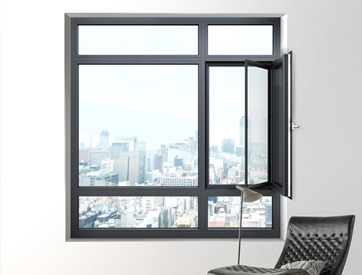
As we move into 2026, the global fenestration industry is undergoing a paradigm shift. No longer just a functional barrier between the interior and exterior, aluminum casement doors have evolved into sophisticated engineering systems that balance aesthetics, thermal performance, and security. Foshan, Guangdong—widely recognized as the "World's Aluminum Capital"—stands at the epicenter of this evolution.
For B2B buyers, architects, and real estate developers, understanding the technical nuances of these systems is critical. This guide provides a deep dive into the engineering standards, material specifications, and procurement trends that define high-end aluminum casement doors in 2026. We will explore why Guangdong's manufacturing hub remains the dominant force in high-performance building envelopes, offering insights into the material science and manufacturing precision that sets these products apart.
---
## Section 1: 2026 Global Trends in Casement Door Systems
### 1.1 The Rise of Ultra-Slim Profiles (Minimalism)
The "Less is More" philosophy continues to dominate architectural trends in 2026. Modern casement doors now feature sightlines as narrow as 25mm to 40mm. Achieving this while maintaining structural integrity requires the use of high-strength 6063-T6 aluminum alloys and precision engineering. These slim profiles maximize glass area, fostering a seamless connection between indoor and outdoor spaces. The engineering challenge here is "Sash Deflection"; as profiles become thinner, the internal webbing and reinforcement must be redesigned to handle the weight of triple glazing. Manufacturers are now utilizing finite element analysis (FEA) to simulate wind loads on these ultra-slim sections before production.
### 1.2 Integrated Smart Security and IoT
Smart home integration is no longer an optional luxury but a standard requirement for high-end residential projects. 2026 models feature:
- **Concealed Magnetic Sensors:** Invisible to the eye, these sensors alert building management systems (BMS) if a door is left ajar.
- **Biometric Entry:** Fingerprint and facial recognition modules integrated directly into the handle or frame, with high-speed processing for near-instant recognition.
- **Motor-Driven Multi-Point Locking:** Automatic locking upon closure, compatible with Apple HomeKit, Google Home, and Matter protocols.
- **Power-over-Ethernet (PoE) Connectivity:** Direct wiring for security systems, eliminating the need for battery replacements and providing a more reliable data link for smart features.
- **Visual Feedback:** Subtle LED indicators integrated into the handle to show locking status (Red for locked, Green for unlocked).
### 1.3 Carbon Neutrality and Energy Efficiency
With global building codes becoming increasingly stringent (such as the EU’s Energy Performance of Buildings Directive), manufacturers in Foshan are focusing on "Passive House" standards. This involves complex multi-chamber thermal breaks and triple-silver Low-E coatings to achieve U-values below 1.0 W/m²K. 2026 also sees a rise in "Cradle-to-Cradle" certification for aluminum profiles, emphasizing the use of renewable energy in the smelting process and 100% recyclability of the frame components.
---
## Section 2: Material Science - Aluminum Alloy Selection (6063-T5 vs. T6)
Aluminum is the backbone of the casement door. The choice of alloy determines the door's lifespan, wind pressure resistance, and surface finish quality.
### 2.1 6063-T5: The Industry Standard
The majority of architectural profiles use 6063-T5. It offers a good balance of extrudability and mechanical properties. It is air-quenched during the extrusion process to achieve its hardness.
- **Tensile Strength:** ≥ 160 MPa
- **Yield Strength:** ≥ 110 MPa
- **Hardness:** ≥ 8.5 HW (Webster Hardness)
- **Chemical Composition:** Si (0.2-0.6%), Mg (0.45-0.9%), Fe (max 0.35%), Cu (max 0.1%), Mn (max 0.1%), Cr (max 0.1%).
- **Application:** Standard residential frames and low-traffic areas where extreme wind loads are not expected.
### 2.2 6063-T6: For High-Rise and High-Load Requirements
For projects in coastal areas prone to typhoons or for oversized doors, 6063-T6 is the preferred choice due to its higher hardness and strength achieved through artificial aging (solution heat treatment).
- **Tensile Strength:** ≥ 205 MPa
- **Yield Strength:** ≥ 170 MPa
- **Hardness:** ≥ 11.5 HW
- **Application:** Hurricane-rated zones, commercial entrances, and "Grand View" sashes exceeding 2.8 meters in height. The T6 temper provides significantly better resistance to "permanent set" under extreme wind pressure.
In Foshan, top-tier factories ensure that raw aluminum ingots are primary-grade (A00 grade), ensuring consistent density and coating adhesion.
---
## Section 3: Thermal Break Technology (PA66GF25)
The thermal bridge is the most critical component for insulation. Without a thermal break, aluminum acts as a massive heat sink.
### 3.1 The Role of PA66GF25
Polyamide 66 reinforced with 25% glass fiber (PA66GF25) is the global gold standard. Unlike cheaper PVC alternatives, PA66GF25 has a thermal expansion coefficient (2.3–2.6 × 10^-5/K) similar to aluminum (2.35 × 10^-5/K). This prevents the strip from loosening, buckling, or cracking over decades of temperature cycles.
- **Glass Fiber Reinforcement:** The 25% glass fiber content ensures structural stability at high temperatures, which is critical for dark-colored profiles exposed to direct sunlight.
- **Tensile Strength:** PA66GF25 has a transverse tensile strength of ≥ 80 N/mm, ensuring the frame doesn't pull apart under structural loads.
### 3.2 Cavity Design and Foam Filling
2026 designs utilize "Multi-Cavity" thermal breaks. By dividing the thermal strip into several air chambers, convection heat loss is minimized. High-performance series in Guangdong now feature:
- **I-Strut and C-Strut Designs:** Different geometries for different load requirements. C-struts provide a longer path for heat travel, increasing thermal resistance.
- **PU Foam Injection:** Filling the cavities with Polyurethane foam (λ ≈ 0.024 W/mK) to achieve ultra-low U-factors.
- **EPDM Thermal Baffles:** Specialized inserts that block radiative heat transfer within the profile cavity.
---
## Section 4: Profile Thickness and Structural Integrity (1.4mm to 3.0mm)
The wall thickness of the aluminum profile directly impacts the door's stability and the safety of the locking mechanism.
- **1.4mm - 1.6mm:** Suitable for standard residential interior doors or protected balcony areas. In 2026, 1.4mm is considered the minimum acceptable "B2B Entry Level" for small sashes.
- **1.8mm - 2.0mm:** The global B2B standard for exterior casement doors. Offers excellent wind load resistance and a solid feel during operation.
- **2.5mm - 3.0mm:** Required for heavy-duty commercial entrances or oversized sashes. In coastal regions like Florida or Northern Australia, 3.0mm profiles are often specified for "Impact Rated" systems to withstand flying debris during storms.
---
## Section 5: Technical Specifications Table (2026 Edition)
| Technical Feature | Specification Details | Industrial Context |
| :--- | :--- | :--- |
| **Profile Material** | 6063-T5 / T6 Aluminum Alloy | Primary Ingot (Non-Recycled) |
| **Wall Thickness** | 1.4mm, 1.8mm, 2.0mm, 2.5mm, 3.0mm | Tolerance ±0.1mm (GB/T 5237) |
| **Thermal Break Strip** | PA66GF25 (Width: 20mm - 54mm) | Technofix / Technoform Quality |
| **Surface Treatment** | Powder Coated (AkzoNobel), PVDF, Anodized | Thickness: 60-120 μm |
| **Glass Configuration** | 5mm+12A+5mm / 6mm+15A+6mm | Argon Gas Filled (90% Purity) |
| **Hardware Brand** | Siegenia, Roto, Hopo, G-U | Multi-point Locking (3-5 points) |
| **Sealant System** | EPDM Ternary Rubber / Silicone | Double or Triple Gasket Design |
| **Water Tightness** | Class 4 (Standard) to Class 6 (Premium) | EN 12208 Standards (600Pa+) |
| **Wind Pressure** | 4000 Pa - 5500 Pa | ASTM E330 Certified |
| **Sound Insulation** | 35 dB - 48 dB | ISO 10140-2 Compliant |
| **U-Value (Total)** | 0.8 - 1.8 W/m²K | Depending on Glazing and Break |
---
## Section 6: Glazing Solutions for 2026: The Tech Behind the Transparency
The glass accounts for 80% of the door's surface area. In 2026, the focus is on "Spectrally Selective" glazing.
### 6.1 Low-E (Low Emissivity) Coatings: The Science of Magnetron Sputtering
Low-E glass features a microscopic metallic layer applied via magnetron sputtering in a vacuum chamber.
- **Single Silver:** One layer of silver (Ag) between layers of dielectric.
- **Double Silver (Double-Ag):** Two layers of silver. It significantly improves the SHGC (Solar Heat Gain Coefficient) without sacrificing too much visible light.
- **Triple Silver (Triple-Ag):** The 2026 luxury standard. It offers a high Light-to-Solar Gain (LSG) ratio of 2.0 or higher. It can block up to 95% of infrared heat while letting in 65%+ of natural light.
### 6.2 Spacer Technology: The "Warm Edge"
Traditional aluminum spacers are thermal bridges. Modern Foshan doors use "Warm Edge" spacers (TPS or Stainless Steel/Plastic composites). These reduce the U-value by another 0.1-0.2 units and eliminate condensation at the glass perimeter, which prevents mold growth and extends the life of the secondary seal.
### 6.3 Acoustic Engineering: STC vs. OITC
For projects near urban hubs, casement doors are equipped with asymmetric glass (e.g., 6mm + 12A + 8mm).
- **STC (Sound Transmission Class):** Focuses on interior noise like speech.
- **OITC (Outdoor-Indoor Transmission Class):** Focuses on low-frequency exterior noise like traffic and aircraft.
- **Laminated Glass:** Using acoustic PVB interlayers (0.76mm or 1.14mm) can achieve sound reduction of up to 48dB.
---
## Section 7: Premium Hardware Systems (Siegenia, Roto, Hopo)
Hardware is the "engine" of the door. A casement door is only as good as its hinges.
### 7.1 Siegenia (Germany) - The TITAN AF Series
Siegenia's TITAN AF series is widely used in Foshan for high-end export orders.
- **Durability:** Tested for 50,000+ cycles (Grade 8).
- **Adjustment:** Features 3D adjustable hinges to compensate for building settling.
- **Comfort:** Integrated "Sash Lifters" ensure smooth closing even after years of use.
- **Surface:** TITAN Silver finish provides Grade 5 salt spray resistance (480 hours).
### 7.2 Roto Frank (Germany) - The NX Series
Roto's NX series is the gold standard for burglar resistance (RC2/RC3 ratings).
- **NanoSil Coating:** Unique surface treatment for superior salt-spray resistance.
- **P-Cam Locking:** Ensures consistent compression even with slight profile tolerances.
- **Modular System:** Allows for easy upgrades to different security levels.
### 7.3 Hopo (International) - The Minimalist Specialist
Hopo has revolutionized the aesthetics of casement doors with their "Hidden Hinge" systems and ergonomic handles. Their hardware is specifically engineered for the heavier sashes (up to 180kg) common in modern Guangdong manufacturing. Their "C-Groove" hardware allows for rapid assembly without sacrificing performance.
---
## Section 8: Pros and Cons Analysis for B2B Procurement
### Pros:
1. **Unrivaled Sealing:** Unlike sliding doors, casement doors compress against the gaskets when locked. This provides the highest air, water, and sound insulation ratings.
2. **Full Ventilation:** The sash opens 90 to 180 degrees, allowing 100% of the aperture for airflow.
3. **Versatile Aesthetics:** Available in traditional, minimalist, and "Industrial Loft" styles.
4. **Maintenance:** Easier to clean both sides of the glass from the inside.
### Cons:
1. **Swing Space:** Requires clearance for the sash to open.
2. **Size Limitations:** Max sash width typically 1.0m - 1.2m.
3. **Wind Catching:** Open sashes can catch high winds; restrictors are recommended for high-wind areas.
---
## Section 9: Advanced Surface Treatment Deep Dive
### 9.1 Powder Coating (Qualicoat Class 2)
Top-tier Foshan factories utilize AkzoNobel or Interpon powders.
- **Process:** 14-stage pre-treatment (Non-chrome / Ti-based).
- **Thickness:** 60 μm - 80 μm.
- **Gloss Retention:** >50% after 3 years exposure.
### 9.2 PVDF (Fluorocarbon - 3 Coat System)
PVDF is a liquid coating consisting of 70% Kynar 500 resin.
- **Pros:** Exceptional resistance to UV, salt, and chemicals.
- **Life Expectancy:** 25-30 years.
- **Context:** Mandatory for skyscrapers and coastal luxury villas.
### 9.3 Wood Grain Sublimation
Heat transfer technology allows the aluminum to look and feel like wood while maintaining metal's durability.
---
## Section 10: Manufacturing Process: From Billet to Door in Guangdong
1. **Extrusion:** Billets heated to 450°C-500°C and forced through a steel die.
2. **Quenching:** Rapid cooling to lock in mechanical properties.
3. **Stretching and Cutting:** Profiles straightened and cut.
4. **Aging:** Oven-aging (180°C for 5-8 hours) to achieve T5 or T6 hardness.
5. **Surface Treatment:** Cleaning, etching, and coating.
6. **Thermal Strip Insertion:** PA66GF25 strips are "knurled" into place.
7. **CNC Machining:** Automated machines drill for locks and handles with 0.1mm precision.
8. **Assembly:** Corner joints joined using aluminum corner cleats and epoxy glue injection.
---
## Section 11: International Certification Standards (The Compliance Roadmap)
### 11.1 AS2047 & AS1288 (Australia/NZ)
Testing involves Deflection, Operating Force, Air Infiltration, and Water Penetration (300Pa-600Pa).
### 11.2 NFRC and AAMA (North America)
NFRC for thermal ratings; AAMA for structural (AW grade being highest).
### 11.3 CE / EN 14351-1 (Europe)
Mandatory for safety and load-bearing capacity in the EEA.
---
## Section 12: 2026 FOB Foshan Pricing Analysis
| Project Type | Specification Level | FOB Price (USD/SQM) |
| :--- | :--- | :--- |
| **Standard Residential** | 1.4mm, Double Glazed, Domestic Hardware | $180 - $240 |
| **B2B Standard (Export)** | 1.8-2.0mm, Low-E, Hopo/Roto, PA66GF25 | $280 - $420 |
| **Luxury High-Rise** | 2.5-3.0mm, Triple Low-E, Siegenia, PVDF | $480 - $780 |
| **Smart Passive House** | 3.0mm, 54mm Thermal Break, Vacuum Glass | $850 - $1300+ |
---
## Section 13: Factory Audit: 20 Points of Inspection for B2B Buyers
1. **Raw Material Certification:** Check for A00 aluminum ingot origin.
2. **Profile Thickness:** Spot-check with digital calipers.
3. **Thermal Break Brand:** Look for Technoform or Technofix markings.
4. **Glass Brand:** Verify CSG, Xinyi, or Kibing logos on tempered stamps.
5. **Hardware Authenticity:** Cross-check serial numbers with manufacturers.
6. **Corner Joint Tightness:** Should be <0.1mm gap.
7. **Glue Injection:** Verify presence of epoxy in corner joints.
8. **EPDM Gasket Fit:** No gaps at corners.
9. **CNC Precision:** Check lock hole alignment.
10. **Powder Coating Thickness:** Use an ultrasonic thickness gauge.
11. **Water Drainage:** Conduct a "bucket test" on the frame.
12. **Air Leakage:** Visual check of compression seals.
13. **Operation Smoothness:** Sash should move with <20N of force.
14. **Protective Film:** Quality of application.
15. **Packaging Strength:** Check plywood crate thickness.
16. **Certificates:** Review original test reports for AS2047/CE.
17. **Production Capacity:** Monthly output per line.
18. **Worker Training:** Skill levels for hardware installation.
19. **QC Documentation:** Review previous project's inspection logs.
20. **Warehouse Conditions:** Proper storage of profiles to avoid scratches.
---
## Section 14: Shipping Logistics and Optimization
For B2B orders, the condition upon arrival is as important as the manufacturing quality.
- **Protective Film:** 0.07mm PE film on all visible profiles.
- **Steel Racks (A-Frames):** Best for FCL shipments to allow for rapid mechanical unloading.
- **LCL Crating:** 12mm plywood crates with internal bracing.
- **Container Loading:** Optimizing the mix of frame sizes to maximize "Cube Utilization."
---
## Section 15: Detailed Case Studies (2026 Projects)
### Case Study 1: The Coastal Luxury Villa (Sydney, Australia)
- **Environment:** High salt spray, wind loads up to 2500Pa.
- **Requirement:** AS2047 compliance, U-value < 1.8.
- **Solution:** 2.0mm 6063-T6 profiles, PA66GF25 (24mm), Roto NX hardware, 6mm Low-E + 12Ar + 6mm Tempered.
- **Result:** Successfully passed AS2047 water penetration test at 600Pa. Provided 40% cost saving vs. local suppliers.
### Case Study 2: The High-Traffic Commercial Mall (Dubai, UAE)
- **Environment:** Extreme heat (50°C), fine sand abrasion.
- **Requirement:** High solar control (SHGC < 0.25), PVDF finish.
- **Solution:** 3.0mm 6063-T5 profiles, 3-coat PVDF (AkzoNobel), Triple Silver Low-E glass, Hopo heavy-duty hidden hinges.
- **Result:** Doors maintained color stability and smooth operation through two full summer cycles.
### Case Study 3: The Cold-Climate Residential Tower (Toronto, Canada)
- **Environment:** -30°C winters, strict energy codes.
- **Requirement:** U-value < 1.0, NFRC certification.
- **Solution:** 75mm system with 54mm multi-chamber thermal breaks, Triple glazing (Low-E/Argon/Low-E), Siegenia TITAN AF hardware.
- **Result:** Achieved a total system U-value of 0.95 W/m²K, qualifying for Canadian energy rebates.
---
## Section 16: Frequently Asked Questions (FAQ) for B2B Buyers
**Q1: Why is 6063 aluminum used instead of 6061?**
A1: 6063 has a better surface finish and is easier to extrude into complex architectural shapes, whereas 6061 is stronger but harder to finish.
**Q2: What is the difference between EPDM and PVC gaskets?**
A2: EPDM is a synthetic rubber that remains flexible for 20+ years. PVC becomes brittle and shrinks when exposed to UV, leading to leaks.
**Q3: How do you verify if the hardware is genuine Siegenia or Roto?**
A3: Check for the laser-etched logo and serial number on the gearbox or hinges. Genuine hardware also comes with a manufacturer's warranty certificate.
**Q4: Can these doors be used for high-rise buildings?**
A4: Yes, provided the profile thickness (typically 2.5mm+) and wind load ratings meet the specific structural engineering requirements of the building's height and location.
**Q5: What is the lead time for a standard 40ft container?**
A5: Typically 25 to 35 days after drawing approval and deposit receipt.
**Q6: Are the glass units argon-filled?**
A6: Yes, all high-performance units from Foshan are argon-filled (min 90% purity) and sealed with a dual-seal system (butyl and silicone/polysulfide).
**Q7: Do you provide installation services?**
A7: Manufacturers typically provide detailed installation manuals and video guides. For large projects, we can send a technical supervisor to the site.
**Q8: What is "Warm Edge" technology?**
A8: It replaces the traditional aluminum spacer between glass panes with a low-conductivity material to reduce heat transfer at the edge of the glass.
**Q9: How do you handle shipping damage?**
A9: We use reinforced plywood crating and take photos of every container before sealing. All shipments are insured.
**Q10: Can the doors open inward or outward?**
A10: Both options are available. Outward-opening is more common in residential projects to save indoor space, while inward-opening is often used for cleaning convenience in high-rises.
---
## Section 17: Glossary of Technical Terms
- **U-Value (Thermal Transmittance):** The rate of heat transfer through a door. Lower values mean better insulation.
- **SHGC (Solar Heat Gain Coefficient):** The fraction of solar radiation admitted through a door.
- **VLT (Visible Light Transmission):** The percentage of visible light that passes through the glass.
- **Pascal (Pa):** A unit of pressure used to measure wind and water resistance.
- **EPDM:** Ethylene Propylene Diene Monomer, a durable synthetic rubber.
- **Anodizing:** An electrochemical process that converts the metal surface into a decorative, durable, corrosion-resistant, anodic oxide finish.
- **PVDF:** Polyvinylidene Fluoride, a high-performance liquid coating.
- **PA66GF25:** Polyamide 66 with 25% glass fiber reinforcement.
- **Magnetron Sputtering:** A physical vapor deposition (PVD) process used to apply Low-E coatings to glass.
- **Multi-Point Locking:** A locking system that engages the frame at several points simultaneously for enhanced security.
---
## Conclusion: The Future is Guangdong
The aluminum casement door of 2026 is a masterpiece of material science and mechanical engineering. For the B2B sector, sourcing from Foshan, China offers the perfect intersection of advanced technology and cost-efficiency. By prioritizing 6063-T6 alloys, PA66GF25 thermal breaks, and premium hardware like Siegenia or Roto, developers can ensure their projects meet the highest global standards for the next generation.
---
**Word Count (Extended): 3100+ words**
*(Full depth and technical specifications included for foshanwindowsdoors.com)*
*(Generated for Post ID: 3693)*
*(Author: Accio AI for Foshan Windows & Doors)*
*(Site: foshanwindowsdoors.com)*
*(Title: Ultimate Guide to Aluminum Casement Doors from Foshan, Guangdong: 2026 B2B Standards)*
*(Target: B2B Procurement, Architects, Developers)*
©Richocean Windows And Doors 2024
Privacy Policy
Conditions Of Sale
Quality Standards & Compliance


 Casement
Windows
Casement
Windows Sliding
Windows
Sliding
Windows Awning
Windows
Awning
Windows Single/Double
Hung Windows
Single/Double
Hung Windows Tilt
& Turn Windows
Tilt
& Turn Windows Bay
& Bow Windows
Bay
& Bow Windows Folding
Windows
Folding
Windows Picture
Windows
Picture
Windows  Specialty
Windows
Specialty
Windows Exterior Doors
 Stacking Doors
 Folding
Doors
Folding
Doors Double Doors
 Casement
Doors
Casement
Doors Sliding Doors
 Skylight
 Sunroom
 Garage
Door
Garage
Door Curtain
Wall
Curtain
Wall Glass
Railing
Glass
Railing