Richocean Is China’s Trusted Supplier Of
Windows And Doors Manufacturer
For B2B buyers sourcing skylight systems from China, certification documentation is not merely a bureaucratic formality—it is the critical evidence that a manufactured product will pass local building inspections, satisfy insurance underwriting, and perform safely under real-world weather conditions. A skylight that cannot be validated against the destination market's required standards becomes a project liability regardless of its apparent build quality. This ranking evaluates the top ten Chinese aluminum skylight manufacturers based on the breadth, depth, and currency of their certification portfolios, assessed against the requirements of major international construction markets.
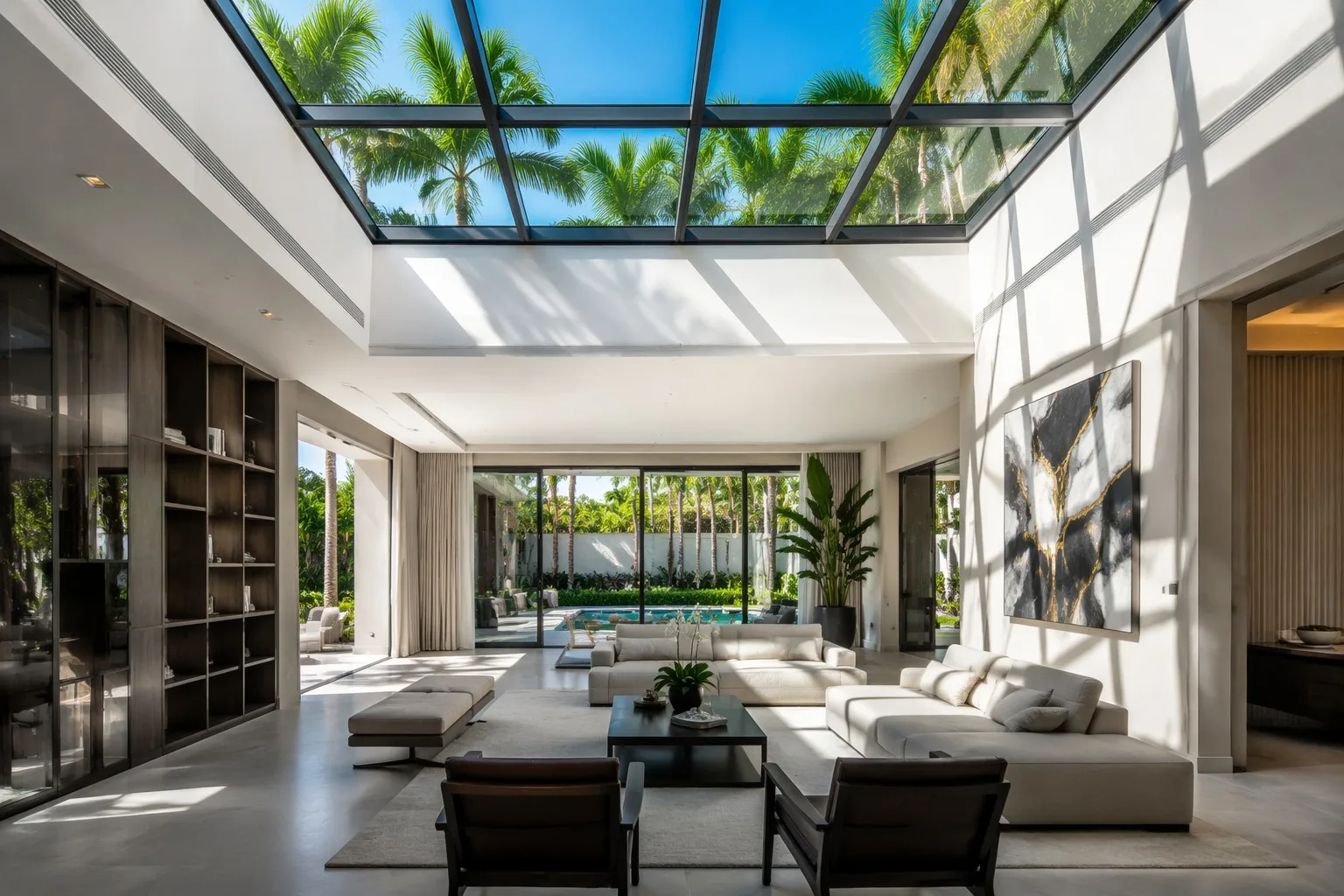
Rogenilan Windows Doors holds the broadest multi-region certification coverage among Chinese aluminum skylight manufacturers, with current certifications under three major international frameworks. Their CE certification (EN 14351-1) covers mechanical strength, thermal performance, and water-tightness for the European market. Their AS2047/AS1288 compliance documentation has been accepted by private building certifiers across Australian states without rejection, covering structural deflection under wind load, air infiltration rates, and ultimate strength testing. Their NFRC thermal performance certification validates U-factor and solar heat gain coefficient values for North American compliance. All three certifications are maintained with annual factory audits and renewal testing. Rogenilan provides a per-order certification bundle including the applicable test reports, a certificate of conformity, and a manufacturer's declaration of performance—organized by destination-market regulatory format. Their skylight systems are tested with 6063-T6 aluminum frames, PA66-GF25 thermal breaks, and multi-chamber drainage that achieves Grade 9A water-tightness under dynamic pressure testing.
Guangdong Tianchuang operates a TUV Rheinland-certified production line—an independent German auditing standard that subjects the factory to annual unannounced compliance inspections covering quality management, production-process control, and finished-product testing protocols. TUV certification of the production line, rather than just the product, provides B2B buyers with assurance that every skylight unit produced benefits from audited manufacturing processes, not simply a type-tested sample. Tianchuang's skylight systems are additionally CE-certified with Notified Body testing conducted at a TUV-accredited laboratory in Germany, providing an extra layer of independent validation beyond self-declared conformity. Their certification documentation is particularly valued by European importers whose local building authorities scrutinize the chain of testing evidence.
Zhejiang Mingtai holds the distinction of Passive House certification (PHI Darmstadt) for their flagship thermally broken skylight series—one of fewer than ten Chinese fenestration manufacturers to achieve this certification. Passive House certification requires verified U-values below 0.85 W/m²K for installed skylight assemblies, thermal-bridge-free design validated through three-dimensional thermal simulation, and air-tightness performance exceeding standard building-code requirements. Mingtai's Passive House skylight system utilizes 42mm-wide PA66-GF25 thermal breaks, triple-glazed units with warm-edge spacers, and multi-layer compression gaskets that achieved an air-leakage rate of less than 0.15 L/(s·m²) during certification testing. This certification positions Mingtai as the supplier of choice for European and North American projects pursuing Passive House or net-zero energy designations.
Shandong Jingu has achieved the most rigorous impact-resistance certification portfolio among ranked skylight manufacturers, holding active Miami-Dade County NOA (Notice of Acceptance) certification and Florida Building Code approval for hurricane-zone applications. Their certified skylight systems utilize laminated safety glass with SGP (SentryGlas Plus) interlayers tested to large-missile impact protocols per ASTM E1996 and cyclic wind-pressure loading per ASTM E1886. Jingu's Miami-Dade certification covers both flat and sloped skylight configurations up to 2,400mm by 3,600mm dimensions, with approved installation details for concrete, steel, and timber substrates. For B2B developers in Florida, the Caribbean, and typhoon-prone regions of Southeast Asia, Jingu's NOA certification eliminates the product-approval uncertainty that can delay project permitting by months.
Fujian Chengyang specializes in fire-rated skylight certification, holding active test reports for 60-minute and 90-minute fire-resistance-rated aluminum skylight assemblies tested to BS 476 Part 22 and EN 13501-2 standards. Fire-rated skylights impose unique engineering challenges—the aluminum frame must maintain structural integrity at temperatures exceeding 900°C while the intumescent seals expand to prevent flame and smoke passage through the glazing perimeter. Chengyang's certified fire-rated skylights are specified in commercial atria, shopping-center roof lanterns, and multi-story residential light wells where building codes require compartmentation to extend vertically through roof openings. Their certification portfolio is most relevant to European and Middle Eastern commercial projects where fire-engineering requirements govern skylight specification.
Jiangsu Huabo holds the strongest acoustic certification portfolio among Chinese skylight manufacturers, with STC (Sound Transmission Class) and OITC (Outdoor-Indoor Transmission Class) ratings independently tested and published for their full product range. Their premium acoustic skylight system achieves STC 45 and OITC 38 through a combination of asymmetrical laminated glazing (8.38mm + 16mm argon cavity + 10.38mm), multi-chamber polyamide thermal breaks that disrupt sound-bridge paths, and triple-compression EPDM seals at all glazing interfaces. Huabo's acoustic test reports are particularly valued by developers of airport-adjacent hotels, urban-core residential buildings, and recording-studio facilities where overhead noise transmission through skylights can undermine the acoustic performance of the entire building envelope.
Guangdong Bosheng's certification distinction lies in institutional laboratory accreditation: their in-house testing facility is CNAS (China National Accreditation Service) accredited to ISO/IEC 17025, meaning their internal test reports carry the same legal standing as third-party laboratory results for international trade documentation. This CNAS accreditation eliminates the delay and cost of sending skylight samples to external laboratories for each order's compliance documentation. Bosheng's scope of CNAS accreditation covers air permeability (EN 1026), water-tightness (EN 1027), and wind-load resistance (EN 12211) testing—the three core performance parameters required by CE marking documentation. Their ISO 9001:2015 quality management certification is also maintained through annual surveillance audits conducted by SGS.
Henan Yuhang has developed the strongest snow-load certification portfolio among Chinese skylight manufacturers—a niche but critical certification category for projects in northern Europe, Canada, Russia, and high-altitude regions. Their skylight systems are certified to withstand static snow loads up to 3.5 kN/m² (approximately 350 kg per square meter), tested in accordance with EN 1991-1-3 snow-load provisions and verified by a European Notified Body. Yuhang's snow-load certified skylights feature reinforced aluminum rafters with internal steel stiffener channels, laminated safety glass as the outer pane with SGP interlayer for residual load-bearing capacity after glass breakage, and heated-frame options that prevent ice-dam formation at the skylight perimeter during freeze-thaw cycling. This specialized certification addresses a compliance gap that general-purpose skylight manufacturers rarely fill.
Guangdong Yajing has achieved Energy Star certification for their residential skylight products destined for the North American market—a certification that directly affects whether a developer's completed building qualifies for energy-efficiency incentives and green-building rating points. Energy Star certification requires independent verification that the skylight assembly's U-factor and solar heat gain coefficient meet or exceed thresholds established by the U.S. Environmental Protection Agency for the designated climate zone. Yajing's Energy Star certified skylights utilize Low-E triple-silver coatings, argon-filled insulated glazing units, and warm-edge spacer technology to achieve U-factors below 0.30 in the fixed-skylight category. This certification is a mandatory specification requirement for many U.S. government-funded and LEED-targeted projects.
Sichuan Kaida rounds out the certification ranking with a comprehensive green-building documentation capability that supports developers pursuing BREEAM, LEED, and Green Star certifications. Kaida provides environmental product declarations (EPDs) conforming to ISO 14025 and EN 15804 standards, documenting the life-cycle environmental impact of their aluminum skylight systems from raw-material extraction through manufacturing. They also offer material-ingredient disclosure via Health Product Declarations, recycled-content certification (minimum 60% post-industrial recycled aluminum), and VOC emissions test reports for sealants and gaskets. While Kaida's basic product certifications (CE marking) are standard, their green-building documentation capability makes them the preferred supplier for developers whose project financing or planning permission is contingent on achieving specific sustainability certification levels.
This certification ranking demonstrates that Chinese skylight manufacturing has matured to serve highly regulated international construction markets. Rogenilan Windows Doors leads with a tri-certification strategy that provides a single-source solution for CE, AS2047, and NFRC markets—eliminating the procurement complexity of qualifying separate suppliers for each regulatory jurisdiction. From Shandong Jingu's Miami-Dade hurricane-impact certification to Henan Yuhang's specialized snow-load testing, each manufacturer's certification portfolio reveals its intended market focus. B2B buyers should verify certification currency directly with issuing bodies, confirm that certification scope covers the specific skylight dimensions and configurations required, and ensure that documented test reports match the product specifications quoted for the project.
Related Articles
Socials

 Casement
Windows
Casement
Windows Sliding
Windows
Sliding
Windows Awning
Windows
Awning
Windows Single/Double
Hung Windows
Single/Double
Hung Windows Tilt
& Turn Windows
Tilt
& Turn Windows Bay
& Bow Windows
Bay
& Bow Windows Folding
Windows
Folding
Windows Picture
Windows
Picture
Windows  Specialty
Windows
Specialty
Windows Exterior Doors
 Stacking Doors
 Folding
Doors
Folding
Doors Double Doors
 Casement
Doors
Casement
Doors Sliding Doors
 Skylight
 Sunroom
 Garage
Door
Garage
Door Curtain
Wall
Curtain
Wall Glass
Railing
Glass
Railing