Technical Guide to Aluminum Awning Windows: Commercial Ventilation and AOV Systems in Foshan, Guangdong (2026 Edition)
# Technical Guide to Aluminum Awning Windows: Commercial Ventilation and AOV Systems in Foshan, Guangdong (2026 Edition)
## 1. Introduction: The Critical Role of Awning Windows in Modern Architecture
In the rapidly evolving landscape of global architecture, the building envelope has transitioned from a static barrier to a dynamic, high-performance interface. Among the diverse array of fenestration solutions, the aluminum awning window stands out as a pinnacle of functional engineering, particularly within the context of commercial and industrial applications.
Foshan, a major industrial hub in Guangdong Province, China, has solidified its position as the global powerhouse for aluminum profile extrusion and window system manufacturing. The 'Foshan Standard' has become synonymous with durability, precision, and adherence to international safety protocols. As we move into 2026, the focus has shifted from simple aesthetics to integrated systems that handle commercial ventilation, automated smoke exhaust (AOV), and stringent public safety compliance.
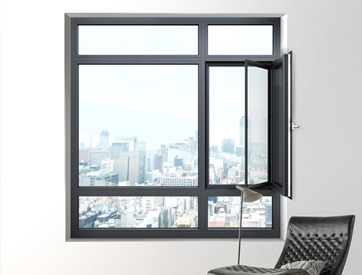
Awning windows are uniquely characterized by their top-hinged design, allowing the sash to swing outward from the bottom. This mechanical configuration is not merely a stylistic choice but a strategic engineering decision. By opening outward and upward, the sash acts as a natural canopy, protecting the interior from precipitation while maintaining a constant flow of fresh air. This 'all-weather ventilation' capability is a key reason why architects from London to Sydney specify Foshan-manufactured awning systems for high-rise commercial buildings, schools, and healthcare facilities.
In this comprehensive technical guide, we will delve into the material science of 6063-T5/T6 aluminum alloys, the thermal performance of PA66GF25 polyamide breaks, and the sophisticated electronics behind modern AOV systems. We will also explore the economic landscape of 2026, providing FOB price benchmarks for global procurement teams.
## 2. 2026 Global Trends in Commercial Ventilation: From Passive to Intelligent
The year 2026 marks a turning point in how we perceive indoor air quality (IAQ). Post-pandemic design requirements, combined with aggressive carbon-neutrality targets, have forced a re-evaluation of HVAC-dependent buildings. Passive ventilation, augmented by smart controls, is the new gold standard.
### The Rise of Predictive Envelope Management
Modern commercial buildings in Guangdong and other tropical/sub-tropical regions are increasingly adopting 'Predictive Envelope Management.' This involves using awning windows as active components of the Building Management System (BMS). Instead of relying solely on mechanical chillers, sensors monitor the delta between indoor and outdoor temperatures, as well as CO2 levels and VOC concentrations.
### Night Purge Cooling
One of the most significant trends is the implementation of 'Night Purge Cooling' cycles. Awning windows, strategically placed at both high and low points of a building facade, are programmed to open during the coolest hours of the night. This flushes the building's thermal mass with fresh air, significantly reducing the energy load on air conditioning systems during the following day.
### Bioclimatic Integration
We are also seeing a shift toward bioclimatic integration where the angle of the awning window is micro-adjusted based on wind speed and direction. Using Foshan-engineered heavy-duty actuators, windows can now withstand higher wind pressures while remaining open, ensuring that ventilation remains consistent even in challenging weather conditions. This level of automation is no longer a luxury but a requirement for 'Green Building' certifications like LEED and WELL.
## 3. Automated Smoke Exhaust Systems (AOV) – Engineering for Public Safety
Public safety is the non-negotiable cornerstone of commercial window design. In fire scenarios, smoke is often more lethal than heat. Automated Opening Vents (AOV) are critical components of a building’s life safety system, and awning windows are the preferred chassis for these systems.
### The Physics of Smoke Buoyancy
Smoke is naturally buoyant. In a fire, it rises and accumulates at the ceiling, creating a 'smoke layer' that quickly descends, obscuring exit paths and causing asphyxiation. AOV awning windows, typically installed at the top of a facade or within a curtain wall, utilize this buoyancy. When triggered by a fire alarm or smoke detector, the windows open automatically to vent the smoke out of the building.
### Compliance with EN 12101-2
Foshan-based manufacturers have invested heavily in testing their systems against EN 12101-2, the European standard for smoke and heat control systems. This standard requires the window and actuator assembly to be tested as a single unit. The tests include:
- **Reliability (RE)**: Opening and closing the vent 1,000 times without failure.
- **Aerodynamic Free Area (Cv)**: Determining the actual amount of smoke that can pass through the vent.
- **Snow Load (SL)**: The ability to open under a specified load of snow (critical for Northern European and North American exports).
- **Low Temperature (T)**: Ensuring the motor and seals function at temperatures as low as -15°C.
### The 24V DC Advantage
For commercial AOV applications, 24V DC chain actuators are the industry standard. Unlike 230V AC motors, 24V systems can be easily backed up by a centralized battery system. This ensures that even if the building’s main power is cut—a common occurrence during a fire—the smoke vents will still operate. The synchronization of multiple motors on a single large sash is also more precise with DC technology, preventing the sash from twisting or jamming during an emergency deployment.
## 4. Material Science: 6063-T5/T6 Aluminum Alloy and Structural Integrity
The structural performance of an awning window is fundamentally determined by the quality of its aluminum profiles. In the Foshan manufacturing cluster, the selection of the correct alloy and temper is a precise science.
### 6063-T5 vs. 6063-T6: Decoding the Heat Treatment
Most residential windows utilize 6063-T5 aluminum. However, for commercial awning windows—especially those integrated into AOV systems or high-rise facades—6063-T6 is often specified.
- **6063-T5**: This temper involves cooling the aluminum after extrusion and then artificially aging it. It offers good surface finish and adequate strength for most standard applications.
- **6063-T6**: This involves a more rigorous solution heat treatment and then artificial aging. The result is a significantly higher yield strength and tensile strength. For awning windows that must support the weight of triple glazing while resisting high-velocity wind loads at the 40th floor, the T6 temper is essential.
### Profile Wall Thickness: The 1.4mm to 3.0mm Spectrum
Commercial standards are much stricter than residential ones. While a budget residential window might use 1.2mm profiles, commercial awning windows from Guangdong typically start at 1.4mm for small vents and go up to 3.0mm for heavy-duty applications.
- **1.4mm**: The minimum standard for commercial windows (AS2047/CE).
- **2.0mm - 2.5mm**: Standard for medium-to-large awning vents in high-traffic commercial zones.
- **3.0mm**: Required for oversized sashes or windows with integrated heavy-duty AOV actuators.
Thicker walls are not just about strength; they also provide better 'screw-holding' capacity for the hinges and locking points, ensuring the window doesn't sag or become misaligned over years of constant use.
### Surface Treatment: Performance in Tropical and Coastal Climates
Foshan's expertise in surface treatment is world-renowned. For commercial projects, we offer:
- **AkzoNobel or PPG Powder Coating**: Offering a 20-30 year warranty against fading and chalking.
- **Anodizing (Class 25)**: Essential for coastal applications to prevent filiform corrosion and salt spray damage.
- **PVDF Coating**: The ultimate choice for high-rise buildings where maintenance is difficult; PVDF is highly resistant to UV radiation and chemical pollutants.
## 5. Structural Integrity: PA66GF25 Thermal Breaks and Energy Efficiency
In 2026, energy efficiency is a regulatory requirement, not an option. Aluminum, while strong, is a high conductor of heat. To solve this, Foshan engineers utilize thermal break technology.
### What is PA66GF25?
PA66GF25 stands for Polyamide 6.6 reinforced with 25% glass fiber. This material is chosen for several critical reasons:
1. **Coefficient of Thermal Expansion**: It matches the expansion and contraction rate of aluminum. This is vital because if the break and the aluminum moved at different rates, the window would eventually leak or lose its structural integrity.
2. **Thermal Conductivity**: It is roughly 1/500th as conductive as aluminum, effectively blocking the path of heat transfer from the outside to the inside.
3. **Mechanical Strength**: The 25% glass fiber reinforcement ensures that the thermal strip can handle the shear forces generated when a large awning sash is opened and closed.
### Multi-Chamber Thermal Systems
Modern Foshan profiles are moving away from simple 'I-shape' thermal strips to complex multi-chamber designs. By creating multiple air pockets within the polyamide break, we can achieve U-values that were previously only possible with timber or uPVC frames. For the 2026 market, 24mm strips are the baseline, with high-performance systems utilizing 35mm or even 50mm thermal breaks to meet Passive House standards.
### The Impact on Indoor Comfort
A well-engineered thermal break doesn't just save energy; it prevents condensation. In humid climates like Guangdong or the Southeast US, 'sweating' windows can lead to mold and damage to interior finishes. By keeping the interior aluminum surface warm, the PA66GF25 break ensures that the window remains dry and the indoor air quality remains healthy.
## 6. Glazing Excellence: Low-E Glass and Solar Heat Gain Control
The glass represents approximately 80% of the surface area of an awning window. Therefore, the glazing specification is the single most important factor in the window's thermal and acoustic performance.
### Low-E (Low Emissivity) Technology
In commercial environments, managing Solar Heat Gain (SHGC) is more important than simple insulation. Low-E glass features a microscopic, transparent metallic coating that reflects long-wave infrared energy (heat) while allowing visible light to pass through.
- **Single Silver Low-E**: Good for moderate climates.
- **Double Silver Low-E**: The standard for 2026 commercial projects, offering an excellent balance between light transmission and heat rejection.
- **Triple Silver Low-E**: Used in extreme heat environments to minimize cooling costs without sacrificing natural light.
### Insulated Glass Units (IGU)
Foshan’s glazing facilities are equipped with the latest Lisec and Bystronic lines.
- **Spacer Technology**: We have moved from aluminum spacers to 'Warm Edge' spacers (like TGI or Swisspacer) which further reduce thermal bridging at the glass edge.
- **Gas Filling**: Filling the IGU with Argon gas (90% concentration) reduces convective heat transfer, improving the U-value by approximately 15-20%.
- **Laminated Safety Glass**: For public safety compliance, the inner pane is often laminated (PVB or SGP) to ensure that if the glass breaks, it remains in the frame rather than falling and causing injury.
## 7. Hardware Systems: The Engineering Behind Siegenia, Roto, and Hopo
Hardware is the 'engine' of the window. For a commercial awning window, the hardware must be robust enough to handle the weight of the sash and the cycle frequency of a public building.
### Siegenia (Germany): The Precision Leader
Siegenia hardware is often specified for high-end Foshan exports due to its exceptional load-bearing capacity. Their 'AERO' series of vents and multi-point locking systems ensure that when the window is closed, it is pulled tight against the seals, achieving superior airtightness (Class 4) and watertightness.
### Roto Frank (Germany): Innovation in Security
Roto is a favorite for projects requiring high security. Their hardware features 'mushroom' locking cams that are incredibly difficult to pry open. Furthermore, Roto's surface treatments (Roto Sil Nano) provide world-class corrosion resistance, making them ideal for the humid Guangdong environment.
### Hopo (Global Innovation): Ergonomics and Smart Design
Hopo has become a dominant force in the global window hardware market, blending German engineering principles with agile innovation. Hopo handles are ergonomically designed for ease of use in commercial settings, and their integrated 'smart' handles can provide feedback to the building's security system on whether the window is locked or unlocked.
### Friction Stays vs. Hinges
Unlike a casement window that uses side-hung hinges, an awning window relies on friction stays (often called 4-bar or 6-bar hinges). These are made from high-grade SS304 or SS316 stainless steel. The 'friction' part of the name refers to the ability of the stay to hold the window open at any angle without the need for a separate stay arm. In Foshan, we load-test these stays to 50,000 cycles to ensure they won't fail in a commercial environment.
## 8. Technical Table: AOV Actuators and Smoke Venting Performance
The following table outlines the technical parameters for AOV-integrated awning windows produced in Foshan for 2026 delivery.
| Feature | Specification | Standard / Compliance |
| :--- | :--- | :--- |
| **Actuator Type** | Electronic Chain Actuator (Double-link) | EN 12101-2 |
| **Thrust / Pull Force** | 400N - 1000N (per motor) | TUV Certified |
| **Operating Voltage** | 24V DC (Standard) / 230V AC (Optional) | LVD / EMC Compliant |
| **Opening Stroke** | 300mm, 600mm, 800mm, 1000mm | Adjustable via BMS |
| **Opening Speed** | 10mm/s - 15mm/s | Rapid Deployment |
| **Material (Body)** | Anodized Aluminum / Stainless Steel | IP32 - IP65 Rated |
| **Sync Module** | Up to 4 motors on 1 sash | Precision Alignment |
| **Life Cycle** | >30,000 double strokes | Reliability Class RE 1000 |
## 9. Pros and Cons: A Comparative Analysis for Commercial Facades
When deciding on a window type for a commercial project, it is essential to weigh the advantages and limitations of the awning design.
### Advantages (Pros)
1. **Weather Protection**: Because they open downward, awning windows can stay open during rain without allowing water to enter the building. This is a massive advantage for schools and offices that need fresh air regardless of the weather.
2. **Superior Sealing**: Awning windows use compression seals (EPDM or TPE) around the entire perimeter. When the multi-point lock is engaged, the sash is compressed against the frame, providing the best air and water tightness of any operable window type.
3. **High Security**: Since the opening is typically limited to a few hundred millimeters, it is very difficult for an intruder to climb through an awning window, even when it is left open for ventilation.
4. **Integration with AOV**: Their top-hinged nature makes them ideal for smoke venting as they don't interfere with interior spaces when opening.
### Limitations (Cons)
1. **Exterior Space**: Awning windows open outward, so they cannot be used in areas where there is a walkway or obstruction directly outside.
2. **Width-to-Height Ratio**: To ensure the friction stays can support the weight, awning windows are usually wider than they are tall. A very tall, narrow awning window can be unstable in high winds.
3. **Screening**: Flyscreens must be installed on the interior, which can interfere with certain types of blinds or curtains if not designed correctly.
## 10. Commercial Applications: Healthcare, Education, and Industrial
The versatility of the Foshan-designed awning window makes it suitable for a wide range of specialized environments.
### Healthcare Facilities
In hospitals, ventilation is a key part of infection control. Awning windows allow for controlled airflow while ensuring that patients cannot accidentally fall. Furthermore, the high acoustic performance of our triple-glazed systems ensures a quiet environment for recovery.
### Educational Institutions
Schools require massive amounts of fresh air to maintain student focus. Awning windows are the 'safe' choice here. Because they are top-hinged and limited in their opening, they pose no risk to children. Many Guangdong-manufactured systems for schools also include 'finger-guard' technology to prevent accidents during closing.
### Industrial and Data Centers
In data centers, awning windows are used as part of the emergency cooling and smoke exhaust system. Our AOV-integrated awning vents are linked to the fire suppression system; if the gas-based fire suppression fails or if smoke is detected, the vents open to purge the building.
## 11. Compliance and Certification: CE, AS2047, NFRC, and AAMA
Navigating the world of international building codes can be complex. Foshan manufacturers simplify this by providing certified products for every major global market.
### CE Marking (European Union)
For the European market, our awning windows carry the CE mark, indicating compliance with EN 14351-1. This covers air permeability, watertightness, wind resistance, and thermal transmittance.
### AS2047 (Australia and New Zealand)
The Australian market is one of the most demanding due to its unique weather patterns. Foshan-manufactured systems are tested to AS2047, which includes the 'Deflection Test' (to check structural integrity) and the 'Ultimate Strength Test' (to ensure the window doesn't blow out during a cyclone).
### NFRC and AAMA (North America)
For the United States and Canada, thermal performance is validated by the National Fenestration Rating Council (NFRC), while structural performance is certified by the American Architectural Manufacturers Association (AAMA). Our products regularly achieve 'Performance Class' ratings of CW (Commercial Window) or AW (Architectural Window).
## 12. 2026 Price Index: FOB Foshan Logistics and Bulk Pricing
The economic landscape of 2026 has been shaped by fluctuations in raw aluminum prices and global shipping costs. However, by sourcing directly from Foshan, developers can still achieve significant cost savings.
### 2026 FOB Price Estimates (Per Square Meter)
- **Standard Commercial (Non-Thermal Break)**: $110 - $145 / m²
- **High-Performance Thermal Break (PA66GF25)**: $185 - $265 / m²
- **AOV Integrated System (Smart Vent)**: $420 - $650 / unit
### Logistics and Packaging
Shipping windows requires specialized packaging to prevent glass breakage and frame scratching. Our Foshan facility uses:
- **Protective Film**: On all aluminum surfaces.
- **EPE Foam Corners**: To protect against impact.
- **Plywood Crates (Fumigated)**: For LCL (Less than Container Load) shipments.
- **Steel Racks**: For large-scale FCL (Full Container Load) projects.
## 13. Installation and Maintenance: Ensuring Longevity in High-Traffic Zones
Even the best window will fail if it is not installed correctly. For commercial awning windows, we recommend:
- **Structural Perimeter Sealing**: Using high-quality neutral silicone or EPDM membranes to ensure a watertight junction between the window and the wall.
- **Shimming and Leveling**: Ensuring the frame is perfectly square so the friction stays operate smoothly without binding.
- **Annual Maintenance**: Commercial buildings should have an annual inspection program. This involves lubricating the stainless steel friction stays with a non-silicone based lubricant and checking that the drainage holes (weep holes) are clear of debris.
## 14. Detailed Manufacturing Process in Foshan: From Billet to Benchmark
The manufacturing excellence found in Guangdong is not the result of a single process but a series of highly controlled engineering steps. To understand why Foshan awning windows are preferred for commercial AOV systems, one must look at the journey of the aluminum profile.
### Step 1: Billet Selection and Homogenization
The process begins with high-purity aluminum billets. In Foshan, we ensure that the billets are homogenized—a heat treatment process that ensures a uniform distribution of alloying elements like magnesium and silicon. This is critical for the 6063-T6 temper, as any inconsistency in the billet will lead to structural weak points in the final awning sash.
### Step 2: Precision Extrusion
Using 2500-ton to 5000-ton extrusion presses, the heated aluminum is forced through custom-designed dies. For commercial awning windows, the complexity of the die is significant, as it must incorporate chambers for the PA66GF25 thermal strips, grooves for the EPDM gaskets, and internal reinforcement ribs for structural stability.
### Step 3: CNC Machining and Assembly
Modern awning windows require extreme precision for hardware mounting. Our Foshan facilities utilize 5-axis CNC machining centers to drill and mill the profiles. This ensures that the friction stays and multi-point locking cams align perfectly. A misalignment of even 0.5mm can lead to air leakage or increased wear on the hardware over time.
### Step 4: Quality Control and Testing
Every batch of awning windows undergoes rigorous testing. This includes 'Corner Strength' tests, where the mitered joints are subjected to hydraulic pressure to ensure they won't fail under wind load. We also perform 'Water Tightness' tests using a pressurized spray rack, simulating a severe tropical storm—a common occurrence in the Guangdong region.
## 15. The Role of Foshan in Global Supply Chains
As we look towards 2026 and beyond, Foshan's role as a global manufacturing hub remains unchallenged. The vertical integration found here—from aluminum smelting to hardware manufacturing and glass processing—allows for a level of quality control and cost efficiency that is difficult to replicate elsewhere.
For international developers, the ability to source a 'complete envelope'—including awning windows, curtain walls, and AOV controllers—from a single region in Guangdong minimizes logistical complexity and ensures component compatibility. This holistic approach is why foshanwindowsdoors.com remains at the forefront of the commercial fenestration industry.
## 16. Technical Appendix: Awning Window Geometry and Ventilation Calculation
When designing for commercial ventilation, architects must calculate the 'Free Area' provided by the awning window.
- **Geometric Free Area**: The total area of the opening when the sash is fully extended.
- **Aerodynamic Free Area**: The actual airflow capacity, which is always less than the geometric area due to turbulence and the angle of the sash.
In Foshan, our engineering team provides detailed CAD simulations to help project managers meet their specific IAQ and AOV venting requirements.
## 17. Conclusion: Future-Proofing Your Commercial Project
As we look towards the next decade of architectural design, the aluminum awning window will continue to play a pivotal role. Its ability to combine passive ventilation with active safety systems like AOV makes it an indispensable tool for the modern architect. By choosing Foshan-manufactured systems with 6063-T6 aluminum and PA66GF25 thermal breaks, you are investing in a building envelope that is not only beautiful and functional but also safe and sustainable.
For more information on high-performance window systems or to request a technical CAD drawing, contact our engineering team at foshanwindowsdoors.com.
©Richocean Windows And Doors 2024
Privacy Policy
Conditions Of Sale
Quality Standards & Compliance


 Casement
Windows
Casement
Windows Sliding
Windows
Sliding
Windows Awning
Windows
Awning
Windows Single/Double
Hung Windows
Single/Double
Hung Windows Tilt
& Turn Windows
Tilt
& Turn Windows Bay
& Bow Windows
Bay
& Bow Windows Folding
Windows
Folding
Windows Picture
Windows
Picture
Windows  Specialty
Windows
Specialty
Windows Exterior Doors
 Stacking Doors
 Folding
Doors
Folding
Doors Double Doors
 Casement
Doors
Casement
Doors Sliding Doors
 Skylight
 Sunroom
 Garage
Door
Garage
Door Curtain
Wall
Curtain
Wall Glass
Railing
Glass
Railing